Join WhatsApp Channel

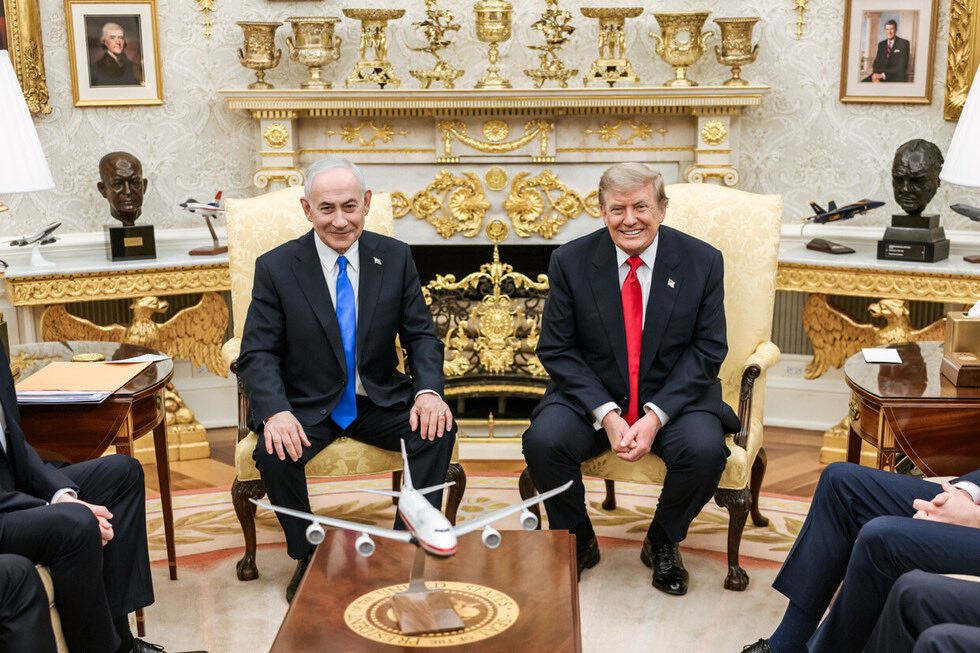
Leaders come to Washington for different reasons. Some to renew friendships; a few of them for a political lift back home; and others still to implore the United States to stay on a course even if it is a losing proposition. That is how many will be tempted to view the visits to Washington by the Ukrainian president and the Israeli prime minister.
Of course, the official refrain could be that they were both high-profile invitees to the funeral services of the departed Senator Lindsey Graham of South Carolina, seen as a dear friend of both countries. The late senator’s hawkish stance did not go unnoticed. President Donald Trump lightheartedly remarked during the eulogy that Graham “never saw a war that he didn’t like.”
The contrasting nature of the visits could not be more visible. Here was Volodymyr Zelensky presiding over an imposed scandalous conflict in its fifth year that President Vladimir Putin of Russia thought would be over at a snap of his finger through a “Special Military Operation.”
At the other end of the spectrum was Benjamin Netanyahu who is believed to have egged President Trump into attacking and starting a war with Iran which the American leader thought would be over in three or four weeks. Now apprehensive of an unfinished job and facing a weaker political setting ahead of the October 27 elections, Prime Minister Netanyahu is subtly pressuring President Trump to continue his war on the pretext that Tehran has started its nuclear activities in the Pickaxe Mountains, as if the White House does not know.
President Zelensky is also carrying domestic baggage by way of his controversial sacking of his defense minister and springing a surprise in announcing a new General setting off fears that the abrupt changes are being made when Kyiv appears to be wresting the upper hand in its conflict with Russia. Military analysts are saying that Kyiv has made impressive hits on Russian forces and pinning them down in the forward areas while scoring high by taking out tens of Kremlin’s shadow tankers in and around the Black Sea with a view to not only disrupting oil transport but also block supplies to Crimea. For its part Moscow has kept up the pressure on the port of Odessa and on Ukrainian agricultural exports.
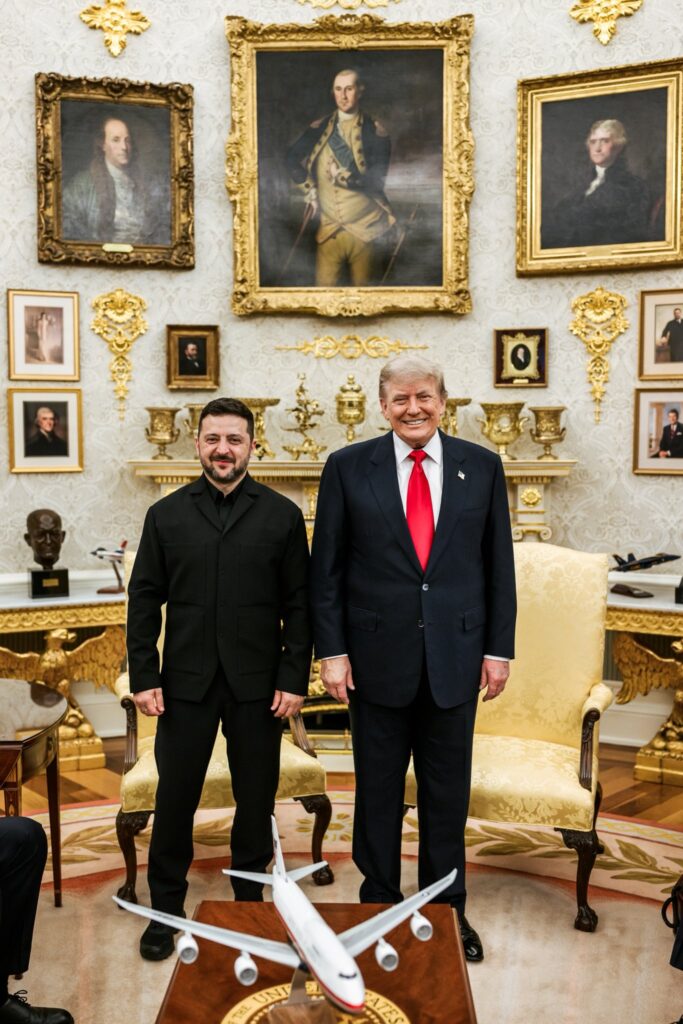
But President Zelensky is looking for more and his equal attention is also on Capitol Hill where he had to make his case prior to the law makers leaving town for the August recess. The big relief to the Ukrainian leader was in President Trump already signing off on the co-production of Patriot Interceptor Missiles. Outright shipment of these pricey missiles is difficult at this juncture as Washington itself is running low as a result of the war with Iran with drones becoming a less expensive alternative to the Patriots. Questions are already being raised in Congress and elsewhere if the United States is currently adequately prepared to face another potential conflict with depleted armory.
The tit-for-tat missiles and drone attacks by Moscow and Kyiv aside, there are also signs that peace efforts could also be reviving, something that had seemed to be pushed to the back burners to give more attention for the conflict in the Middle East. President Trump’s top peace envoys, Steve Witkoff and Jared Kushner, are reportedly heading to Kyiv soon for what would be the first such visit of President Trump’s second term.
The problem with the peace talks is that there is a recognition that a ceasefire must be the first beginning which itself appears to be difficult given the maximalist positions of the two sides. And there are continuing misgivings of Washington being more favorable to the Russian positions especially when it comes to ceding territory. The question of “freezing” the borders seems possible only to the side holding the advantage at that point of time.
The Trump administration does not take kindly to the notion that it was Israel that had the United States involved in the Iran war knowing full well the sentiments of the President on Iran and its nuclear program. And some eight years after walking away from a nuclear deal signed by President Barack Obama, Iran gave every intention of pursuing a program that had all elements of weaponization written over it; and it was clear to whom this bomb was ultimately intended for which the Iranian leadership made no intention to hide. But to nearly everyone in the comity of nations it was so baffling that the United States would start Round Two of its bombing of nuclear sites in Iran after proudly proclaiming in June 2025 that Round One was such a big success that Iran’s nuclear program was simply obliterated.
But to the disbelief of many in the political and strategic community, it was the shifting rationales for the war that led many to argue that it was a conflict that started without clearly defined objectives, not to speak of a well-marked exit plan. After seeing the phases of bombing nuclear sites and assassinations of civilian and military leaderships, the impasse is now hopelessly locked into the future of the Strait of Hormuz. Iran and Oman are now negotiating voluntary transit fees or service surcharge along the lines of what Indonesia, Malaysia and Singapore have for the Straits of Malacca, an idea resolutely opposed by the United States.
A war weary America may be in no mood for Prime Minister Netanyahu to keep up the drumbeats on Iran. Republicans and President Trump are quite aware of the anxieties of the American people at the price of groceries in supermarkets and gasoline at the pumps that have started surging in the past week. And no one is waiting for a Nobel Laureate to explain this phenomenon.
Disclaimer: The opinions and views expressed in this article/column are those of the author(s) and do not necessarily reflect the views or positions of South Asian Herald.