Join WhatsApp Channel

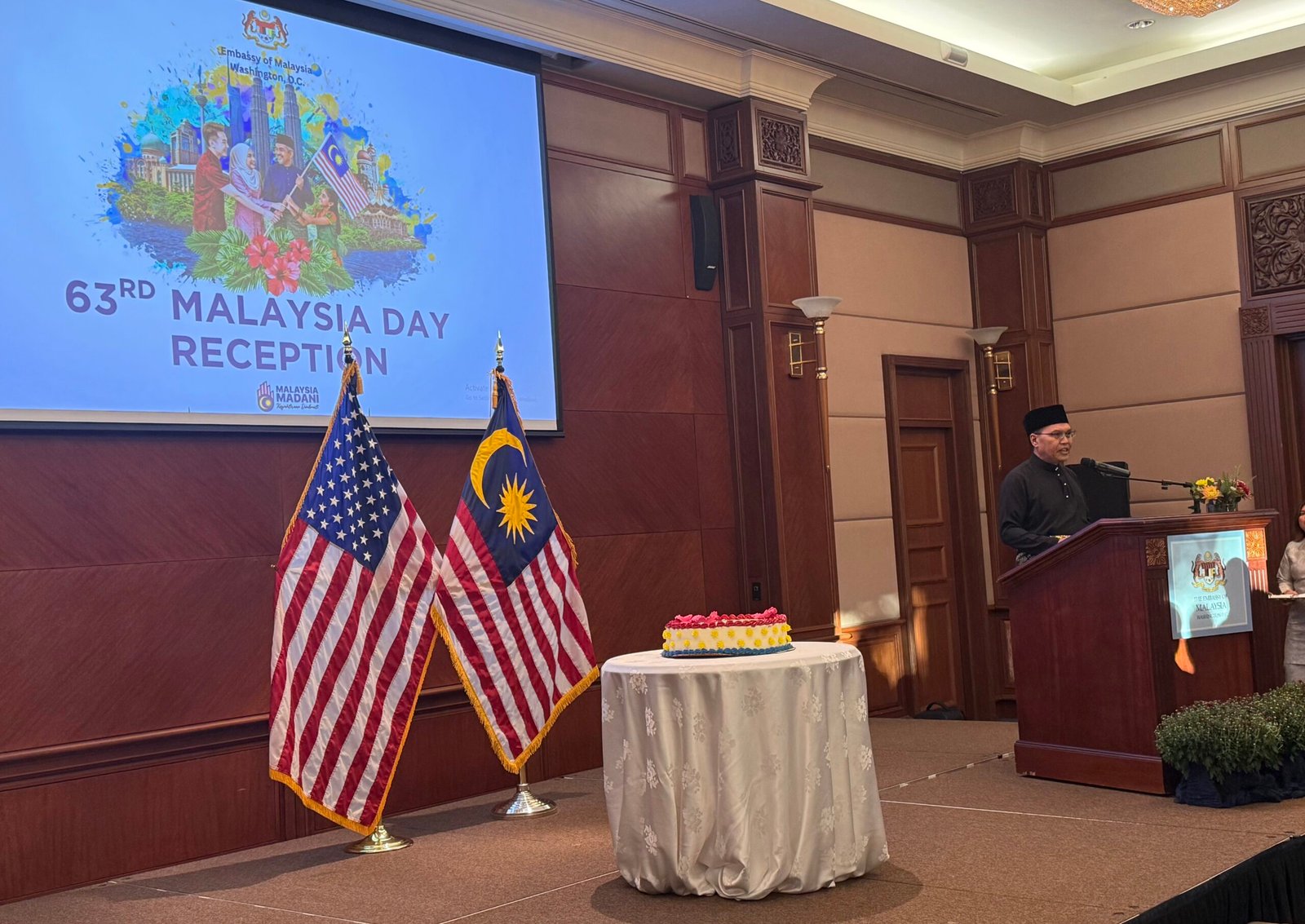
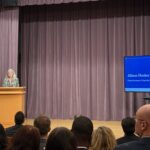
The Embassy of Malaysia in Washington, D.C., hosted a reception on September 15, commemorating the 63rd anniversary of Malaysia Day and celebrating the longstanding bilateral relationship between Malaysia and the United States.
Malaysian Ambassador to the United States, Tan Sri Muhammad Shahrul Ikram Yaakob welcomed guests and highlighted the significance of September 16, 1963, the date Malaysia was formed. Observed annually on September 16, Malaysia Day commemorates the establishment of the federation comprising Malaya, Sabah, then known as North Borneo, Sarawak and Singapore. Singapore subsequently left the federation in 1965.
“For Malaysians, Malaysia Day is therefore not only a celebration of our country; it is a celebration of our diversity, our shared aspirations, and our belief that different communities and cultures can come together to build a common future as one nation,” the Ambassador said.
He noted that the occasion also offered an opportunity to celebrate the enduring friendship between Malaysia and the United States, which marks the 250th anniversary of its independence this year.
“Our bilateral relationship has deep historical roots,” Ambassador Yaakob said, noting that the United States recognized the independence of the Federation of Malaya on August 31, 1957, the day Malaya gained independence. Diplomatic relations were established the same day.
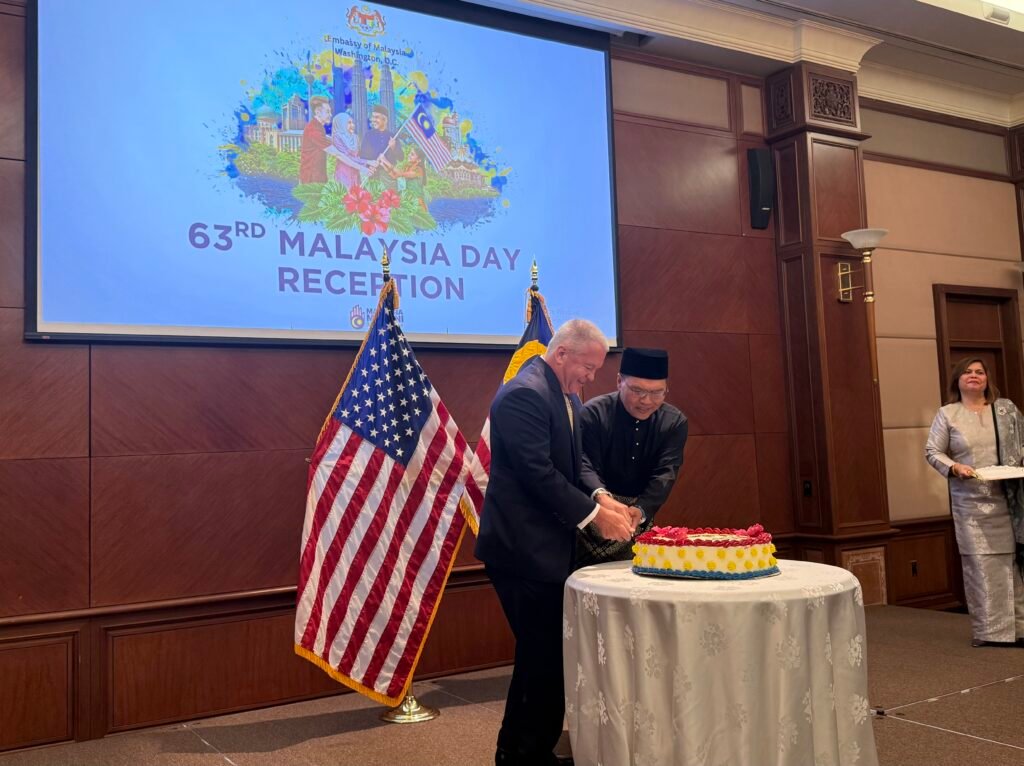
“Since then, our relationship has evolved considerably. In 2014, Malaysia and the U.S. elevated our relationship to a comprehensive partnership, and in October last year, during President Donald Trump’s visit to Kuala Lumpur, Prime Minister Anwar Ibrahim and President Trump agreed to further elevate the relationship to a comprehensive strategic partnership,” the Ambassador said.
According to Ambassador Yaakob, the progression reflects the “depth and breadth” of the relationship the two countries have developed over nearly seven decades.
“Malaysia matters to the United States, and the United States matters greatly to Malaysia,” he said, describing Malaysia as an open economy, a major trading nation and an important contributor to the regional and global economy.
Malaysia has become an established manufacturing and technology center in Southeast Asia, particularly in the electrical and electronics, semiconductor and advanced manufacturing sectors, he said.
The Ambassador emphasized that the partnership extends beyond economic ties. Malaysia and the United States have demonstrated that their cooperation can contribute “constructively” to regional peace and stability, he added.
During a conflict between two Association of Southeast Asian Nations members last year, the two countries helped “facilitate dialogue” that ultimately resulted in the signing of the Kuala Lumpur Accord, Ambassador Yaakob said. He described the outcome as a reflection of ASEAN “centrality, regional ownership, and partnership.”
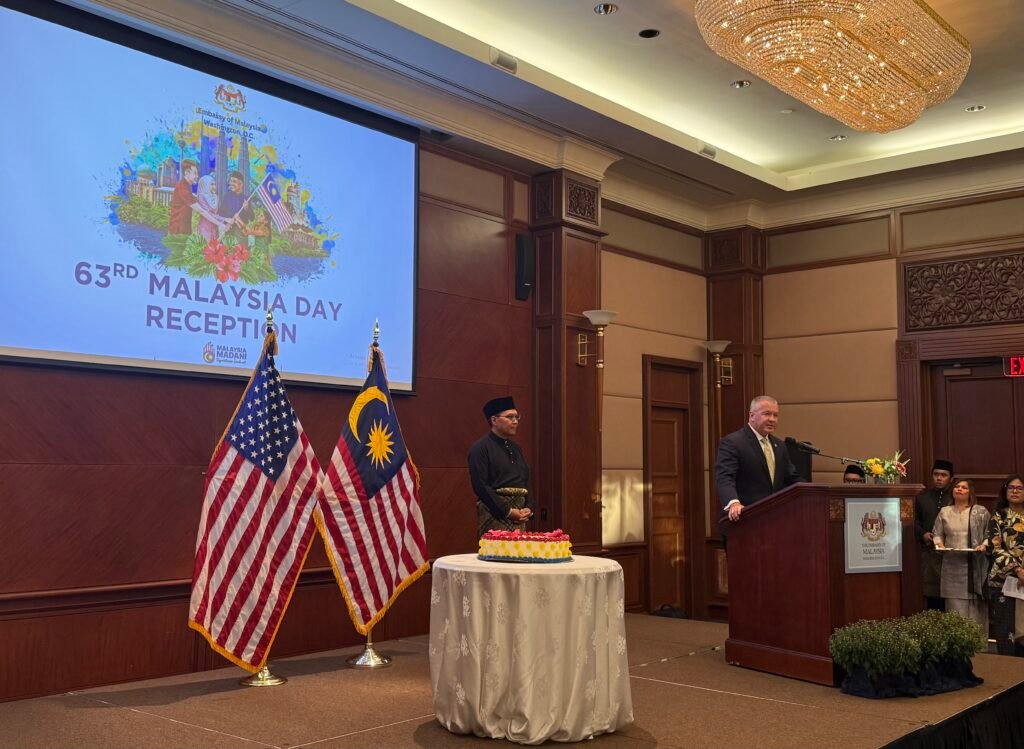
In addition to strong economic, trade and investment ties, the Ambassador highlighted defense and security cooperation between the two countries.
The Malaysia-U.S. defense relationship is “long-standing, substantive, and mutually beneficial,” Ambassador Yakko said. The two countries’ armed forces have participated in numerous bilateral exercises and exchanges, while thousands of senior Malaysian military officers have attended courses at U.S. military institutions, he added.
Ambassador Yaakob said the two countries could also expand cooperation in emerging areas, including cybersecurity, the digital domain, artificial intelligence and critical minerals.
Expanding the partnership would support Malaysia’s strategic ambition to become a regional technology and manufacturing hub while reinforcing the United States’ commitment to an “open, secure, and prosperous Indo-Pacific,” he said.
Addressing these emerging opportunities would help ensure that the Malaysia-U.S. partnership remains “dynamic, adaptive, and mutually beneficial” for future generations, the Ambassador added.
Ambassador Yaakob said the critical task ahead is translating the broader framework into “practical cooperation.” Malaysia, he added, continues to believe strongly in mutually beneficial cooperation with the United States, between ASEAN and its developed partners, and among countries that may view the world differently but share an interest in “peace, stability, and prosperity.”
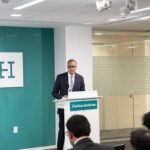
Michael DeSombre, assistant secretary of state for East Asian and Pacific affairs, congratulated Malaysia on the anniversary and praised its history of unity and resilience.
“Today’s celebration is more than a date; it marks peoples, states, and traditions coming together as one nation, a story of unity, resilience, and shared purpose. The United States is proud to celebrate with you,” DeSombre said.
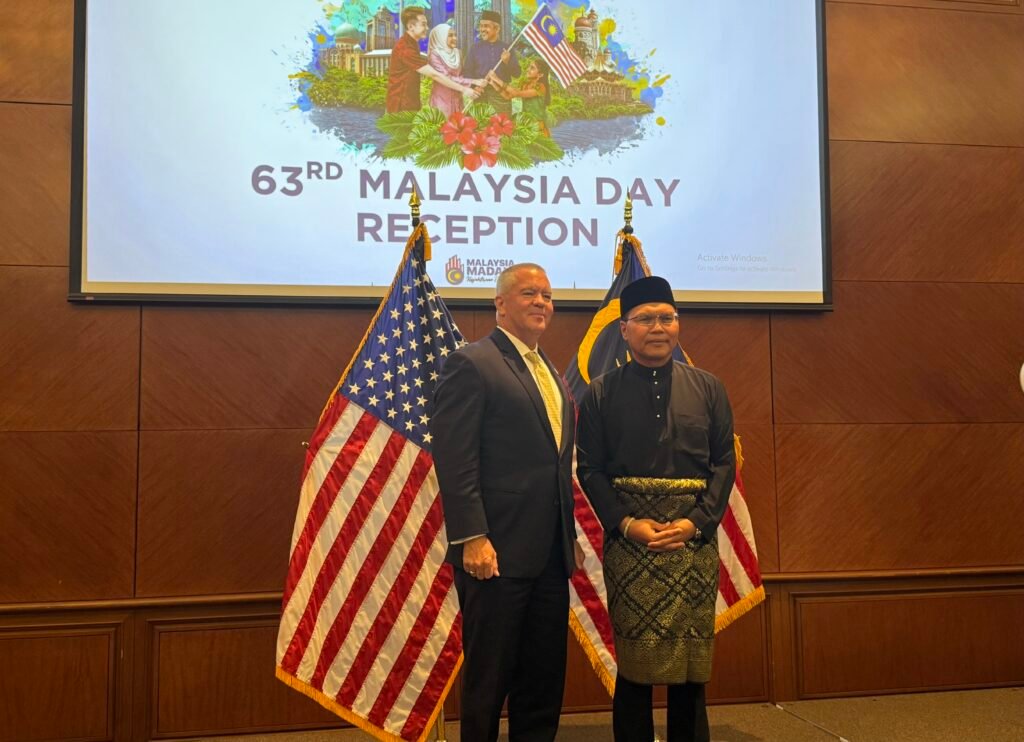
He said the partnership between the two countries dates to Malaysia’s founding on September 16, 1963, underscoring that the United States stood with the country from its inception.
DeSombre also pointed to Tugu Negara, Malaysia’s national monument, as a symbol of the longstanding relationship.
The monument was inspired by Tunku Abdul Rahman’s 1960 visit to Washington, D.C., and created by American sculptor Felix de Weldon, who also designed the Marine Corps War Memorial in Arlington, Virginia.
“Our friendship was built on common ground, the rule of law, open markets, and a mutual respect for shared history,” he said. “Six decades later, the foundation has grown into one of our most vital partnerships in the Indo-Pacific.”
DeSombre described Malaysia as one of the United States’ top 20 trading partners and the United States as Malaysia’s leading investor. Bilateral trade exceeded $80 billion last year, representing an increase of 40 percent over five years, he said.
Since 2021, Malaysia has received tens of billions of dollars in new American investment in semiconductors, critical minerals and data centers, much of it concentrated in Penang, which is known as the Silicon Valley of the East.
Malaysia is a partner in “practice,” not merely on “paper,” DeSombre said. He also cited Malaysia’s ASEAN chairmanship, its role in easing tensions between Thailand and Cambodia, and growing cooperation in space, critical minerals and maritime security.
Other attendees included Rafael Leonardo, deputy assistant secretary at the Department of War; Ambassador Raja Nushirwan Zainal Abidin, director-general of the Malaysian National Security Council; Tan Sri Mohamad Salim bin Fateh Din, chairman of the Malaysian Communications and Multimedia Commission; diplomats representing several countries; public policy professionals; and members of the media.
Related posts:
 Malaysia is open to collaborating with a US President from either political party
 Exclusive: Malaysia’s Datuk Seri Saravanan Murugan on FeTNA 2025, Tamil Leadership, and Empowering the Indian Diaspora
 US State Department Officials Reaffirm Strategic and Humanitarian Commitment to South Asia at Indo-Pacific Conference
 ‘We have entered an era of convergence in US-India ties’ says Deputy Secretary of State Richard Verma