Join WhatsApp Channel

By the time the conflict in the Middle East hopefully comes to a close, the word “deal” should perhaps be the most used in the media, by the media, and for the media. In a war that has been punctuated by free-flowing rhetoric, especially in the social media and through posts, once again there is talk of a “deal” around the corner. And this time it has to apparently do with a “sheet” of paper doing the rounds with some fourteen points presented by the United States as some sort of a framework or memorandum to start a process to end a mess that no one even knows why it all began. And expectedly Iran has brushed off this Framework or Memorandum from Washington as a “wish list.”
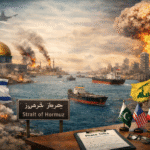
If what has been appearing in the American media is anything to go by—attributed to unnamed officials obviously—there are indeed elements of what Iran, and the United States could and should address. According to the details no one has officially seen, the plan would reportedly bring hostilities to an end to be followed by discussions to unblock the Strait of Hormuz, lifting sanctions and on Tehran’s nuclear plans.
It may all sound easy on a sheet of paper but every one of the issues talked about is a minefield to be walked across, especially the segment relating to defining the parameters of the Iranian nuclear program. According to one American media outlet, following a short term pause in Iran’s nuclear enrichment, the United States would begin lifting sanctions as well as unfreeze billions of dollars in frozen Iranian assets.
It is said in some quarters that it took the Obama administration close to two years to come up with the 2015 nuclear agreement with Iran that the First Trump administration walked away from in 2018. Opening the Hormuz that Iran had no business shutting or worse still planting mines in the narrow waters is something far more complicated than “drunken sailors firing at flying fish,” to quote President Lyndon Johnson sarcastic comment out of context to the firing on USS Maddox and USS Turner Joy in the Tonkin Gulf in 1964. And starting with President Trump nearly everyone in the administration will be bent out of shape if an argument is made that the present One Page Memorandum is a re-run of President Barack Obama’s ideas.
For a country that had maintained, especially since 2018, that its nuclear program is non-negotiable, credit is due to the negotiating team to even bring Tehran around to talk about such a sensitive subject. The 2015 accord known as Joint Comprehensive Plan of Action (JCPOA) had tough restrictions on Iran signed off by the Permanent Five along with Germany and under the aegis of the International Atomic Energy Agency.
Europeans and the IAEA pleaded with Washington not to walk away as Iran was in strict compliance of enrichment levels of 3.67 percent. Some eight years later Tehran has not only a stockpile of some 440 kilograms of Uranium but also an enrichment of 60 percent. Rolling back the enrichment, finding safehouses for the huge stock and the time frame is a herculean task, to say the least.
Tucked away in all this noise is the ongoing skepticism in Washington on who is going to sign the deal for Iran as questions of leadership has been actively debated in the recent past. In an anxiety to run through the assassinations list, somebody seems to have forgotten that a vacuum is often more dangerous than known hard-liners. This is what is exactly playing out in Tehran with neither Washington nor Tel Aviv sure of who is calling the shots—the clerics or the remaining Generals in the Islamic Revolutionary Guards who had always championed themselves as the torch bearers of the 1979 Revolution. Any agreement now runs the risk of being tossed out in the name of factional struggle.
Ahead of the critical visit of President Trump on May 14 and 15 —already postponed by a month because of the war in the Middle East—China has made it known that it is for a quick end to the hostilities as well as the urgent need to keep the Hormuz open. This would seem as a message to both sides, especially on the Hormuz which is of vital economic importance to Beijing. For now, China has been managing the Middle Eastern war and the closure of Hormuz by relying on domestic reserves and perhaps juggling routes of tankers; but Beijing and Tehran have vital economic stake to keep the oil flowing.
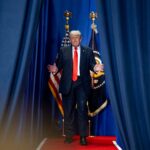
Oil and stock markets have undoubtedly kept close tab of political statements especially those coming out of Washington, in the present instance fluctuating depending on the tone and tenor of President Trump’s statements. Markets were up when the President said on Truth Social that the war would end and the Strait would reopen “assuming Iran agrees to give what has been agreed to, which is perhaps a big assumption.” At the same time there was a warning that failure of Tehran not agreeing to his terms “the bombing starts, and it will be, sadly, at a much higher level and intensity than it was before.”
The clock is ticking. Both the United States and Iran know, and they are fully aware of the political implications of playing out a waiting game. To Iran which perhaps believes that it can outlast the United States, there is the urgent reminder of a collapsing economy with citizens looking at empty market shelves. To the Trump administration, it is not just an issue of approval rating of a President nose diving but also in seeing retail prices of gas at pumps surging past levels not seen since 2022, which is not good when looking at Congressional Mid Terms down the line.
Disclaimer: The opinions and views expressed in this article/column are those of the author(s) and do not necessarily reflect the views or positions of South Asian Herald.