Join WhatsApp Channel

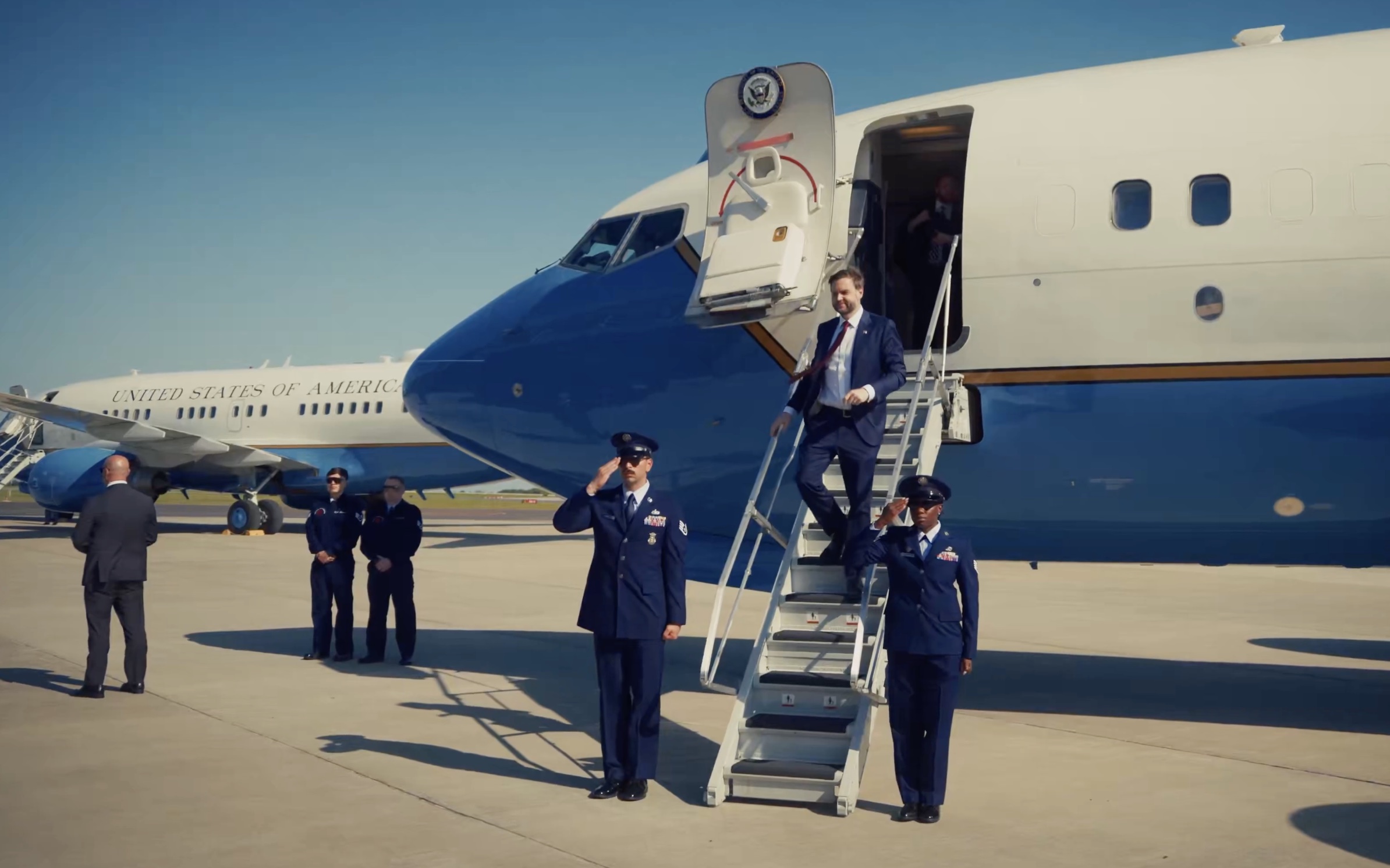
Air Force Two is still parked in Washington DC. Vice President, J.D. Vance who was all set to leave for Islamabad for his Round Two with Iranian interlocuters is now not sure when he is going to be green lighted. And in the interim all kinds of questions and speculations have started flying around in the media attributed to “sources” as well as conflicting messages on social media. The broad consensus: nobody really knows what is going on except perhaps the main actors or the principals involved in the process. The small comfort: no one is even sure why this madness started.
There is so much noise that there is now speculation of a power struggle or rift in Tehran between the Clerics and the Islamic Revolutionary Guard Corps (IRGC), holding the mantle of being the principal defender of the 1979 revolution that overthrew the Shah of Iran and brought in the Clerics.
The powers that be in Iran reject any notion of a power struggle but at least President Donald Trump is convinced of a process being played out. In a post on Truth Social, the President maintained that Iran was experiencing an intense internal conflict between hardliners who were “losing badly on the battlefield” and moderates who were “ not very moderate” but “gaining respect” going on to make the point that “Iran is having a very hard time figuring out who their leader is.”
The response from Tehran was along expected lines with its President Masoud Pezeshkian denying any internal divisions stressing “There are no hardliners or moderates in Iran. We are all Iranians and revolutionaries.” In fact, over the last eight weeks what has been said in many quarters is that the leadership hierarchy has been well established and has depth to withstand assassinations. Perhaps the disturbing dimension is that very little could be known of those in the deeper echelons and in the possibility of entrenched hardline elements of the theocracy. Analysts in the Middle East have been cautioning against any idea of superficial rifts or coming to conclusions of an edifice collapsing in the wake of sustained bombings and assassinations.
International relations has a long history of forgetting lessons of wars irrespective of their intensities. And in the case of Washington, it is not just President Trump but several of his predecessors stumbled into conflicts under a notion that “national interests” would have to be protected. In the case of Vietnam, at least six American Presidents kept a war going even after being warned in the early 1950s of the futility of taking on the North Vietnamese or the inability to distinguish between nationalism and communism. If the invasion of Afghanistan of 2001 was to rid the region of terrorists and wiping out the al Qaeda, historians are still looking at why the Bush administration wandered into Iraq in 2003. And in the case of Vietnam, there was a domestic context as well: no President wanted to go down in American history as the one who “lost” Vietnam.
The bogus argument that Saddam Hussein had weapons of mass destruction or that the Iraqi strongman was hand in glove with Osama bin Laden has been laughed out of court. Now the same question of the principal objectives is being asked of a Trump administration on Iran; and till this date no reasonable answer has been provided. If the issue was one of Iran’s nuclear weapons program, Washington is asked how it is in a better position to deal with the problem now than when it walked out of an agreement in 2018 that was patiently stitched together in 2015 by President Barack Obama with the blessing of Europe and the Permanent Five.
The Joint Comprehensive Plan of Action (JCPOA) of 2015 restricted Iran’s nuclear capabilities in exchange for sanctions relief with some of the toughest provisions set forth under the supervision of the International Atomic Energy Agency (IAEA). Even at the time of the First Trump administration walking away from the accord in 2018, the IAEA and Europeans were of the view that Tehran was in full and strict compliance. But the conservatives and the far right had always maintained that the United States gave away too much in return for nothing. Eight years later and after two massive bombing runs of Iranian nuclear sites in June 2025 and February/ March 2026, Washington after initially maintaining that Tehran’s nuclear program had been “obliterated” is once against looking at the same framework of the Obama administration: freeze, rollback, time frame on the one hand and lifting sanctions in a comprehensive fashion on the other. Iran is also asking for war reparations this time.
The only difference: negotiations are taking place in the midst of a war with both sides playing a cat and mouse game hoping to get past the other in a moment of weakness. But conflicts always show a darker side: that it is easy to start a mess but difficult to clean up. And the recent reference is that of President Vladimir Putin and his “Special Military Operation” against Ukraine that he started in February 2022 on the pretext of clearing out Nazis on the other side of the border. Five years into the war, there are still no signs of an end with the Ukrainian leader Volodymyr Zelensky now talking of the West of having abandoned Kyiv because of the conflict in the Middle East.
The problem with the current standoff in the Middle East is that both sides have to realize the futility of generating headlines by increasing the tempo of the rhetorics. Iran’s constant clamor of shutting down the Strait of Hormuz or threatening to lay mines in the narrow waterways does as much disservice as Washington saying it is ready for another round at a moment’s notice or Tel Aviv maintaining that it is only waiting for the go-ahead from the United States to bomb Iran back to the Stone Ages. The fine art of diplomacy is in talking, not threatening.
Disclaimer: The opinions and views expressed in this article/column are those of the author(s) and do not necessarily reflect the views or positions of South Asian Herald.