In a major move that has both strategic and diplomatic implications, Japan has decided to lift the ban on the export of lethal weapons for now restricting it to some 17 countries with which there is a defense technology transfer agreement.
That list would include the developed and the developing nations in the West and Asia Pacific. The transfer of combat equipment like combat aircrafts, destroyers, warships, combat drones and missiles cannot be done to nations that are in active conflict although “special circumstances” can be an exception to this rule; and each deal will have to be signed off by the country’s National Security Council.
On the one hand, the lifting of the ban on export of lethal hardware places Japan’s military industrial complex in international competition; and on the other it opens the doors for friends of Tokyo—like India– and those already in an alliance network to source first rate technology and gear. In the past years Japan had allowed only export of non-lethal equipment like radars or mines sweeping gear. In fact, in the ongoing war in the Middle East and in the mining of the Straits of Hormuz by Iran, there was the loud thinking of why Japan should not send in its mine-sweepers given the high-tech capability and availability.
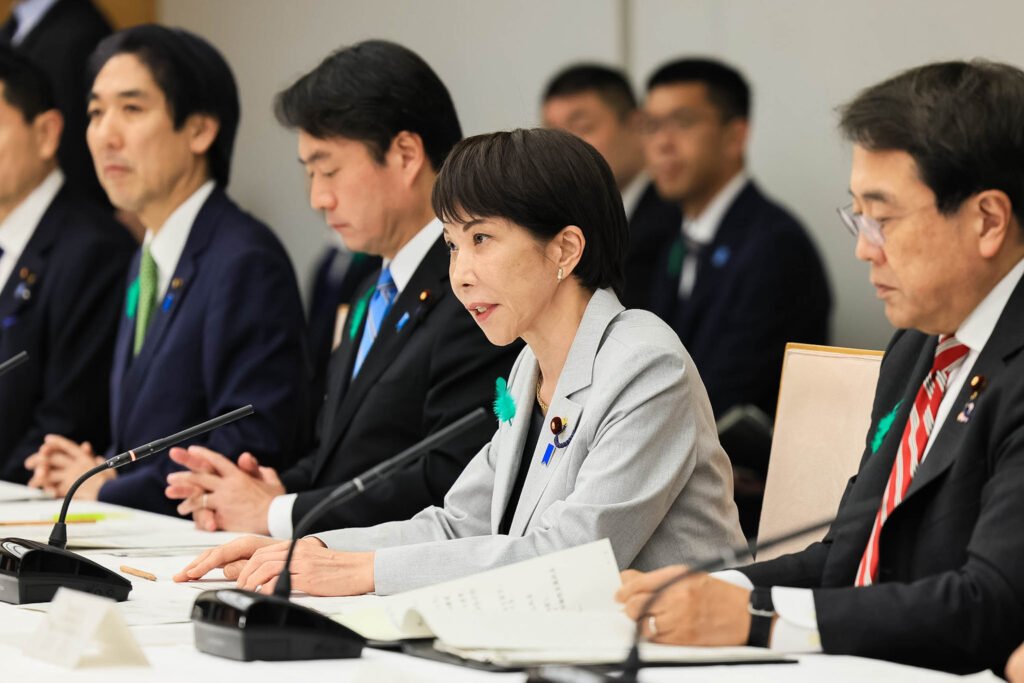
The decision to lift the ban on lethal material has been welcomed by countries like Australia and obviously dissed by someone like China that sees a threat to regional stability. But supporters of the Sanae Takaichi government will argue that it was precisely the belligerence of countries like China and North Korea that pushed Tokyo in this direction. For quite sometime now policy makers in Tokyo have openly voiced concern over the goings-on in the immediate neighborhood with the menacing presence of three nuclear powers of China, North Korea and Russia not exactly a sobering thought.
Advertisement
Starting with the “Three Principles on Arms Exports” in 1967 that saw a de facto ban on sale to communist nations, those under United Nations exclusion and in conflict, Japan shifted to a total prohibition on arms exports in 1976. But Prime Minister Shinzo Abe eased the rules of 1967 to include non-lethal categories of rescue and surveillance; and following Russia’s invasion of Ukraine in 2022, the exports list was expanded to include bullet-proof vests, helmets and hazmat suits with Ukraine in mind. The following year Tokyo allowed the export of lethal weapons domestically manufactured under foreign licenses.
The decision on export of lethal weapons must be seen in the context of current trends in Japan’s foreign policy that has been visible for the last several years and not necessarily confined to Prime Minister Takaichi. For quite some time Tokyo has been increasingly worried about the posturing of both Beijing and Pyongyang in the South China Seas and in and around the Sea of Japan. And it is not merely Chairman Kim Jong Un firing off a few missiles every now and then; but a concerted intimidation effort under one pretext or another. To be fair, Prime Minister Takaichi also had some inputs to heightening tensions with China when she recently remarked of Japan having to get involved should Beijing attack Taiwan.
The gradual loosening-up on arms exports is also seen in the context of a larger agenda of having to rid the Pacifist Constitution, Article 9 in particular was put in place in 1947 formally renouncing war as a sovereign right and prohibiting any offensive capabilities for its armed forces. But over a period of time the ruling Liberal Democratic Party and its allies were able to make subtle changes to the posture including abandoning the One percent of GDP spending on defense. Currently Japan spends 2 percent if its GDP for the military even as the pressure is on from Washington to push it up to 5 percent in line with the demand on the North Atlantic Treaty Organisation (NATO) alliance partners.
To the political right in Japan, Article 9 is an imposition and an anachronism that needs to be dispensed so that Japan can function as a “normal” nation. The Trump administration may not have much difficulty if Japan renounced Article 9—might even welcome it as long overdue—but the issue is not that simple in the domestic politics of Japan even if Prime Minster Takaichi may have a “super-majority” in Parliament and can get through a referendum on the issue.
Especially in the context of the war against Iran, sentiments in Japan are currently against any move to alter the pacifist constitution with a one liner: “Stop sucking up to America.” Obviously, an apprehension, especially amongst youth and women, that Tokyo might get involved in conflicts or dragged into global affairs where it has no national interests at stake.
Japan’s strategic message can neither be mis-read nor seen as ambiguous with nations in the Indo Pacific keen on expanding their relations with Tokyo eyeing defense as yet another mechanism. It is just not Australia looking at frigates, but also India, United States and the Quad partnership that stands to benefit from the heft of Japan’s inputs.
Countries like the Philippines who are already nervous on Beijing’s interventions in the South China Seas will be more drawn to Japan and its military wares. The transformation of Japan has not happened overnight; and it still has miles to go before making a complete break with the past. But the writing is on the wall that few can miss and hopefully to the benefit of the Indo Pacific.
Disclaimer: The opinions and views expressed in this article/column are those of the author(s) and do not necessarily reflect the views or positions of South Asian Herald.