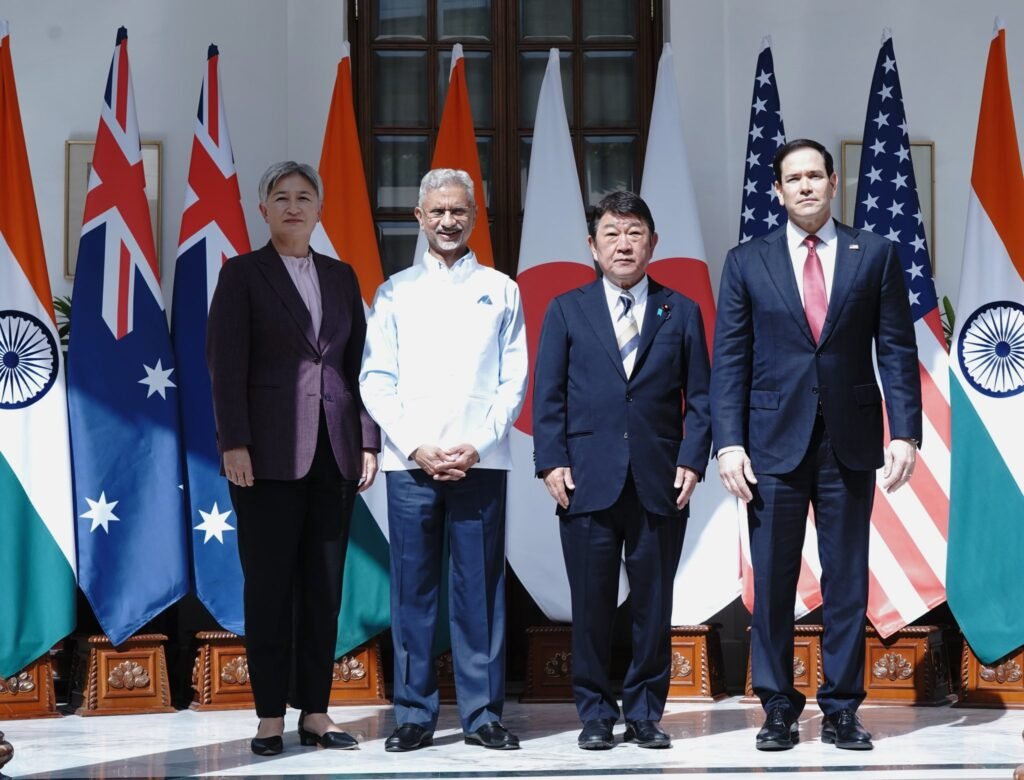
A new Quad Critical Minerals Framework aimed at strengthening supply chains for minerals essential to economic growth, advanced technologies, and regional security was unveiled by India, Australia, Japan, and the United States during the Quad Foreign Ministers’ Meeting in New Delhi on May 26, 2026.
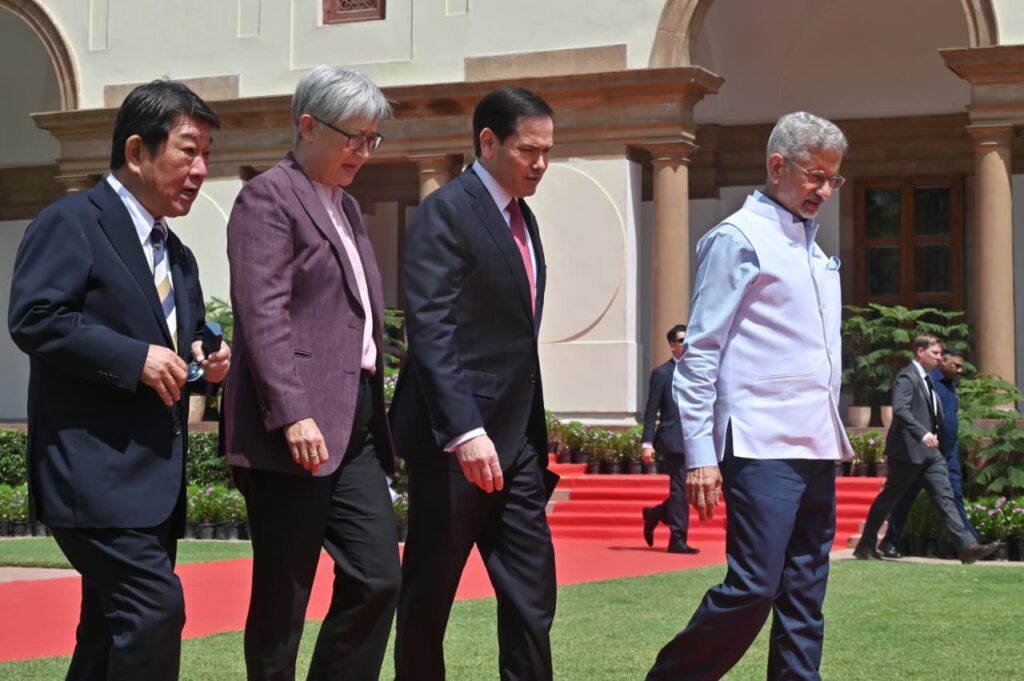
Held at Hyderabad House, the meeting was attended by India’s External Affairs Minister S. Jaishankar, Australian Foreign Minister Penny Wong, Japanese Foreign Minister Toshimitsu Motegi, and U.S. Secretary of State Marco Rubio.
Strengthening Critical Minerals Supply Chains
According to the framework, the Quad partners intend to mobilize up to US$20 billion in government and private sector support through new and existing efforts to strengthen critical minerals supply chains, including mining, processing, and recycling projects.
Advertisement
The framework states that the Quad partners will work together to use “economic policy tools and coordinated investment” to accelerate the development of “diversified and fair critical mineral markets” and support the supply of critical minerals considered crucial to economic growth, advanced technologies, and the resilience of industrial bases across the region.
The announcement formed part of a broader agenda spanning economic security, energy resilience, maritime cooperation, emerging technologies, infrastructure development, and regional stability across the Indo-Pacific.
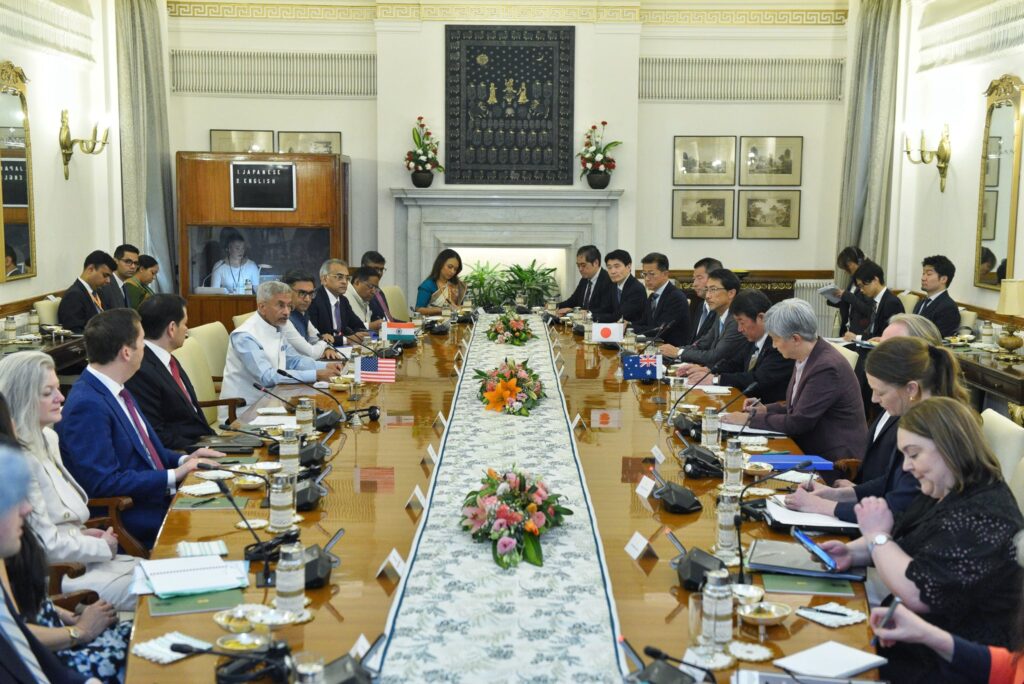
In their joint statement, the ministers expressed “grave concerns” over “economic coercion” and “non-market policies and practices,” including “arbitrary export restrictions, price manipulation, and disruptions” affecting critical minerals and global supply chains. They also underscored the importance of “diversified and reliable global supply chains” and the need to avoid reliance on any one country.
Under the framework, the Quad partners intend to identify strategic projects with a Quad nexus, including those located in Quad countries, operated by Quad-based companies, or supplying Quad markets. Support may include export credit financing, loans, guarantees, insurance, equity participation, subsidies, and other arrangements aimed at strengthening critical mineral supply chains.
The framework also places significant emphasis on recycling and recovery. Under the framework, the Quad partners intend to improve the recovery of critical minerals from e-waste and other scrap materials, encourage investment in recycling technologies, strengthen collection and recycling processes, and promote innovation in resource recovery.
The initiative is expected to be particularly significant for Australia and India. Australia is home to some of the world’s largest reserves of lithium, rare earths, and other strategic minerals, while India has accelerated efforts to strengthen manufacturing capabilities, clean energy deployment, and access to resources critical for emerging technologies.
Addressing the media following the meeting, Jaishankar said discussions had focused on strengthening “economic resilience,” enhancing production capacities, promoting trusted technologies, and building stronger supply chains.
“Our deliberations touched on the current energy and fertilizer availability as well as that of critical minerals and resources,” Jaishankar said, adding that the objective was to intensify cooperation among Quad partners while also assisting countries across the wider region.
Wong described secure and reliable supply chains as a “precondition to economic and strategic stability,” while U.S. Secretary of State Marco Rubio said the Quad was evolving into a “partnership of action” focused on delivering practical outcomes across the Indo-Pacific.
Energy, Maritime Security and Emerging Technologies
Beyond critical minerals, the ministers announced a new Quad Initiative on Indo-Pacific Energy Security aimed at strengthening regional energy resilience and supporting “open, well-functioning and stable energy markets” and “resilient and diversified supply chains.”
Maritime security featured prominently in the discussions. Reaffirming support for a “free and open Indo-Pacific,” the ministers said “peace, stability, and prosperity of the Indo-Pacific” hinges on upholding international law and the peaceful resolution of disputes.
The statement expressed opposition to “destabilizing or unilateral actions” that seek to change the status quo “by force or coercion” and voiced concern over “dangerous and coercive actions” in the East China Sea and South China Sea.
The ministers also reaffirmed support for “freedom of navigation and overflight,” “other lawful uses of the sea,” and “unimpeded commerce” in accordance with international law.
To strengthen regional maritime awareness, the Quad announced expanded cooperation through the Indo-Pacific Partnership for Maritime Domain Awareness and launched the Indo-Pacific Maritime Surveillance Collaboration initiative, which will enhance information sharing and maritime monitoring capabilities across the region.
The meeting also highlighted cooperation on infrastructure and connectivity. The Quad announced plans to work with Fiji on port infrastructure development, marking the first joint Quad port project, and highlighted ongoing efforts to ensure all Pacific Islands Forum countries are connected through undersea cable systems by 2026.
Emerging technologies were another major focus of the meeting. The Quad partners reaffirmed cooperation on artificial intelligence, 5G and 6G technologies, semiconductors, trusted networks, digital standards, and advanced manufacturing, while welcoming efforts to deepen collaboration across the technology ecosystem, from critical minerals and manufacturing to computing infrastructure and secure digital networks.
Commitment to Regional Security and Counterterrorism
The ministers also discussed North Korea’s missile and nuclear programs, cyber threats, online scam centers operating across Southeast Asia, humanitarian assistance, disaster response cooperation, health security, and the ongoing conflict in Myanmar.
In a joint statement, the ministers “unequivocally condemn terrorism in all its forms and manifestations,” including the attacks in Pahalgam, India, and Bondi Beach, Australia. They called for “decisive and sustained international efforts to combat terrorism” and reaffirmed their commitment to working with regional and international partners to strengthen capacity to prevent, detect, and respond to evolving threats.
Addressing the media after the meeting, Jaishankar said there must be “zero tolerance for terrorism” and emphasized that “nations subject to terrorist attacks have the right to defend themselves.”
The ministers concluded by reaffirming their commitment to a “free and open Indo-Pacific” and looked ahead to future engagements aimed at advancing “peace, stability, and prosperity” across the region.