May is one of the hottest months of the year in northern India.
Keeping pace with the scorching temperatures are diplomatic activities in New Delhi.
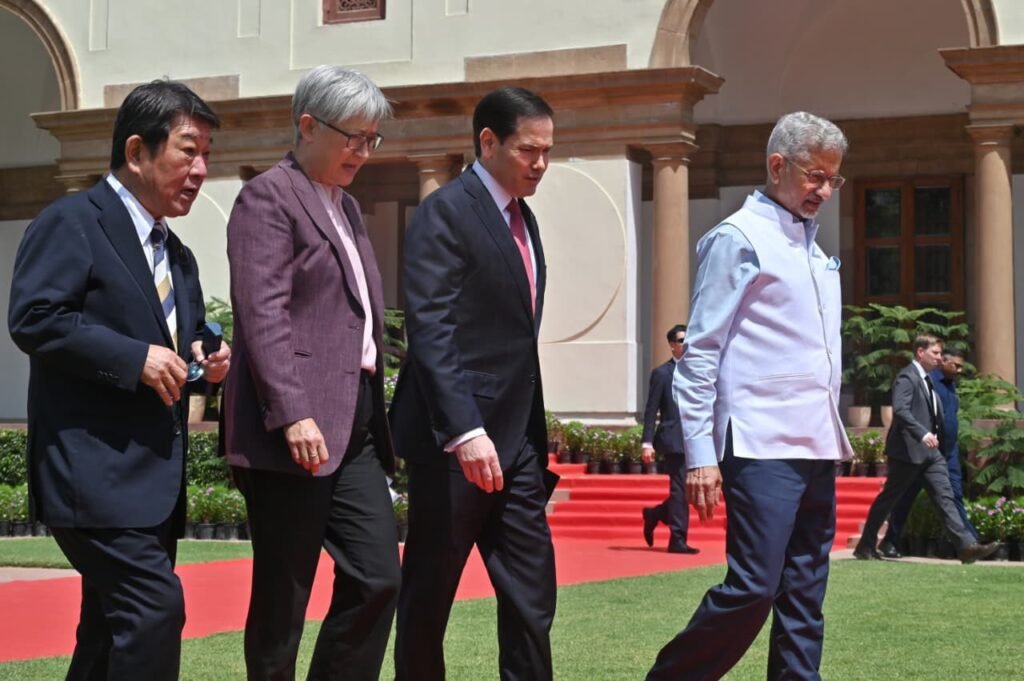
Recently, India played host to US Secretary of State Marco Rubio. He was in India for four days – no less, the punishing heat notwithstanding. Another visitor expected is also from the Western Hemisphere – Delcy Rodriguez, the acting President of Venezuela.
But back to the Rubio visit, which took place a year and four months into US President Donald Trump’s second term in office.
Advertisement
From the Indian perspective, there is a world of difference between Trump’s first and second terms – in all spheres.
The 50% tariffs that included a 25% punitive levy for buying Russian oil, characterizing China as an economic rather than strategic competitor, Trump’s sudden embrace of Pakistan, getting called a “dead economy” by Trump and “hellhole” by a supporter, and near abandonment of the Quad are all part of the shocking changes India has had to live through. The relationship is seen as being at its most stressed in the past 25 years.
The Rubio visit was aimed at steadying the bilateral relationship and resuscitating the Quad. The Quad was seen as an instrument to balance China’s expanding regional footprint while promoting technological coordination, maritime security and supply-chain resilience.
On May 26, foreign ministers of Australia, Japan, India and the US met in New Delhi for the third Quad meeting since Trump took office in January 2025. India was to host a Quad summit of leaders in New Delhi last year. But disagreements with Trump on trade and the cooling of ties between Prime Minister Narendra Modi and Trump as the former declined to nominate the latter for a Nobel Peace Prize for brokering peace with Pakistan during a military conflict in May 2025 put paid to that.
Trump’s National Security Strategy, unveiled last year, spoke of “setting conditions for a balance of power in the Indo-Pacific that allows all of us – the United States, China, and others in the region – to enjoy a decent peace.” No longer is China framed as the “pacing threat” or strategic competitor.
So, will the Quad meeting result in anything substantial? Or will Chinese Foreign Minister Wang Yi’s prediction that the Quad will dissipate like “sea foam” come true?
During Trump’s May 14-15 Beijing visit, Chinese President Xi Jinping dug into Greek military history to showcase the importance of managing ties between a dominant power (read the US) and a rapidly rising one (i.e., China). The inference: — a conflict could arise if the US attempts to stymie China’s rise. Not subtly, Xi also drew the red line on Taiwan, stating that if it is “handled properly” by the US, the US-China ties “will enjoy overall stability.”
Xi’s reference to “constructive strategic stability” to guide US-China relations over the next three years (Trump’s remaining term in office) and “beyond” was also noteworthy. Xi seems to be seeking stability with the US.
In an increasingly transactional world, largely created by Trump, will the US do anything substantive with its partner countries in the Quad that will upset the delicate equilibrium set with China? Especially when Trump needs Xi’s help with Iran and securing rare earths supplies? My guess – Quad will exist at the foreign minister level, occupying less mind space than before till the end of Trump’s term. After that, who knows?
Disclaimer: The opinions and views expressed in this article/column are those of the author(s) and do not necessarily reflect the views or positions of South Asian Herald.