Join WhatsApp Channel

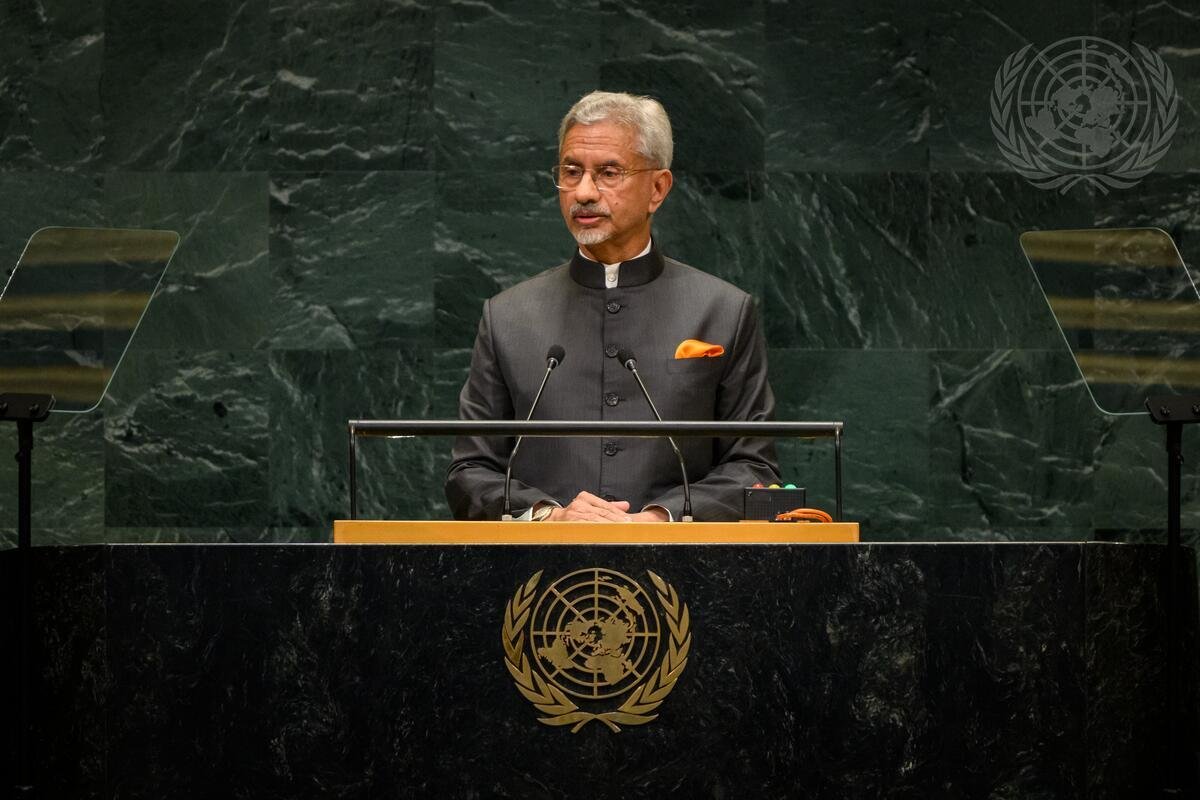
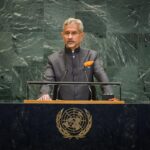
United Nations, New York: India’s External Affairs Minister S. Jaishankar said terrorism remains a “persistent threat” to peace, warning that state-sponsored violence carried out across borders poses a direct challenge to the global order.
“Governments indulging in such practices must be held accountable. There must be no dilution in our zero-tolerance approach towards terrorism. Its financial aspects, in particular, should be exposed and countered,” Jaishankar said in his address to the 81st session of the United Nations General Assembly (UNGA) in New York on September 26.
Without naming Pakistan, Jaishankar said a “serial practitioner” of terrorism had misrepresented facts before the General Assembly on September 25, the day before his address. He said the country had advanced arguments intended to normalize terrorism and shield itself from the consequences.
“Our right to defend ourselves against terrorism will be exercised,” he said. “Mr. President, friendship and goodwill cannot coexist with terrorism. And understandings premised on that will naturally be called into question. It is for the perpetrator of terrorism to mend its ways.”
The Minister placed those remarks within a broader appeal for international peace and security as the United Nations enters its ninth decade. He recalled that the organization was founded to maintain peace, enable collective action and strengthen friendly relations among nations.
Yet conflicts and confrontations continue to dominate the international agenda, he said. The failure to maintain peace is undermining security while slowing development, and the effects of war extend well beyond the countries directly involved. Nations far from conflict zones can bear substantial costs despite having little influence over the decisions that produce them.
“This Assembly must face up to the true state of affairs,” Jaishankar said.
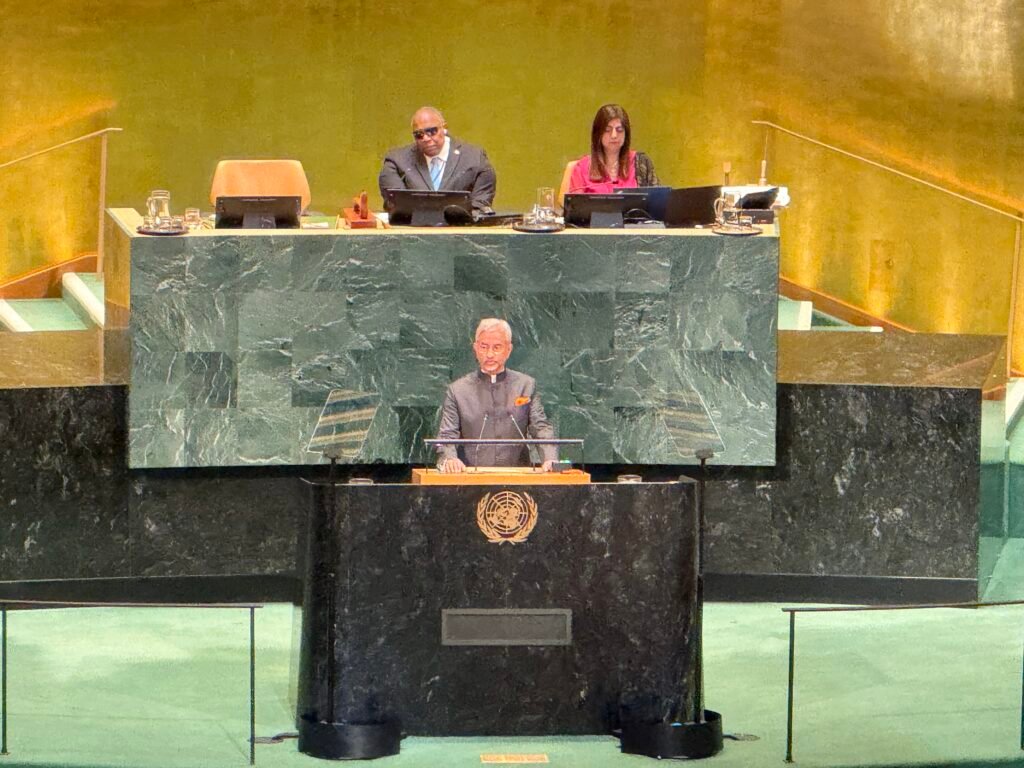
The world is moving toward a more multipolar order, Jaishankar said, as arrangements established after 1945 give way to new realities. Adjusting to those changes will be difficult, and some of today’s tensions reflect that process, he argued. He also acknowledged UN Secretary-General António Guterres, who is nearing the end of a decade in the role.
In a more diverse international system, peace will depend on civil discussion, wider consultation and transparent decisions, he said. Large parts of humanity should have a meaningful role in those decisions, he added, making the case for reform of multilateral institutions more urgent.
He cited the conflict in the Gulf as a source of concern that has added to an already difficult global situation. India remains troubled by the continuing hostilities, he said, particularly attacks affecting commercial vessels and the people who work aboard them.
“The targeting of commercial shipping and seafarers transiting international waterways is simply unacceptable,” he said. “India calls upon all parties to exercise restraint, de-escalate tensions, ensure protection of civilians, and uninterrupted flow of energy and commerce.”
India supports current efforts to bring about peace, Jaishankar said, while urging attention to the safety of seafarers and the continued supply of grain and energy. India is prepared to help ease those pressures, particularly where food and energy security are at stake, he added.
Turning to Ukraine, Jaishankar said the war, now in its fifth year, was “equally concerning.” He referred to Prime Minister Narendra Modi’s call for an “end to war” after what he described as an “endless war.”
On West Asia, Jaishankar reiterated India’s support for a two-state solution and said the country was contributing to humanitarian assistance for Palestinians. “We strongly believe that a durable and lasting peace requires a two-state solution. In the meanwhile, India is contributing to humanitarian assistance and relief efforts for the Palestinian people,” he said.
He argued that peace requires more than an end to active fighting. Persistent threats and pressure, he said, leave countries vulnerable to a further crisis. Stability, security and predictability are therefore essential conditions for peace.
Jaishankar said those conditions were being weakened by what he called the “weaponization of everything.” He pointed to restrictions on market access, disruptions to supply chains, the withholding of technology and the use of resources and connectivity as sources of pressure.
Such practices, he said, have encouraged countries to reduce risks and diversify their partnerships, even as trust between them has eroded.
The consequences are especially severe for the Global South, which he said faces a “4F crisis” involving food, fuel, fertilizer and finance. He cited the combined pressures of a strong El Niño, fertilizer shortages and obstacles to grain shipments. Progress toward the Sustainable Development Goals is also under strain, he said.
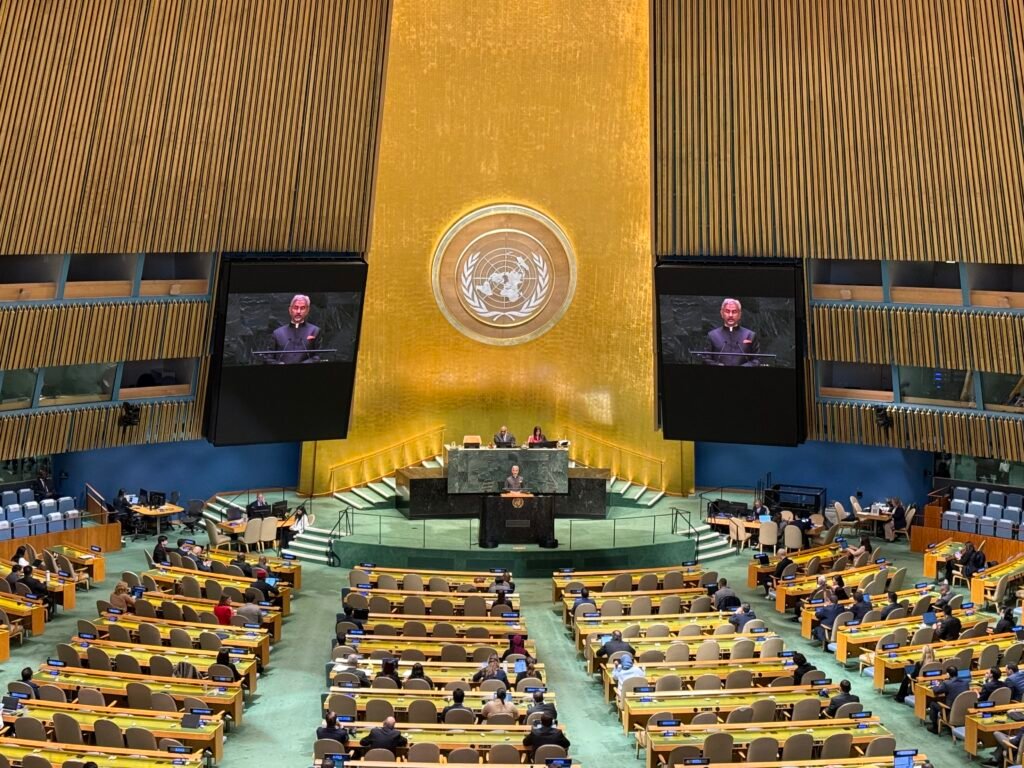
Jaishankar argued that nonmarket practices and barriers to market access were limiting the Global South’s ability to industrialize. Technology, which had offered the promise of greater opportunity, has also become a source of concern, he said, warning that misuse of artificial intelligence can reinforce bias and diminish mutual respect.
Against that backdrop, he said, every UN member should consider what it can contribute. India’s growth and development have improved the prospects of one-sixth of humanity, he said, pointing to gains in health, nutrition, education, drinking water, electricity, roads and housing. Progress on that scale also contributes to global development goals, he argued.
Jaishankar said India’s digital public infrastructure has strengthened governance and helped deliver social and economic benefits. He also cited expanding physical infrastructure, improvements in the ease of doing business and daily life, a growing startup culture and programs focused on specific sectors as contributors to the country’s economic development.
India sees an opportunity to share those experiences with other countries, he said. Its ties with the Global South have led it to respond to partners’ needs through development work spanning infrastructure, manufacturing, agriculture, information technology and training.
According to Jaishankar, India has undertaken 600 major development projects in 78 countries. He presented those projects as evidence of a commitment to cooperation shaped by the needs of partner nations.
Climate initiatives have formed a significant part of that work, he said. India has supported projects involving clean energy, clean water and sustainable agriculture, while sharing technology and practices developed through its own experience. African countries and small island developing states have been important partners, he added.
Jaishankar also pointed to the International Solar Alliance, the Coalition for Disaster Resilient Infrastructure and the Global Biofuels Alliance as initiatives through which India is working with other countries on energy and climate challenges.
He said India has sent medical supplies to conflict zones, places affected by epidemics and areas struck by natural disasters. The country has also responded to the Nepal flash floods and the Venezuela earthquake, he said. Beyond emergency aid, he cited limb-fitting camps, support for food and medicine supplies, assistance with energy and fertilizer needs, and programs intended to create livelihoods.
India’s training and knowledge-sharing programs have made a difference across the Global South, particularly in Africa, Jaishankar said. He pledged that the country would continue contributing to those efforts.
The Minister also emphasized India’s role in UN peacekeeping. Indian personnel currently serve in nine of the organization’s 11 peacekeeping missions, he said, adding that they have continued their work under difficult conditions. He highlighted a UN award given to an Indian woman combat helicopter pilot, who was named the 2025 Military Gender Advocate of the Year.
Returning to maritime security, Jaishankar said attacks on commercial ships and seafarers have occurred in the Gulf and along routes stretching from the Red Sea to the Black Sea. Indian nationals, along with seafarers from other countries, have lost their lives.
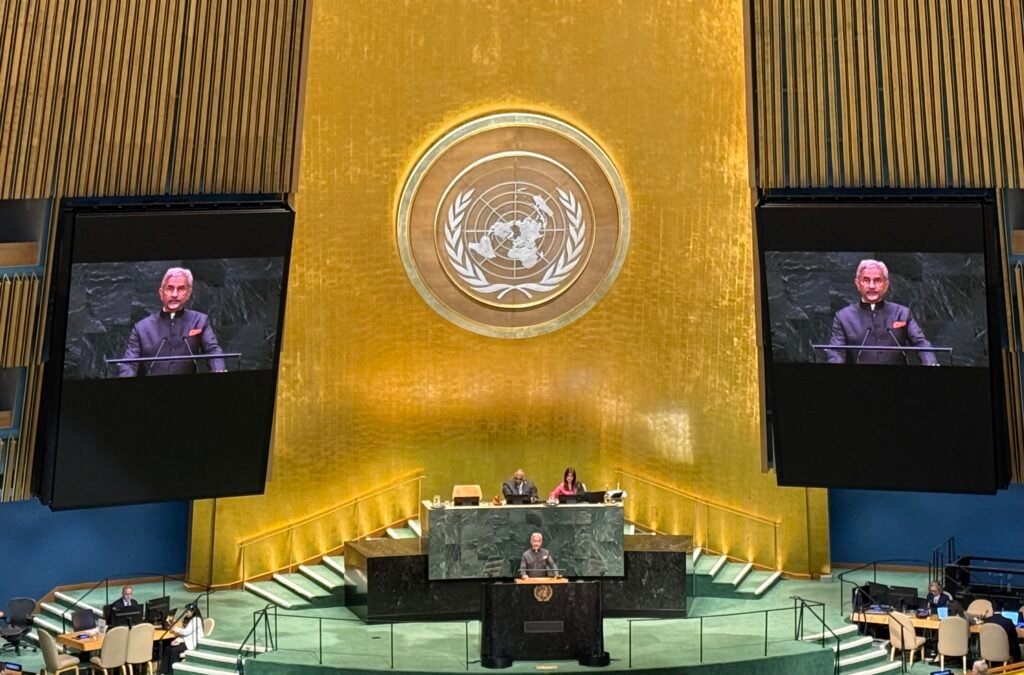
He said India had joined Liberia and 23 other partners in an initiative to draw international attention to the attacks. Protecting vessels and crews requires countries to observe international law, he said.
“The safety and security of shipping and seafarers” must never be compromised, Jaishankar told the assembly.
Artificial intelligence was another focus of the address. Jaishankar said India hosted the AI Impact Summit in February to bring together people working in the field. India views AI as a means to expand opportunity, strengthen economies and address problems affecting large populations, he said.
At the same time, he argued that each country should be able to develop its own AI models and determine how to use them in keeping with its national priorities. India intends to make AI part of its cooperation with countries across the Global South.
Jaishankar linked international cooperation on technology to a broader call for mutual respect. Countries should give serious consideration to one another’s interests and viewpoints, he said, while encouraging greater understanding of different cultures, histories and traditions.
Economic power is shifting, and changes in political influence are also apparent, he said. Those developments should be accompanied by what he described as “cultural rebalancing,” allowing a wider range of societies to shape international discussions.
India values his contributions to multilateral cooperation, he said, particularly his support for Mission LiFE, an Indian initiative promoting environmentally conscious choices.
Closing his address, Jaishankar urged delegations to leave the General Debate with a stronger commitment to peace, development and prosperity. That commitment, he said, cannot simply be imposed or negotiated; it must shape how countries approach one another.
He ended by invoking words attributed to Mahatma Gandhi and displayed outside the UN building: “There is no way to peace; peace is the way.”
Related posts:
 At UNGA, India Calls for Global Action Against Terrorism, UN Reform, and Greater Cooperation
 ‘Pakistan’s cross-border terrorism policy will never succeed’ warns India’s Foreign Minister S Jaishankar at UNGA
 India’s Foreign Minister Launches 2028-29 UNSC Campaign at United Nations
 Japan, India Pursue Concrete Cooperation in Indo-Pacific: Prime Minister Takaichi