Join WhatsApp Channel

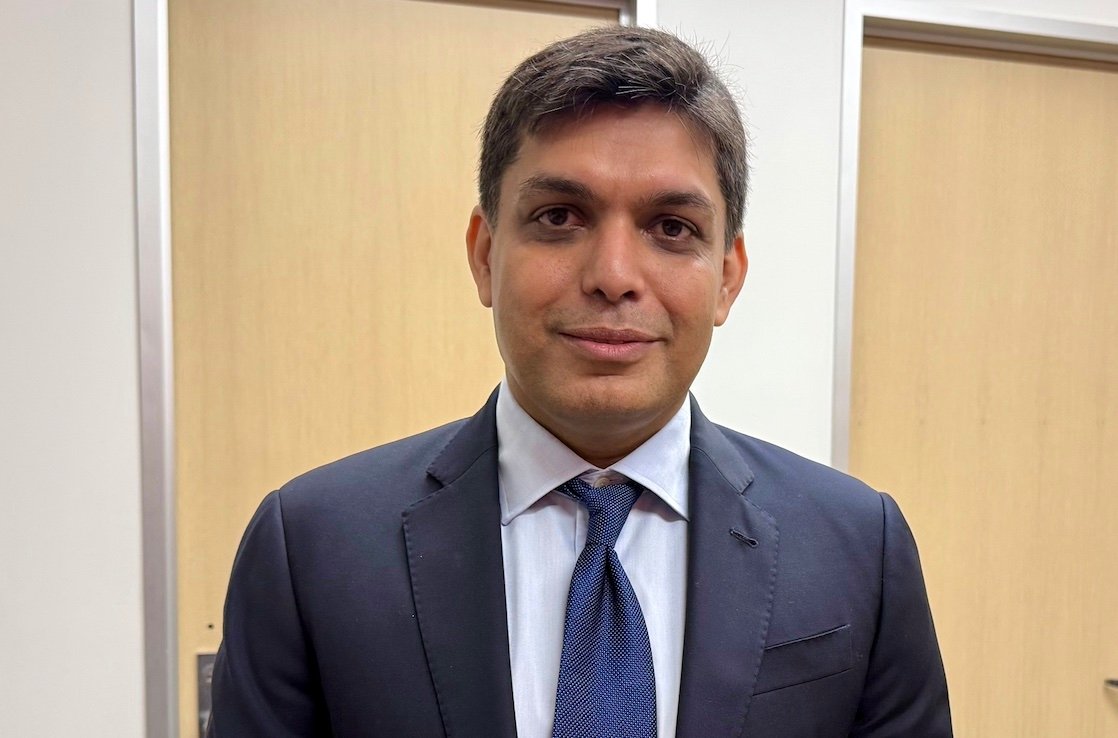
Seattle, Washington: Microsoft’s Vice President of Frontier Tuning and Chief Technology Officer for Agri-Food, Ranveer Chandra, said India has the potential to become a global leader in agricultural Artificial Intelligence (AI) application for smallholder farmers worldwide.
While India should continue building its own AI models, countries such as the United States and China remain ahead in foundational AI technologies, according to Chandra, who has worked in the field for more than a decade. India’s strongest opportunity, he said, may lie in adapting existing models to address the country’s agricultural needs. He underscored that closer collaboration between India and the United States on agricultural AI could be vital.
“The place where India can become a global leader is in the applications of AI,” Chandra told South Asian Herald during an exclusive interview at the Consulate General of India in Seattle on September 17.
AI-powered tools could reduce the uncertainty farmers face when deciding when to plant, harvest or apply agricultural chemicals. Rather than replacing farmers’ experience, the technology could complement their knowledge with timely, data-driven guidance.
“Imagine if every farmer in India is empowered to use AI to reduce the guesswork in their life,” Chandra said, envisioning “a copilot for every farmer.”
He explained that such a system would go beyond a chatbot that merely answers questions. It could guide farmers through the decision-making process and help them complete specific tasks. Achieving that goal, however, would require India to further train and adapt existing AI models for its crops, regions and agricultural practices.
Citing a potato farming foundational model as an example, Chandra said specialized systems could be created by tailoring existing technologies to Indian conditions.
“Taking existing models and adapting them for India, for India’s crops, regions and farmers, will be the biggest unlock,” he said.
Chandra also praised the “Ideas4India: Indian American Tech CEOs Forum | Unlocking the Tech Dividend,” held at the Indian Consulate in Seattle on September 17. He said the event brought together leaders from the region and India to deepen technological collaboration.
He credited the Consulate General in Seattle and Consul General Prakash Gupta with helping strengthen connections between India and the Seattle region.
“We get more visibility. We get an opportunity to participate and talk about what we are doing to create new bonds. I have been very lucky in the last three years to create new connections because of this work. And I think this event makes it even richer,” he said.
As AI continues to advance rapidly, Chandra said it is important to consider how the technology can be deployed at scale and benefit large populations. Cooperation between India and the United States will be critical to that effort, he added.
Instead of developing technologies in isolation, the two countries should collaborate closely as new tools and use cases emerge, he said. Such cooperation has become increasingly important amid the rapid growth of AI.
Chandra emphasized that AI should be developed to produce tangible benefits rather than simply advance the technology itself. He said many Indian American technology leaders understand the challenges facing India and are committed to using innovation to improve lives.
“We all have seen it. My family is from Bihar. I have seen extreme poverty, and that’s the thing that drives me and what I tell my leadership as well. Whatever the work we are doing in AI, we might be operating at the frontier, but it is not of any use unless it touches the people who really need it around the world,” he added.
Discussing India’s progress in AI, Chandra said the country is adopting the technology rapidly. He echoed Indian Ambassador to the United States Vinay Kwatra’s observation that Indians are becoming major consumers of AI, even if the country is not yet at the forefront of developing foundational models.
While AI use is expanding across India, Chandra said questions remain about whether available technologies are designed to address the country’s specific needs and deliver meaningful outcomes. The priority should be to solve problems faced by people in India and help individuals across different professions become more productive, he said.
Chandra pointed to professions in which AI is already improving productivity. “Right now, my agents are writing code while I’m here,” he said.
The larger challenge, he added, is determining what similarly capable AI systems could mean for a farmer or someone working in a hospital or dispensary.
Once such technology becomes widely available, Chandra said, it could open new possibilities and contribute to substantial economic growth. Referring to remarks by Microsoft Chairman and CEO Satya Nadella, he said widespread access to AI could help countries transition from developing to developed economies.
Chandra also recalled attending the India AI Impact Summit in February, describing the gathering as “awesome.” He said the participation of decision-makers from developed and developing countries helped create a more inclusive global conversation about AI.
“It just leveled the playing field, and India played a leader’s role. That was my biggest thing. Agriculture was at front and center. I loved that too,” he said, adding that India should invest heavily in agricultural AI because of its large farming population.
Addressing India’s goal of becoming a developed nation by 2047, Chandra said “AI could be the enabler.” If the country makes the right decisions now and uses the technology to empower people across society, he said, AI could significantly increase productivity, accelerate economic growth and support India’s development ambitions.