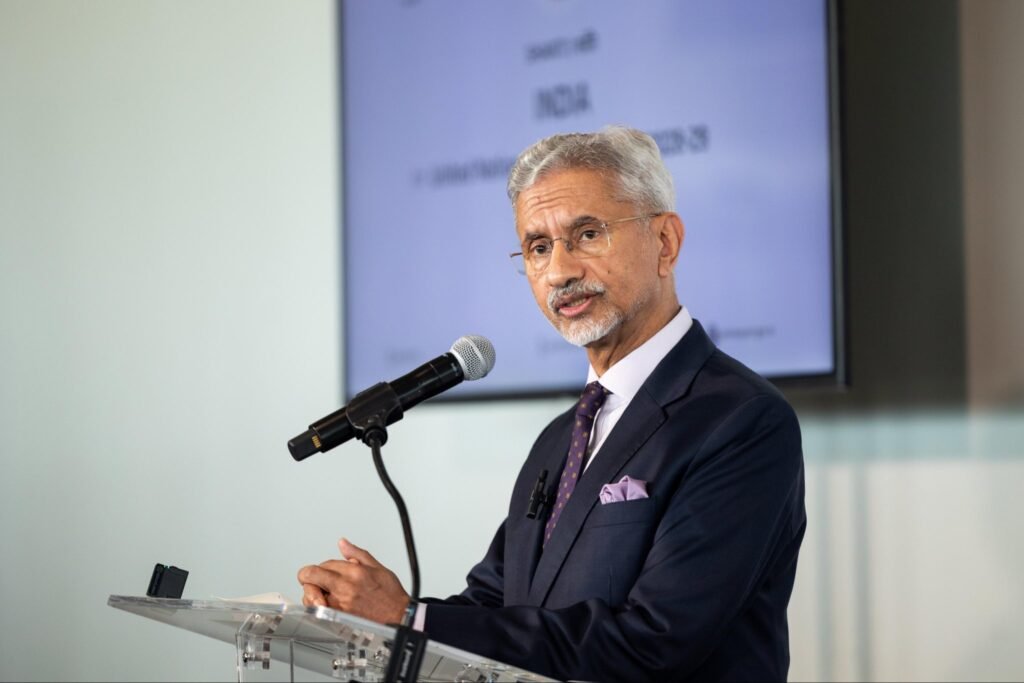
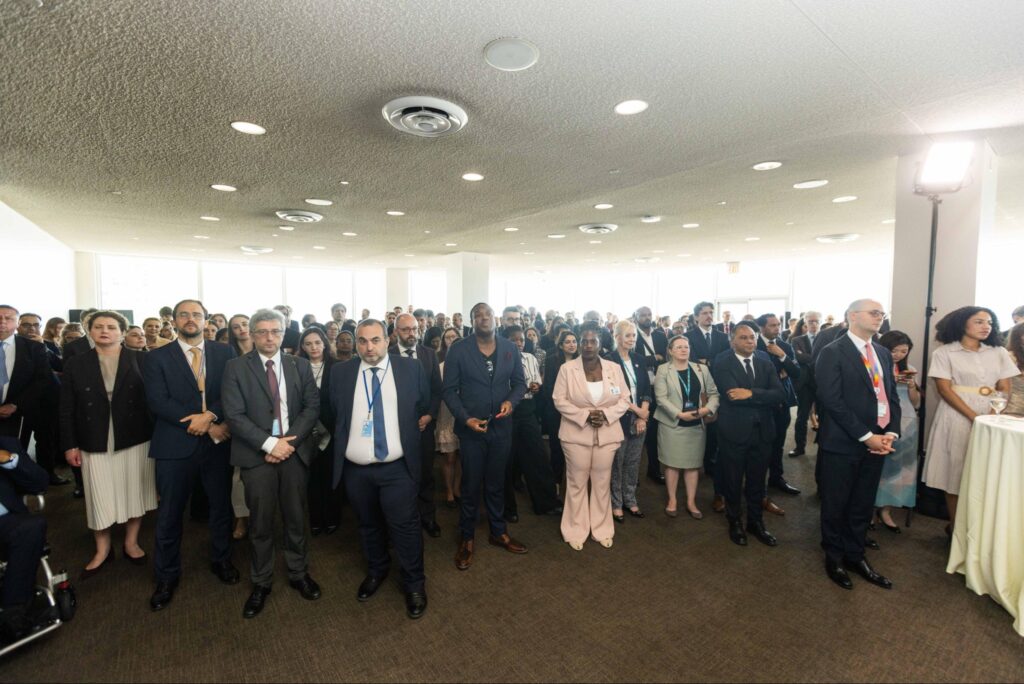
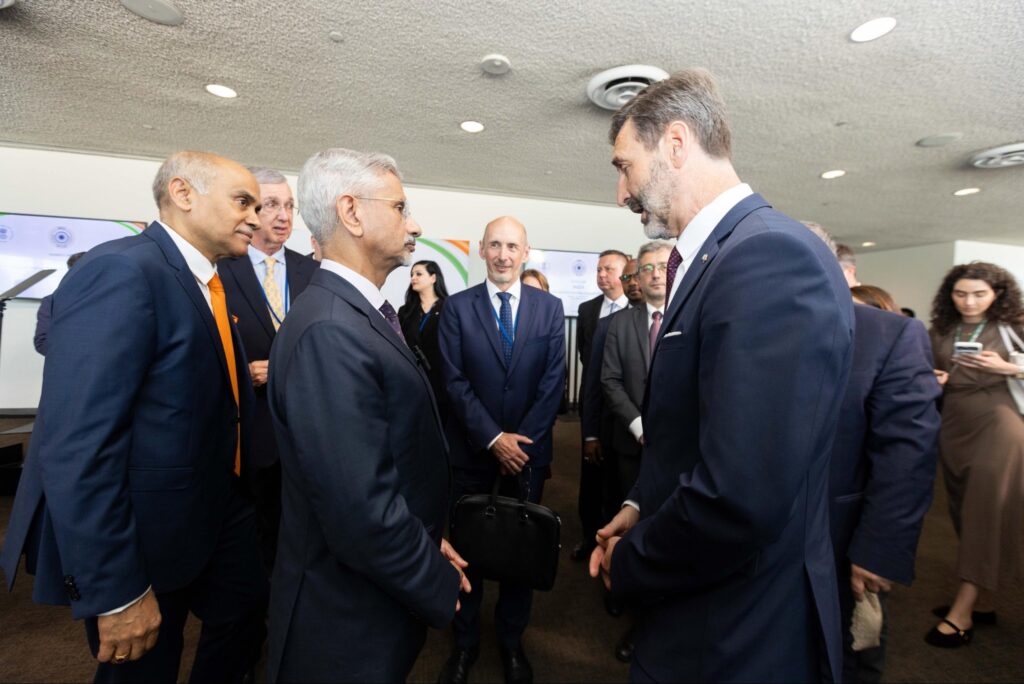
India has formally launched its campaign for a non-permanent seat on the United Nations Security Council (UNSC) for the 2028-29 term, with External Affairs Minister S. Jaishankar outlining New Delhi’s vision for a more representative, secure, and equitable global order during an event at the United Nations on July 13, 2026.
Addressing diplomats and member states, Jaishankar said India’s candidacy comes at a time when the world faces an unprecedented contradiction.
“We do so at a time when the world is facing a profound paradox. Never before has the world possessed such immense capabilities to advance human welfare at this scale,” he pointed out. “At the same time, we are witnessing levels of conflict, violence and instability that threaten even those who may be far away.”
He said the United Nations must take the lead in addressing these challenges, with the Security Council playing a central role. Against that backdrop, he said, elections to the Council carry particular significance.
Advertisement
Jaishankar said member states would naturally seek to understand what India would contribute as a candidate.
“One part of that is our vision of the priorities that the world and the United Nations must address. The other is a track record that enables the international community to make its own judgment.”
He said India’s priorities center on building a secure, peaceful, and equitable world that reflects the aspirations of the Global South and addresses contemporary global challenges.
Among those priorities are ensuring greater representation for the Global South, preparing UN peacekeeping missions for emerging threats, reforming multilateral institutions to reflect present-day realities, harnessing technology while preventing its misuse, safeguarding maritime security, combating terrorism by disrupting its financial and logistical networks, and advancing climate action alongside climate justice and sustainable development.
According to Jaishankar, these priorities are interconnected and reflect the shared interests of the international community.
“Peace, progress and prosperity” cannot be sustained in isolation, he said, noting that nations are increasingly interconnected through supply chains, technology, and communications. He added that global progress requires respect for international norms, trust, integrity, and a rules-based order.
He described India’s approach as SHANTI, an acronym for Securing Holistic Advancement through Norms, Trust and Integrity, while noting that “Shanti” also means peace in several Indian languages.
Jaishankar said India’s vision is rooted in the belief that peace is strengthened through participation rather than domination. He emphasized that the United Nations is founded on sovereign equality and that globally significant decisions should emerge through broad consultation.
He highlighted India’s efforts to amplify the voice of developing countries through the Voice of Global South Summits and noted that during India’s G20 Presidency, the African Union became a permanent member of the grouping.
“Our development partnership spans more than 100 member states across Asia, Africa, the Pacific, Latin America and the Caribbean,” he said, adding that India has also drawn global attention to the impact of major conflicts on food, fuel, and fertilizer security.
Jaishankar reiterated India’s support for reforming global governance.
“We are all aware that global governance has to reform in order to transform,” he said, adding that multilateralism must become more democratic, representative, and effective. He said countries like India, with a history of consensus building and bridging differences, can contribute meaningfully to that effort.
Highlighting India’s peacekeeping record, Jaishankar said the country has deployed nearly 300,000 personnel across about 50 UN peacekeeping missions and currently has approximately 4,300 personnel serving in 10 of the UN’s 11 active operations, most of them in Africa.
He said future peacekeeping missions must be better equipped, technologically enabled, realistically mandated, and focused on clearly defined objectives. He also reaffirmed India’s support for the Women, Peace and Security agenda and the role of women peacekeepers.
Turning to artificial intelligence, Jaishankar said India supports a human-centered approach to AI governance.
He introduced MANAV, an acronym for Moral and ethical systems, Accountable governance, National sovereignty, Accessible and inclusive, and Valid and legitimate systems, saying it reflects India’s vision for responsible AI development. He added that India’s recent AI Impact Summit was guided by the principle of “AI for all.”
He also stressed the need to address the misuse of AI and its potential threats to international peace and security.
On maritime security, Jaishankar underscored the importance of protecting global supply chains and maritime commons through adherence to international law, particularly the UN Convention on the Law of the Sea (UNCLOS). He called for greater international cooperation to combat piracy, protect seafarers, strengthen humanitarian assistance and disaster relief operations, and build maritime capacity.
He noted that India’s International Fusion Centre supports maritime cooperation across the Indian Ocean region and said New Delhi would work to ensure these issues receive greater attention within the Security Council.
Jaishankar also identified terrorism as one of the world’s most persistent security challenges.
“For far too long, our efforts have concentrated on countering its symptoms. But that would only give us limited results unless we are focused on constricting its resource base,” he said.
The Foreign Minister added that India would prioritize efforts to combat terrorist financing and support objective, evidence-based proposals for designating terrorist organizations.
Jaishankar concluded by citing examples of India’s international engagement to demonstrate its commitment to the principle of “Vasudhaiva Kutumbakam” or “The World Is One Family.”
He highlighted India’s contributions to maritime security, UN peacekeeping, disaster relief, humanitarian assistance, support for Palestine, emergency response to natural disasters, global health initiatives, food security, energy and fertilizer supplies, and development projects across 79 countries.
Jaishankar said these efforts reflect India’s commitment to dialogue, diplomacy, and supporting the Global South, adding that India’s experience would strengthen decision-making if elected to the UN Security Council.