Join WhatsApp Channel

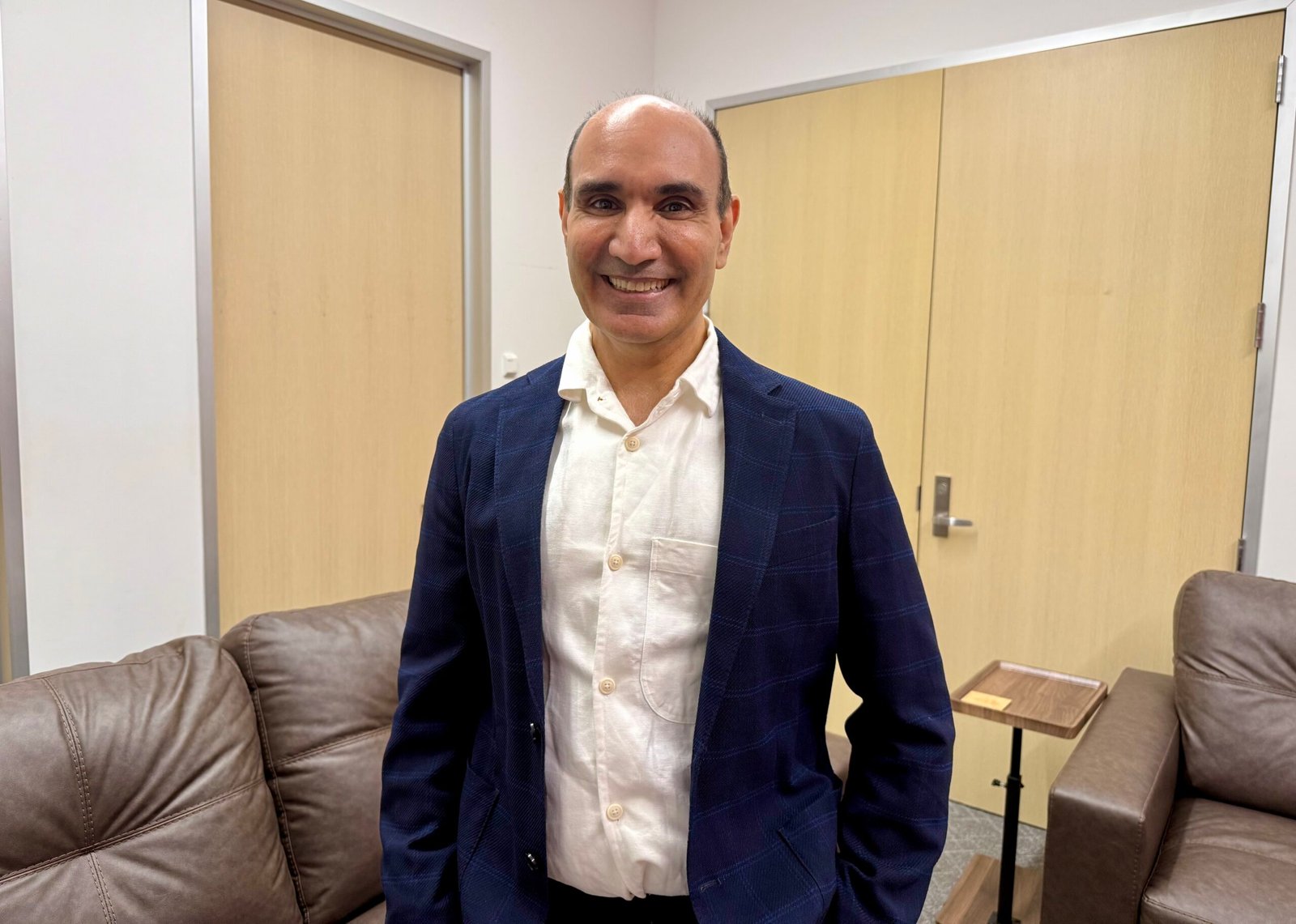
President of Microsoft Azure Core, Girish Bablani has said India’s large and diverse population is one of its greatest strengths in developing and deploying technology. With more than a billion potential users spanning numerous languages and socioeconomic groups, the country has an opportunity to build affordable solutions tailored to a wide range of needs.
Drawing comparisons with Aadhaar and other large-scale identification initiatives, Bablani said India should prioritize reducing costs and developing technology suited to its domestic requirements.
“Rather than pursuing highly sophisticated systems for every application, entrepreneurs could create targeted models that work effectively for smaller, India-specific use cases,” Bablani told South Asian Herald during an exclusive interview on September 17 at the Consulate General of India in Seattle.
He highlighted artificial intelligence’s potential to accelerate India’s development by expanding access to education, health care, agriculture and other essential services.
Asked about the significance of “Ideas4India: Indian American Tech CEOs Forum | Unlocking the Tech Dividend,” held in Seattle on September 17, Bablani said such gatherings could strengthen connections between the region’s technology community and India.
“I think an event like this really kind of helps bring the tech community together here,” Bablani said, noting that the Seattle region is home to major companies such as Amazon, Microsoft and Starbucks, along with a significant concentration of Indian technology professionals.
“I think an event like this kind of helps unlock the channel,” he said.
According to Bablani, such forums can encourage technology leaders to explore how innovations developed in the United States could be scaled for widespread adoption in India. He also emphasized the importance of involving counterparts from India to exchange ideas and identify practical applications.
Discussing the contributions of Indian Americans to the U.S. technology industry, Bablani said their impact extends beyond leadership positions at major corporations. Many are also establishing startups, technology integration firms and customer-focused companies across the country.
On India’s progress in artificial intelligence, Bablani said, “It’s happening.” He recalled attending the AI Summit in India earlier this year, where he met innovators developing AI applications, including solutions for health care.
Bablani said India’s services sector must determine how to incorporate AI into a business model traditionally centered on outsourcing work to people. The challenge, he noted, is to keep humans involved while identifying new services and opportunities beyond the technology industry.
He also discussed how AI is transforming the design and operation of cloud infrastructure. As president of Azure Core, Bablani said one of his priorities is to significantly reduce the time required to make costly computing infrastructure operational.
“I think we need to build everything faster, right? The hardware is so expensive that every day that it sits unused is money lost,” he said. “One of the big things with infrastructure is: How do we go from something that’ll take six months to six days?”
AI agents can now manage several processes that previously required extensive manual work and can provide useful recommendations, he said. However, people remain essential to interpreting those recommendations and setting priorities.
Addressing the challenges facing technology leaders, Bablani identified adaptability and innovation as the most enduring skills. Technical knowledge can quickly become outdated as technology evolves, making the ability to respond to changing circumstances increasingly important.
“The technology of yesterday is really old technology, and the technology of two decades ago is antique,” he said. “It’s adaptability and innovation.”
Reflecting on the AI Summit, Bablani said its focus on inclusion and human progress provided an important framework for international cooperation. He stressed, however, that countries must translate the summit’s commitments into concrete measures.
“Now, how do you actually turn intentions into actual action?” he asked.
Bablani said India could play a significant role in ensuring that people who are often excluded from discussions about technology have an opportunity to be heard.
Looking ahead to India’s goal of becoming a developed nation by 2047, he said, “AI could be a huge accelerator.”
Education could be among the sectors most profoundly transformed by artificial intelligence, Bablani said. While providing every student with a private human tutor would be impractical, AI could deliver personalized instruction based on each child’s needs and development.
“I think the big opportunity is kind of in education for AI,” he said. “You can really, really change the standards at which this thing operates.”
AI could also help translate scientific discoveries into practical solutions more quickly, particularly in disease research, crop production and weather forecasting, Bablani said. Such applications could improve the livelihoods of millions of people while supporting India’s broader development ambitions.
“I really hope I get to see it in my lifetime,” Bablani said.
Related posts:
 JLF Seattle 2026 Opens With Leaders Celebrating Literary Culture
 CGI Seattle Hosts Indian American Tech CEOs Forum Featuring Satya Nadella
 Invest India Business Forum in Seattle Advances Trade and Technology Links with India
 Seattle’s Space Needle Hoists Indian Flag for the First Time to Mark India’s 79th Independence Day