Join WhatsApp Channel

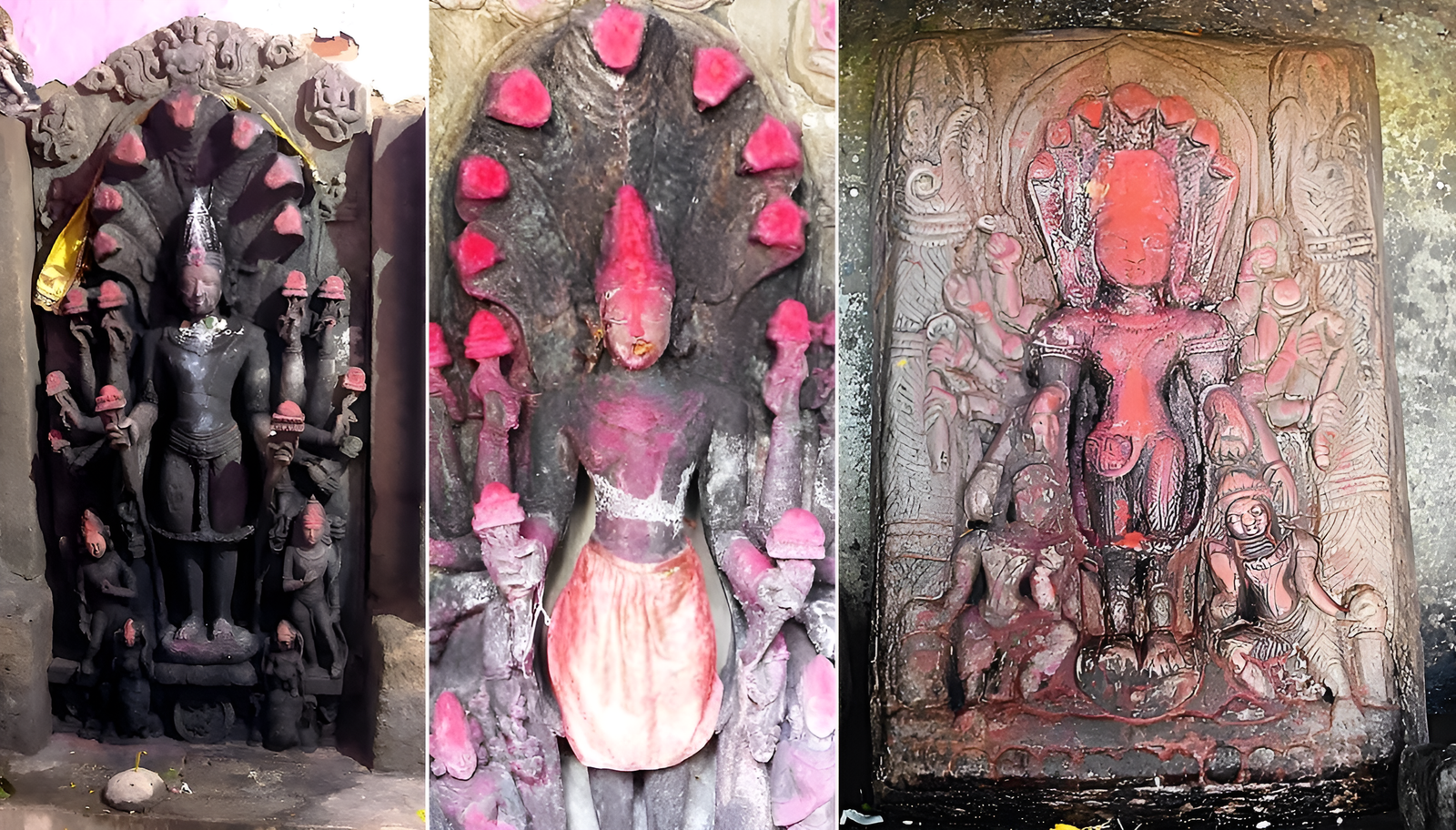
In early June 2025, an idol – which locals readily identified as Lokeshwara Vishnu – was recovered while sand-mining at Bankura’s Dwarkeshwar River in the Indian eastern state West Bengal. Despite the local enthusiasm in quickly identifying the icon as Lokeshwara Vishnu, I have serious doubts on this nomenclature. Here’s why.
To start with, the icon – with 12 arms and a prominent snake-hood standing on a double inverted lotus pedestal – doesn’t have any of Lord Vishnu’s four ‘primary’ implements – Shankha (conch shell), Chakra (disc), Gada (mace) and Padma (lotus). One does see two small human figures – one male and the other female – flanking the deity as seen in Vaikuntha Vishnu’s iconography, but they certainly do not qualify as Ayudha-purush because of the complete absence of weapons. Going by the above iconographic features, one can deduce that this icon is certainly not Vishnu.
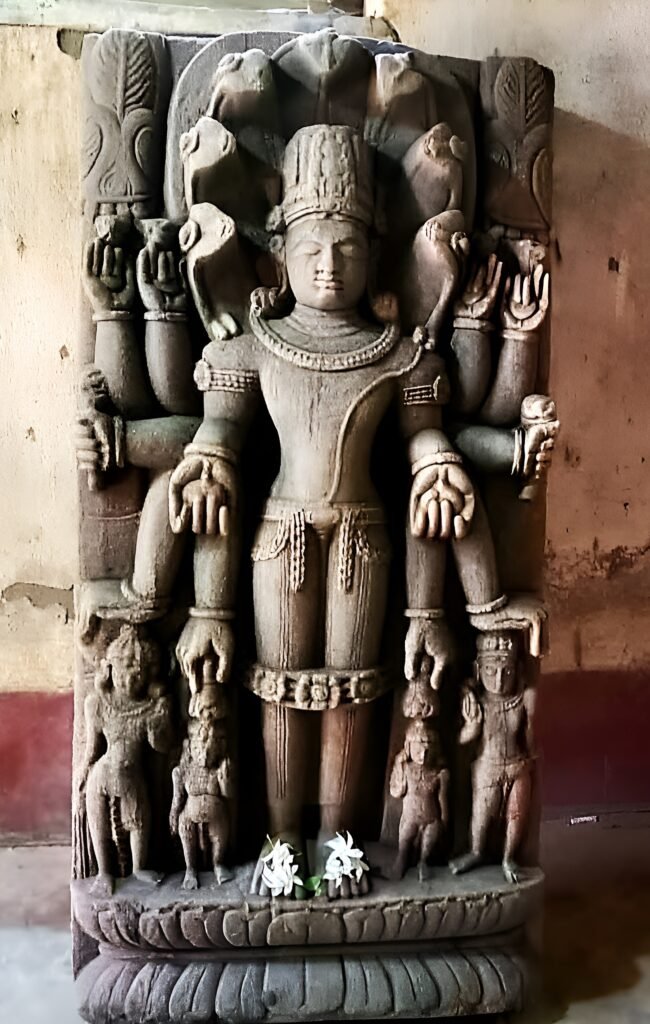
Some have identified the icon – about four feet tall and two feet wide – as Samkarshana or Balarama, who is depicted with snake-hoods. But Balarama’s implements – the Hala (plough), Mushal (stout stick) and drinking cup – are missing in this idol. Therefore, the possibility of this icon being Balarama’s is ruled out. Instead of Vishnu and Balarama’s implements, one can see the icon holding what-seems-to-be containers in two of his lower hands in front, while most of the other hands have flower-like objects.
This brings us to the term, Lokeshwara. Individuals, familiar with ancient Indian icons, will easily identify Lokeshwara as the ever-benevolent and compassionate Buddhist deity Avalokiteshwara. In terms of iconography, the deity borrows a lot from how the Lords – Vishnu and Shiva – were presented in antiquity. While Lord Avalokiteshwara manifests in 108 forms according to ancient Buddhist texts, some forms have gone entirely missing or are rarely seen in present times.
Over the years, I have become acquainted with scores of ancient Avalokiteshwara/Lokeshwara idols and this particular deity – with prominent snake-hoods – doesn’t seem to be the popular Buddhist lord at all.
One also needs to keep in mind that while this icon, currently housed at a makeshift temple at Bankura’s Ola Dubrajpur Nabagram village, is a recent find, many similar snake-hooded icons – all with 12 arms – have been found in the same Bankura district of West Bengal. This is a clear indication of the deity being quite popular in antiquity. So, who is this deity?
I apologize for not being able to identify the icon. Perhaps, He belonged to the Jain religious order. I am suggesting this for three reasons. First, Bankura had a sizable number of Jain devotees about 1,000 years ago, and one still finds ancient idols of Tirthankaras being worshipped as Shiva in brand-new temples. Second, the 23rd Jain Tirthankara, Parsvanath, featured prominent snake-hoods. Third, the icon does not carry any weapons – underlining the Jain adherence to non-violence.
This idol may be a snake-god – the male counterpart of the snake goddess Manasa – as well. If my conjecture is correct, the small vessels that the first icon holds may contain medicine that is an antidote to snake venom. The flowers may also represent forest produce that cures snake-bite victims.
Alternatively, the deities may represent a God of a now-defunct and forgotten religious order. After all, our country has been witness to the flourishing and withering of old religious orders such as Ajivika and Udasi. In the absence of clear identification, all we have now are possibilities.
(With inputs from Mukut Tapadar)
Disclaimer: The opinions and views expressed in this article/column are those of the author(s) and do not necessarily reflect the views or positions of South Asian Herald.