Join WhatsApp Channel

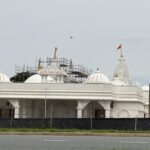
On May 15, 2026, the Madhya Pradesh High Court declared the disputed Bhojshala complex at Dhar to be a Hindu temple dedicated to the deity Sarasvatī.
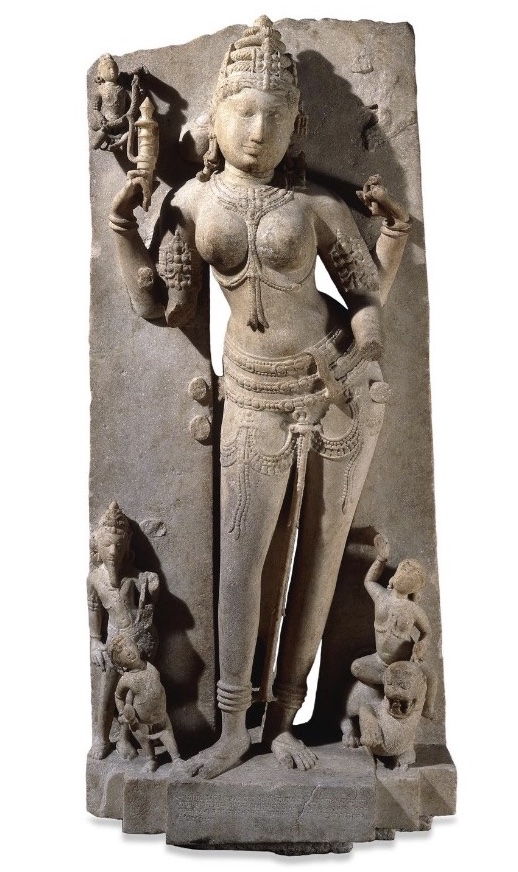
At the center of this controversy is a standing figure of the Jain yakṣī Ambikā. This icon was recovered from the temple complex more than a century ago and is presently housed in the British Museum. It is worth examining what the British Museum actually notes about the inscription found on this ancient artefact, especially since the Madhya Pradesh High Court has positively identified the shrine as a Sarasvatī temple.
The inscription, as translated by the British Museum authorities, reads: Oṃ. Vararuci, who is intent on the dharma of the Candranagarī and Vidyādharī (both branches of the Jain tradition) of Śrīmad Bhoja, the king, the apsaras for the easy removal… that Vararuci, having first fashioned Vāgdevī the mother… afterwards a triad of Jinas, made this beautiful image of Ambā, ever abundant in fruit. Blessings!
The icon was fashioned in the year 1091.
This translation clearly shows that the image in question is of the Jain goddess Ambikā, not the Hindu goddess Sarasvatī.
According to media reports, the Madhya Pradesh High Court bench, comprising Justice Vijay Kumar Shukla and Justice Alok Avasthi, equated Ambikā and Sarasvatī as the same deity while ruling in favor of the Hindu petitioners. Nothing could be further from the truth.
While both are manifestations of the Divine Mother, the Jain Ambikā is the yakṣī, or guardian deity, associated with Lord Neminātha, the 22nd Tīrthaṅkara. In many Jain icons, Lord Neminātha is depicted seated directly above Mā Ambikā. She herself is typically featured carrying a child and holding a mango fruit or a branch of a mango tree, and sometimes she is shown standing beneath one. These features symbolize Her status as a mother and a benefactor.
The Jain tradition also reveres a Jain Sarasvatī, known as Śruta Devī. As the custodian of all knowledge, she carries a bundle of sacred scrolls. The representation of the sacred scroll in her iconography underscores the profound respect accorded to knowledge and the sacred word in Jainism. Interestingly, the icon in the British Museum does carry a scroll-like object in her upper right arm.
The Hindu Ambikā, for the record, also carries a child and is associated with mangoes, but in certain representations, she is depicted bearing weapons. This is a significant departure from the peaceful Jain iconographic tradition. Meanwhile, the Hindu Sarasvatī, who is also a custodian of knowledge, carries a vīṇā. This musical instrument is a distinct iconographic marker that separates Her entirely from Ambikā – both Jain and Hindu. The icon at the British Museum, though significantly damaged, bears absolutely no traces of either a vīṇā or weapons.
Relying on the epigraphic evidence alone, we can confidently identify the British Museum image as representing Goddess Ambikā. Extending this exact logic, it would have been wonderful if the court had recognized the Bhojshala complex as an ancient Jain shrine, which it evidently didn’t. Following the Ram Janmabhoomi verdict, one is left to wonder if this is yet another instance of the judiciary leaning toward majoritarianism.
The media also reported that the court had observed that Jainism is a part of Hinduism. That is also incorrect. Aryan Vedic sacrificial practices that evolved into the early Hindu way of life started around 3,500 years ago, while the 24th Jain Tīrthaṅkara, who opposed such sacrifices, lived roughly 2,600 years ago. Both philosophies are ancient, and it is wrong to suggest that one is part of the other.
Furthermore, by declaring the Bhojshala complex a temple, to the exclusion of its historical identity as the Kamal Maula Mosque, one wonders if the Madhya Pradesh High Court intruded upon the Places of Worship (Special Provisions) Act of 1991? The Act explicitly states that no person shall convert any place of worship of any religious denomination into a place of worship of a different religious denomination or a different section of it. It further mandates that the religious character of a place of worship existing on the 15th day of August, 1947, must continue to be maintained exactly as it existed on that day.
The ancient Bhojshala complex should simply open its doors to history-inclined tourists and scholars, rather than being subjected to religious one-upmanship.
Disclaimer: The opinions and views expressed in this article/column are those of the author(s) and do not necessarily reflect the views or positions of South Asian Herald.