 Join WhatsApp Channel

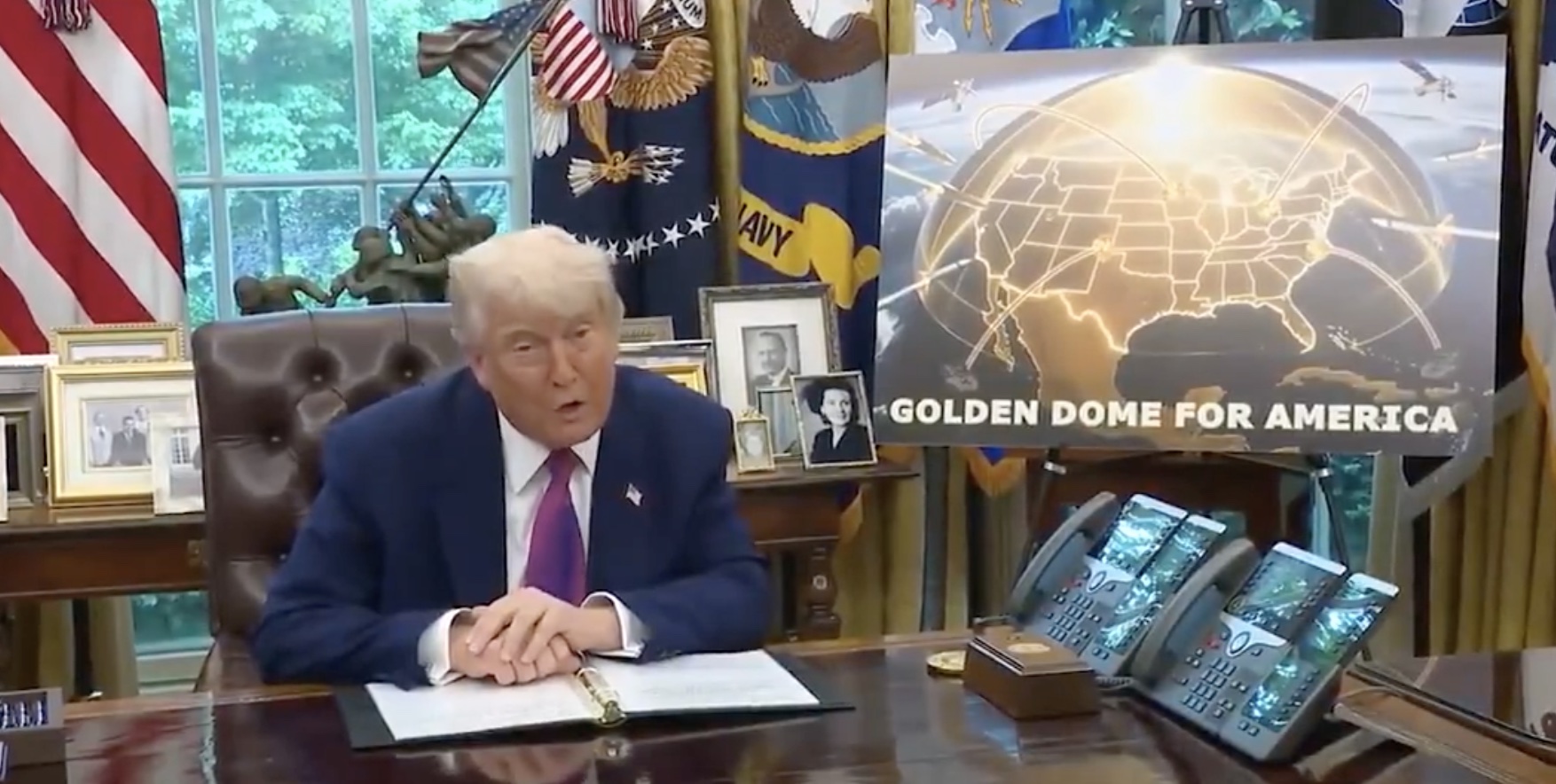
Senior officials from the US Department of War, government, and defense industry showcased progress on “Golden Dome for America” (GDA), a next-generation missile defense initiative aimed at strengthening homeland security against emerging threats.
The briefing, held at Joint Expeditionary Base Little Creek–Fort Story, was attended by key leaders, including Undersecretary for Research and Engineering Emil Michael, GDA Director Mike Guetlein, and North American Aerospace Defense Command Deputy Director of Operations Mark Piper.
Officials said the program is designed to counter a new generation of threats, including ballistic, hypersonic, and cruise missiles, as well as advanced aerial systems. The initiative was launched under the directives of President Donald Trump to modernize US missile defenses.
“Golden Dome is the decisive response to a new era of threats,” Guetlein said, adding that the system will be “layered, integrated, and automated,” with rapid decision-making capabilities.
The GDA architecture includes a space-based sensor network for global threat tracking, advanced interceptor systems for multi-layered defense, and an integrated command-and-control framework designed to operate at machine speed.
Officials highlighted that the program is currently ahead of schedule and within budget. Key milestones include completion of the initial system architecture, formation of a Command-and-Control Consortium, and the awarding of contracts for critical components.
Michael emphasized the use of open architecture and emerging technologies, including artificial intelligence and commercial space capabilities, to accelerate development.
From an operational standpoint, Piper said the system is intended to replace slower, fragmented defense frameworks with an integrated network capable of detecting and responding to threats within milliseconds.
The choice of Hampton Roads as the venue also highlighted ongoing testing of the Army’s Long-Range Persistent Surveillance system, which feeds into the broader GDA framework.
Officials described the initiative as a long-term investment in national security, with a modular design aimed at controlling costs while strengthening the US industrial base and maintaining strategic advantage over evolving threats.
Related posts:
 City of Brampton Breaks Ground on Cassie Campbell Field Hockey and Multisport Training Dome
 India Steps Up Indigenous Defense Tech with ULPGM-V3 Missile and BEL Radar Pact
 Akash Prime Missile Clears High-Altitude Test as L&T Delivers Tejas Wings to HAL
 A Region at War, A World on Edge: The Expanding Iran Conflict
