Join WhatsApp Channel

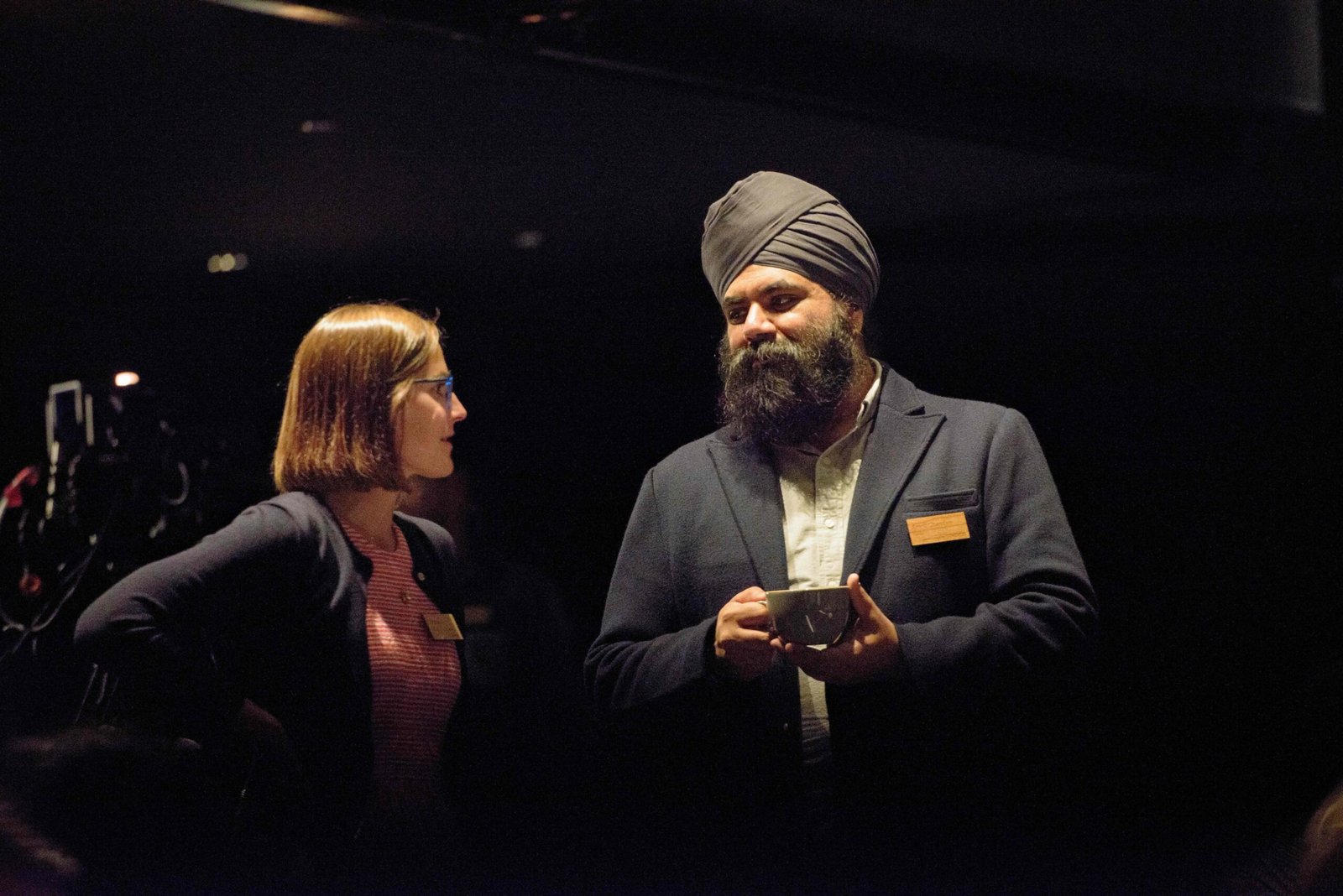
I’m an unlikely CEO.
I grew up in Birmingham in England’s West Midlands, the city with more miles of canals than Venice, and which was once a manufacturing powerhouse.
I watched my grandfather, who’d moved the family from Kenya to the UK with nothing, run a clothing shop, and my dad build his optometry practice. Entrepreneurship was in the family but somehow, I wanted to be the sensible one and live the corporate life.
It was all going to well, when I graduated top of my Chemistry class at university. But the 2008 financial crash and the impersonal nature of grad schemes recruitment put me off. I can only imagine how I’d fare in today’s world of AI-driven grad recruitment.
The stubbornness to not go down the corporate route pushed me into a PhD in chemical engineering. When I graduated, the eventual co-founder for my first startup and I spotted a massive problem hiding in plain sight, namely that there are billions of pounds’ worth of lithium battery cells being welded shut and binned because nobody could open them to replace cells which no longer worked as well as they needed to.
So, we designed a battery pack you could take apart, built with repair and simplicity in mind – literally built with nuts and bolts. Aceleron was born in 2016, and I became a CEO, which nobody was more surprised about than me.
One of my most interesting moments during this time was launching a solar-powered battery repurposing facility in a container, in one of the largest refugee settlements in the world, Bidibidi in northern Uganda. We were seeking to solve a very practical problem: how do you make battery technology useful in places where sending products back to a factory simply is not realistic whilst simultaneously reducing the amount of e-waste being subject to open burning of waste in rural Africa?
Seeing our idea deployed in a refugee settlement changed how I understood our work –technology alone can’t solve such a problem. We need to give people the capability and know-how to maximize the value tech is bringing. Better knowledge transfer creates better outcomes. When this knowledge moves from us to them, and then further on, it compounds.
Within eight years of Aceleron, I was the least experienced engineer in the room. And I learnt from my colleagues and our partners by that same compounding effect.
I’d love to say that helped when I left, but it didn’t. I was reminded one day that the market for fundraising for South Asian founders in deeptech in the UK is shallow; we’re no Palo Alto. And so, one day, our Board decided they didn’t want me as CEO. It was framed as a choice for me, but like Oedipus, who tried to run from a prophecy, only to find that the actions he was taking to avoid calamity were causing exactly what he feared, I felt I didn’t really have agency.
Anyone of my entrepreneurial uncles could have told me in business, sometimes things just go south. But it was my first real taste of such a thing. I wish I could say I handled it calmly, but I didn’t. I was deeply hurt and angry. I didn’t know it at the time, but I was going through a grieving process.
My wife Simren lived through all of that with me. She carried far more than people would ever see: the late nights, the stress, the interrupted weekends, the emotional fallout of decisions that did not have easy answers.
There was a recovery process after leaving Aceleron, but I’ve taken that knowledge into my second startup, Lorefully. I’ve decided that the founder lessons shouldn’t die with me; that they are worth telling. Scar tissue should be the signal to anyone I should work with in the future, that I learnt, that my knowledge compounded and that I won’t make the same mistakes again (to be sure, I’ll make brand-new ones).
I also became older. Family, kids and responsibilities helped me frame my thinking differently. What am I building that will outlast me? What am I making easier for whoever comes next? The aim with Lorefully is to build a human intelligence layer for live human knowledge that would otherwise be lost. In the last year, we’ve captured over 11 million words of data, that help us build proprietary data from beyond the internet.
I wonder if I had access to that knowledge more than a decade ago, whether I would have walked the same path, or whether Simren would have let me. But now that I have, it’s my responsibility to compound that knowledge and pass it on.
Disclaimer: The opinions and views expressed in this article/column are those of the author(s) and do not necessarily reflect the views or positions of South Asian Herald.
Related posts:
 India Moves to Decriminalize Corporate Offences, Replace Jail With Penalties
 India–EU Launch €15.2 Million Initiative to Boost EV Battery Recycling and Secure Critical Minerals
 NIH awards Indian-American professors with 2024 Avant-Garde Research Awards
 Indian Knowledge System, AI Conference Explores Future of Education