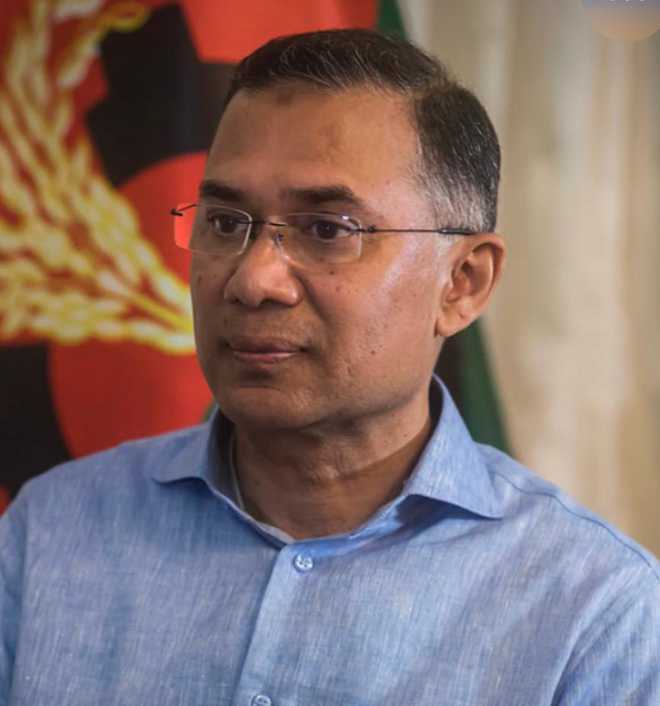
Bangladesh and India are once again approaching a decisive moment in their relationship. Dhaka has renewed its call for an “appropriate” or “conducive” diplomatic environment before Prime Minister Tarique Rahman undertakes an official visit to New Delhi. At the center of this effort are politically sensitive but legally significant requests: the extradition of former prime minister Sheikh Hasina, the return of other Bangladeshi fugitives and the handover of the alleged perpetrators of the murder of Shaheed Sharif Osman Hadi.
These should not be dismissed as procedural irritants preceding a ceremonial visit. They concern sovereignty, justice, public confidence and the future character of one of South Asia’s most consequential bilateral relationships.
The message from Dhaka is increasingly clear. Bangladesh wants stable, constructive and forward-looking relations with India, but a successful visit by its prime minister cannot be built merely on protocol, photographs and carefully drafted joint statements. It requires credible progress on the disputes that have generated deep resentment among Bangladeshis.
During Indian High Commissioner Dinesh Trivedi’s recent meeting with Prime Minister Tarique Rahman, Bangladesh urged India to accelerate action on Sheikh Hasina’s extradition and reiterated its request for the return of those accused of killing Osman Hadi. Rahman also stressed the need to create an appropriate environment for advancing bilateral relations. The Foreign Ministry subsequently connected progress on these matters with the atmosphere required for a successful Delhi visit.
Advertisement
This is not necessarily an ultimatum. It is a recognition that summit diplomacy cannot remain detached from political reality.
Sheikh Hasina’s continued presence in India remains the most difficult issue. She fled Bangladesh following the collapse of her government in August 2024 and is wanted in connection with serious criminal proceedings. India has acknowledged receiving Bangladesh’s extradition request but has maintained that the matter must be considered through its legal procedures.
India unquestionably has the right and indeed the obligation to examine any extradition request according to its domestic law and the bilateral extradition treaty. Extradition is not an automatic political favour. Questions involving the sufficiency of evidence, due process, treaty exceptions and the treatment an accused person may face after surrender must be evaluated carefully.
Bangladesh, however, is equally entitled to receive a clear and timely response. Prolonged silence or indefinite delay risks transforming a legal question into a source of diplomatic confrontation. If India believes that additional evidence or judicial guarantees are necessary, it should communicate those requirements formally. If it finds a treaty-based impediment, it should explain its position. Strategic ambiguity may postpone a decision, but it cannot resolve the dispute.
The situation becomes more sensitive when an individual residing in India is permitted to make political interventions directed at Bangladesh. From Dhaka’s perspective, such activity can appear inconsistent with India’s stated commitment to non-interference and constructive neighbourly relations. New Delhi may argue that it neither sponsors nor endorses those statements. Yet diplomacy is shaped not only by declared intentions but also by public perceptions.
India should therefore ensure that its territory is not seen as a platform for destabilising Bangladesh’s constitutional order. This does not require India to abandon its legal traditions or silence every political opinion. It requires responsible management of a politically exceptional situation in which the actions of a former foreign leader can directly affect bilateral relations.
The Osman Hadi case adds another urgent dimension. Hadi, a prominent figure associated with the post-2024 political movement, was shot in Dhaka in December 2025 and later died from his injuries. Suspects in the case were subsequently detained in India, making cross-border judicial cooperation indispensable.
They must, of course, be described as accused persons until guilt is established in court. But that presumption of innocence cannot justify unnecessary delay. If Bangladesh submits the required documentation and satisfies the applicable treaty provisions, India should facilitate their return without allowing the case to become hostage to broader political bargaining.
For Bangladeshis, the case is about more than one murder. It has become a test of whether national borders can protect fugitives from accountability and whether India is willing to cooperate when the victim occupies an important place in Bangladesh’s recent political history. Failure to address the case transparently would encourage suspicion, misinformation and anti-Indian sentiment.
India should understand that resentment in Bangladesh is not produced merely by political rhetoric. It grows when legitimate grievances appear to receive inadequate attention. Border killings, unequal trade perceptions, unresolved water-sharing questions and the belief that New Delhi cultivated a privileged relationship with one political party have all contributed to a trust deficit.
For many years, India’s Bangladesh policy appeared overly dependent on its relationship with Sheikh Hasina and the Awami League. This may have delivered short-term predictability, security cooperation and connectivity agreements. But it also created the impression that India preferred a friendly government to a genuinely broad relationship with the Bangladeshi state and its people.
The political transformation in Bangladesh has exposed the limitations of that approach. India must now engage not only with the government in Dhaka but also with the country’s changing political landscape, civil society, younger generation and democratic aspirations. A sustainable relationship cannot depend on the political survival of one individual or party.
Bangladesh must also act responsibly. Dhaka should avoid turning extradition into a test of Indian friendship or allowing public anger to descend into indiscriminate hostility towards India. It must provide complete legal documentation, guarantee internationally acceptable judicial procedures and ensure that prosecutions are not perceived as instruments of political vengeance.
The death penalty attached to some proceedings may become a significant obstacle in international legal cooperation. Bangladesh should be prepared to offer credible assurances concerning due process, access to counsel, transparent trials and humane treatment. Justice will command greater international legitimacy when it is visibly separated from retaliation.
Prime Minister Tarique Rahman’s proposed Delhi visit could nevertheless become a historic opportunity. Bangladesh and India share a long border, interconnected economies, dozens of common rivers and vital interests in trade, energy, transit, migration, maritime security and counterterrorism. They cannot afford permanent estrangement.
The approaching expiration of the 1996 Ganges Water Sharing Treaty gives the two governments another reason to restore substantive dialogue. Teesta water sharing remains unresolved, while border management, electricity cooperation, market access and regional connectivity require sustained political leadership.
A well-prepared summit could establish a new framework based on sovereign equality and mutual benefit. It could combine measurable progress on extradition and judicial cooperation with agreements on water, trade, energy and border security. It could also create regular institutional mechanisms so that disputes are handled by law and diplomacy rather than public accusations.
New Delhi should not view Dhaka’s demand for a conducive environment as an insult. Bangladesh, likewise, should not expect India to bypass its courts or legal procedures. The practical solution lies in structured engagement: formal responses to extradition requests, direct communication between legal authorities and a transparent timetable for addressing pending cases.
Tarique Rahman should visit Delhi but neither hurriedly nor merely for symbolism. His visit should take place when both sides can demonstrate that the relationship is moving beyond accumulated grievances. Even an initial Indian step such as formally identifying outstanding legal requirements, accelerating the Hadi suspects’ proceedings or opening a structured extradition dialogue could help create the necessary confidence.
Bangladesh is not asking India to choose between friendship and law. It is asking India to make law the foundation of friendship. India, in return, is entitled to expect fairness, due process and protection for legitimate bilateral interests.
The future of Bangladesh–India relations must not remain captive to Sheikh Hasina, any single murder case or the politics of the past. Yet these disputes cannot simply be ignored in the name of strategic necessity. They must be resolved precisely because the relationship is too important to be governed by mistrust.
A successful Delhi visit will begin not when Tarique Rahman’s aircraft lands in India, but when both governments show their people that sovereignty will be respected, justice will be pursued and cooperation will no longer depend on political convenience.
Disclaimer: The opinions and views expressed in this article/column are those of the author(s) and do not necessarily reflect the views or positions of South Asian Herald.