Join WhatsApp Channel

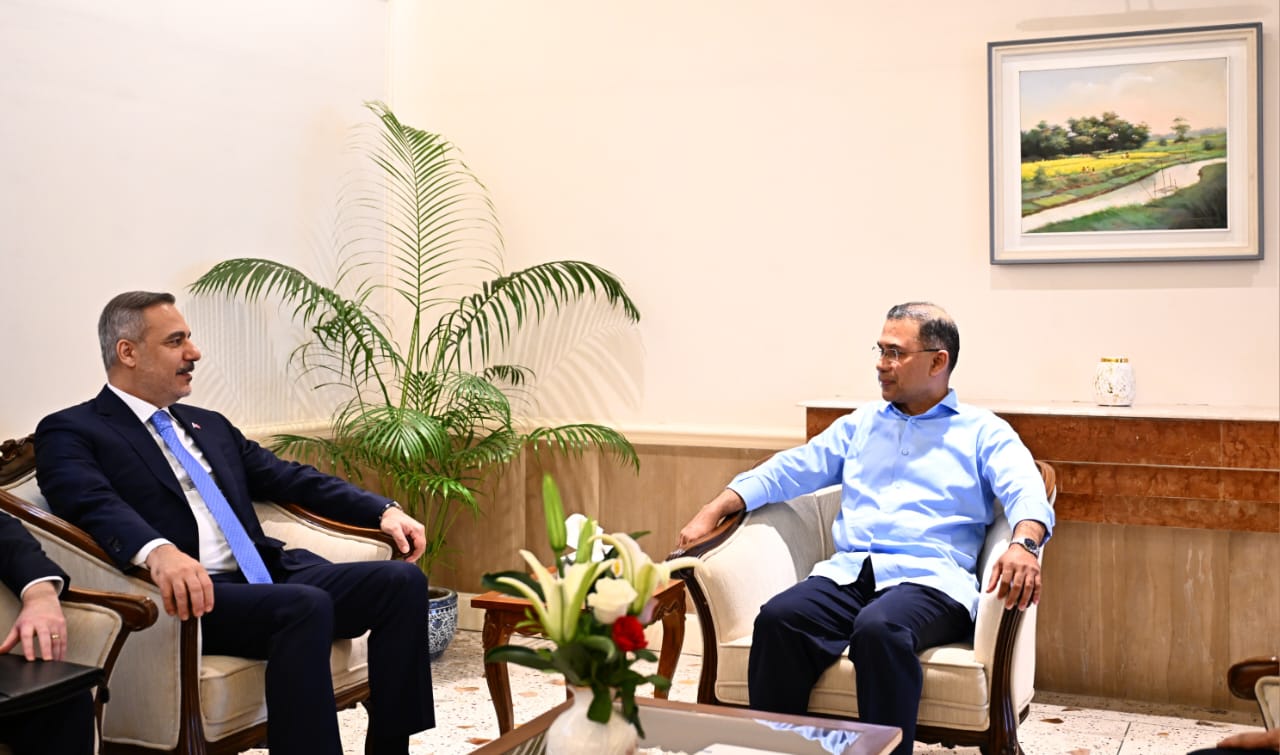
There is a particular kind of diplomatic moment that historians recognize only in retrospect a quiet turning point that, at the time, appears modest in ambition but proves, in the fullness of time, to have been a civilizational pivot. The deepening strategic engagement between Bangladesh and Türkiye, marked by high-level bilateral dialogues, the proposed establishment of a dedicated Special Economic Zone, and the framework of broader defense and economic cooperation, may well constitute such a moment for Dhaka.
To dismiss this as routine diplomatic activity between two Muslim-majority nations bound by historical solidarity would be to profoundly misread the geopolitical architecture taking shape beneath the surface. What is unfolding is something considerably more significant: the deliberate, calculated construction of a fourth pillar in Bangladesh’s foreign policy one designed not merely to supplement existing relationships, but to fundamentally alter the country’s strategic weight in a rapidly transforming world order.
The Fracturing World Order and the Premium on Strategic Flexibility
Any serious analysis of the Bangladesh–Türkiye axis must begin not in Dhaka or Ankara, but in the broader global landscape that has made this partnership both possible and necessary.
The international order that emerged from the ruins of the Cold War anchored in American primacy, multilateral institutions, and liberal economic globalization is undergoing its most consequential stress test since 1991. The strategic rivalry between Washington and Beijing has evolved well beyond trade disputes into a systemic contest for technological supremacy, supply-chain dominance, and the architecture of future global governance. The Russia–Ukraine war has shattered European assumptions about energy security, territorial integrity, and the reliability of deterrence. Meanwhile, the Bretton Woods financial institutions the IMF, the World Bank, the WTO are increasingly challenged by alternative frameworks: the BRICS expansion, the New Development Bank, China’s Belt and Road Initiative, and the growing momentum behind de-dollarization in parts of the Global South.
Within this fragmented landscape, a new premium has emerged: strategic autonomy. The ability to engage multiple centers of power simultaneously without becoming a subordinate client of any single one has become perhaps the most valuable form of national power available to small and middle-income states. India has practiced this art for decades. Vietnam has mastered it with extraordinary sophistication. The Gulf states, particularly the UAE and Saudi Arabia, have elevated it to a high art form.
Bangladesh, by contrast, has historically operated within a more constrained strategic posture responsive rather than proactive, reactive rather than architecturally ambitious. The emerging partnership with Türkiye represents a conscious departure from that pattern, and that departure deserves to be understood in its full strategic depth.
Türkiye’s Unique Strategic Geometry and Why It Matters for Dhaka
To appreciate what Türkiye brings to this partnership, one must understand what makes Ankara genuinely distinctive in contemporary geopolitics and it is a distinctiveness that goes far beyond the familiar description of Türkiye as a “bridge between East and West.”
Türkiye is simultaneously a NATO member and a purchaser of Russian S-400 missile systems. It is a formal EU candidate that has developed independent foreign policy initiatives across the Middle East, the Caucasus, the Horn of Africa, and Central Asia. It has deployed military forces in Syria, Libya, and Somalia while simultaneously maintaining diplomatic communication channels with Moscow, Tehran, Riyadh, and Washington. Under President Erdoğan’s leadership, Ankara has refused to submit to the binary logic of bloc alignment that characterizes so much of contemporary geopolitics. Instead, it has cultivated what Turkish foreign policy scholars describe as “strategic depth” the capacity to project influence across multiple civilizational and geographic theaters simultaneously.
This is not without its contradictions and costs. Türkiye’s relationships with several Western allies carry persistent tensions. Its domestic governance record has attracted sustained international criticism. Its regional ambitions have occasionally generated friction with neighboring states. These complexities are real and should not be minimized.
And yet, for a country like Bangladesh — seeking to diversify its strategic relationships without triggering alarm among its major partners Türkiye’s very complexity is part of its value. Ankara is not a revisionist power seeking to overturn the international order. Nor is it a status quo power content to operate within frameworks designed by others. It occupies an intermediate position that makes it an exceptionally useful partner for states navigating the contradictions of a multipolar world.
Crucially, Türkiye’s influence within the Organisation of Islamic Cooperation, its humanitarian diplomacy credentials, its growing defense-industrial capacity, and its geographic position as a commercial gateway connecting Europe, the Middle East, Central Asia, and Africa give it a portfolio of strategic assets that no other potential partner can replicate for Bangladesh.
The Strategic Triangle That Has Constrained Dhaka and the Architecture of Liberation
Bangladesh’s foreign policy for much of its post-independence history has been shaped and constrained by a powerful strategic triangle. India’s geographic dominance, China’s expanding economic presence, and the West’s leverage through trade preferences, development assistance, and governance conditionalities have collectively defined the parameters within which Dhaka has operated.
Each vertex of this triangle carries its own logic and its own risks.
India remains Bangladesh’s most consequential neighbor sharing a 4,156-kilometer border, controlling the upstream flow of shared rivers, and serving as a critical transit partner. The relationship is structurally asymmetric. New Delhi’s concerns about Bangladeshi territory being used for anti-Indian insurgent activities, its sensitivity about water-sharing arrangements, and its broader interest in maintaining a stable and friendly government in Dhaka have historically given India considerable leverage over Bangladesh’s domestic and foreign policy choices.
China, meanwhile, has emerged as Bangladesh’s largest source of foreign direct investment and its primary defense supplier. Beijing’s Belt and Road Initiative has financed critical infrastructure projects, and Chinese economic engagement has provided Dhaka with an alternative to Western conditionality. Yet dependence on Chinese financing carries its own strategic risks, as Sri Lanka’s experience with the Hambantota Port has illustrated with painful clarity.
The West primarily the European Union and the United States exercises influence through a different but equally consequential mechanism: market access. Bangladesh’s ready-made garment sector, which generates approximately 84 percent of the country’s export earnings, depends overwhelmingly on preferential access to European and American markets. This dependence creates structural leverage that Western governments have not hesitated to deploy when pressing Dhaka on governance, labor rights, and democratic norms.
Operating within this triangle, Bangladesh has demonstrated considerable diplomatic skill. But skill within a constrained framework is fundamentally different from the exercise of genuine strategic agency. The partnership with Türkiye offers, for the first time, a credible pathway to expanding that framework to transforming the triangle into a more complex and more favorable geometric structure.
The “fourth pillar” that a robust Bangladesh–Türkiye relationship could provide is not simply an additional bilateral relationship. It is a structural reconfiguration of Bangladesh’s strategic environment — one that enhances Dhaka’s bargaining power with all three existing partners simultaneously, precisely because it reduces dependence on any one of them.
The Economic Imperative: Beyond Garments, Beyond LDC Status
The economic case for deepening Bangladesh–Türkiye engagement is compelling, but its full strategic significance extends well beyond the immediate trade and investment arithmetic.
Bangladesh is navigating a transition of extraordinary complexity. Its graduation from Least Developed Country status a genuine achievement representing decades of development progress simultaneously triggers the gradual erosion of the preferential trade arrangements that have underpinned its export success. The EU’s Everything But Arms scheme, which has provided duty-free access to European markets, will phase out for Bangladesh following LDC graduation. The competitive landscape for ready-made garments is intensifying, with Ethiopia, Cambodia, Vietnam, and increasingly automated manufacturing centers competing aggressively for market share.
In this environment, the identification of new markets, new investment sources, and new supply-chain partnerships is not a policy preference it is an existential economic imperative.
Türkiye’s value in this context is multi-dimensional. Its domestic market of 85 million consumers with rising middle-class purchasing power represents a significant opportunity in its own right. But Türkiye’s greater value lies in its function as a commercial hub a gateway through which Bangladeshi products could access the broader Turkish supply chain network, which extends across the Middle East, North Africa, Central Asia, and parts of Sub-Saharan Africa. A well-structured Free Trade Agreement could enable Bangladesh to access markets that would otherwise require prohibitively expensive independent market-entry strategies.
Turkish corporate expertise in infrastructure development, logistics, construction, pharmaceuticals, and advanced textile manufacturing offers equally important opportunities. The critical strategic question, however, is not simply whether Turkish companies invest in Bangladesh, but **on what terms**. Investments structured around technology transfer, skills development, and local value addition would accelerate Bangladesh’s industrial upgrading trajectory. Investments structured purely around market access and cheap labor would merely replicate the dependency patterns that have characterized too much of Bangladesh’s engagement with external economic partners.
This distinction between investments that build indigenous capacity and investments that extract value should be the central organizing principle of Bangladesh’s negotiating strategy with Turkish counterparts. Dhaka must insist on joint ventures, mandatory technology-sharing provisions, local content requirements, and research collaboration frameworks as conditions for the most attractive investment incentives.
The proposed Special Economic Zone for Turkish investors, if designed with these principles embedded in its foundational architecture, could become a model for a new generation of Bangladesh’s industrial policy one oriented not toward attracting the lowest-cost manufacturing but toward building the technological foundations of a more diversified and resilient economy.
The Defense Dimension: From Consumer to Co-Producer
Of all the dimensions of the Bangladesh–Türkiye partnership, the defense and security cooperation framework carries perhaps the most transformative long-term potential and also the most complex set of regional sensitivities.
Türkiye’s emergence as a significant defense-industrial power represents one of the more remarkable strategic developments of the past decade. The Turkish defense industry through entities such as Baykar, ASELSAN, Roketsan, and STM has achieved indigenous capabilities in unmanned combat aerial vehicles, armored fighting vehicles, naval platforms, electronic warfare systems, missile technology, and aerospace engineering that would have seemed implausible twenty years ago. The Bayraktar TB2 drone’s performance in the Nagorno-Karabakh conflict, the Libyan civil war, and the early stages of the Russia–Ukraine war demonstrated not merely the technical capability of Turkish defense products but their potential to alter military balances at relatively modest cost.
Bangladesh’s “Forces Goal 2030” modernization framework reflects a genuine strategic ambition to build armed forces capable of defending national interests across a more complex threat environment. But the framework’s deeper strategic value lies not in the procurement of specific platforms but in the question of what kind of defense relationship Bangladesh builds with its suppliers.
The traditional model in which developing countries purchase defense equipment from major powers, with minimal technology transfer and maximum dependency on foreign spare parts, maintenance, and upgrades is strategically corrosive. It creates permanent structural dependence on external suppliers and provides those suppliers with ongoing leverage over the purchasing country’s defense policy.
A well-designed partnership with Türkiye could offer Bangladesh a fundamentally different model. Joint production arrangements, licensed manufacturing, co-development of selected platforms, and collaborative maintenance facilities could begin to build the indigenous defense-industrial base that Bangladesh currently lacks. Even a modest capacity for domestic defense production would significantly enhance Bangladesh’s strategic autonomy reducing dependence on any single supplier, creating industrial employment, and generating technological spillovers into the civilian economy.
The regional implications of this trajectory require careful management. India will observe any significant expansion of Bangladesh’s defense-industrial capacity with close attention, particularly given the historical sensitivities around Bangladeshi territory and Indian security interests. China, as Bangladesh’s current primary defense supplier, will view the emergence of a competing relationship with Ankara through the lens of its own strategic calculations. These reactions are predictable and should be anticipated in Dhaka’s diplomatic planning.
The appropriate response, however, is not to limit the ambition of the defense partnership in order to avoid discomfort among existing partners. It is to communicate Bangladesh’s intentions clearly and consistently framing defense diversification as a contribution to regional stability rather than a challenge to any specific bilateral relationship. States that possess credible defense capabilities and diversified supplier relationships are, paradoxically, more stable and predictable partners than those that are structurally dependent on a single patron.
The Rohingya Crisis: From Symbolic Solidarity to Strategic Partnership
The Rohingya humanitarian crisis represents Bangladesh’s most acute and most internationally visible foreign policy challenge. Nearly a million displaced Rohingya refugees a figure that has grown with subsequent waves of displacement continue to reside in the Cox’s Bazar camps, placing enormous strain on Bangladesh’s social infrastructure, environmental resources, and fiscal capacity.
The international response to this crisis has been, by any honest assessment, deeply inadequate. The United Nations Security Council has been effectively paralyzed by China’s protection of Myanmar’s military establishment. Western governments have issued repeated condemnations without generating meaningful pressure for accountability or repatriation. The Association of Southeast Asian Nations has been unable to move beyond its non-interference consensus. Regional powers have largely prioritized their bilateral relationships with Myanmar over solidarity with Bangladesh.
In this diplomatic landscape, Türkiye’s potential contribution is distinctive and underutilized. Ankara has consistently maintained a vocal stance on Rohingya rights, combining rhetorical solidarity with genuine humanitarian contributions. President Erdoğan’s personal engagement with the issue has given it visibility in international forums that purely diplomatic advocacy from Dhaka cannot replicate. Türkiye’s influence within the OIC provides a multilateral platform through which coordinated pressure on Myanmar could be organized. And Ankara’s unusual capacity to maintain communication channels with both Western governments and non-Western actors including Russia, which maintains its own relationship with Myanmar gives it diplomatic reach that Bangladesh alone cannot access.
The strategic imperative for Dhaka is to transform this relationship from one of parallel sympathy into one of coordinated strategic advocacy. This means developing joint diplomatic initiatives, coordinating positions in international forums, and creating a shared diplomatic strategy that leverages Türkiye’s unique access to multiple geopolitical actors. It means moving beyond the current pattern in which Bangladesh and Türkiye express similar positions independently, toward a framework in which they actively amplify each other’s diplomatic impact.
The Rohingya crisis will not be resolved quickly. But a sustained, strategically coordinated Bangladesh–Türkiye diplomatic partnership could meaningfully raise the international cost of Myanmar’s continued intransigence — and keep the crisis visible on the global agenda at a time when donor fatigue threatens to render it invisible.
The Human Capital Foundation: Building the Civilizational Bridge
Strategic partnerships are ultimately sustained not by the agreements signed in diplomatic meetings but by the human networks that give those agreements meaning and continuity across changing governments and shifting priorities.
The presence of thousands of Bangladeshi students in Turkish universities represents a foundation of extraordinary long-term value one that is currently underappreciated in the bilateral strategic calculus. These students are not merely acquiring academic credentials. They are developing linguistic competencies, cultural fluencies, professional networks, and institutional knowledge that will make them uniquely valuable as future diplomats, business leaders, academics, and civil society actors capable of deepening Bangladesh–Türkiye cooperation across every domain.
History offers compelling evidence of this dynamic. The networks of Indian students educated in the United States during the Cold War era created the human infrastructure for the technology and business partnerships that transformed the India–US relationship in the 1990s and beyond. The generations of Southeast Asian students educated in Australian universities created the foundations for Australia’s deepening engagement with the ASEAN region. The human capital investment consistently precedes and enables the institutional partnership.
Bangladesh should therefore treat the expansion of student exchanges, academic partnerships, research collaborations, and professional exchange programs not as a cultural add-on to the strategic relationship, but as one of its most important long-term investments. Scholarship programs should be expanded, joint research centers established, and professional exchange frameworks developed across sectors including finance, technology, defense, public administration, and creative industries.
The Implementation Challenge: Where Grand Strategy Meets Bureaucratic Reality
No analysis of this partnership’s potential would be complete without an honest accounting of Bangladesh’s most persistent strategic vulnerability: the gap between diplomatic ambition and implementation capacity.
Bangladesh’s development history contains a sobering inventory of ambitious agreements, memoranda of understanding, and grand strategic frameworks that failed to generate meaningful outcomes because the institutional infrastructure required to translate vision into reality was absent, inadequate, or overwhelmed by competing bureaucratic priorities.
The proposed Special Economic Zone for Turkish investors will succeed or fail not on the basis of the diplomatic communiqués that announce it, but on the basis of operational realities: the efficiency of land acquisition procedures, the reliability of energy supply, the transparency of regulatory processes, the speed of customs clearance, the quality of dispute resolution mechanisms, and the consistency of policy implementation across government ministries. Turkish investors like all serious foreign investors will evaluate Bangladesh’s credibility through their operational experience, not through diplomatic declarations.
Free Trade Agreement negotiations present an equally demanding test of institutional capacity. Türkiye’s manufacturing sector is significantly more diversified, more technologically sophisticated, and more internationally competitive than Bangladesh’s. A poorly structured agreement one that opens Bangladeshi markets to Turkish competition without adequate protection for vulnerable domestic industries and without securing meaningful market access and technology-transfer provisions in return could widen trade imbalances and generate economic disruption that undermines the political sustainability of the partnership.
Dhaka will therefore need to invest seriously in developing the negotiating capacity, economic modeling expertise, and institutional coordination mechanisms required to secure an agreement that genuinely serves Bangladesh’s long-term national interests. This is not a task that can be delegated to routine bureaucratic processes. It requires dedicated institutional capacity, sustained political attention, and the willingness to negotiate firmly on the terms that matter most.
The Courage to Think Strategically
Bangladesh stands today at a genuinely consequential juncture. The international environment is more fluid, more competitive, and more open to strategic repositioning by ambitious middle-income states than it has been at any point since the end of the Cold War. The emerging partnership with Türkiye represents one of the most significant opportunities Dhaka has encountered to expand its strategic horizons, diversify its diplomatic options, and begin the process of constructing a foreign policy architecture commensurate with its growing economic weight and demographic significance.
But opportunities of this magnitude do not reward passive observation. They reward strategic clarity, institutional investment, diplomatic skill, and above all the confidence to think and act on the scale that the moment demands.
The countries that will thrive in the multipolar world taking shape around us are not those that wait for the international order to stabilize before committing to a strategic direction. They are those that understand their own strategic value clearly enough to shape that order rather than merely respond to it.
Bangladesh has earned, through decades of remarkable development achievement, the right to think of itself as a significant actor in regional and global affairs. The partnership with Türkiye is not simply a bilateral relationship to be managed. It is an invitation to a more ambitious conception of what Bangladesh can be and what role it can play in the twenty-first century.
The door is open. The question is whether Dhaka will walk through it with the strategic vision and institutional resolve that this historic moment demands.
Disclaimer: The opinions and views expressed in this article/column are those of the author(s) and do not necessarily reflect the views or positions of South Asian Herald.
Related posts:
 Turkey’s Growing Engagement in Bangladesh Adds a New Layer to South Asia’s Strategic Balancing
 India’s Expanding Defense Ties with Europe and Bangladesh’s Strategic Balancing in South Asia
 Between Opportunity and Entrapment: Bangladesh Must Tread Carefully on the EU Partnership Deal
 Beyond a Courtesy Call: Paul Kapur’s Dhaka Visit and Bangladesh’s Rising Strategic Weight in South Asia