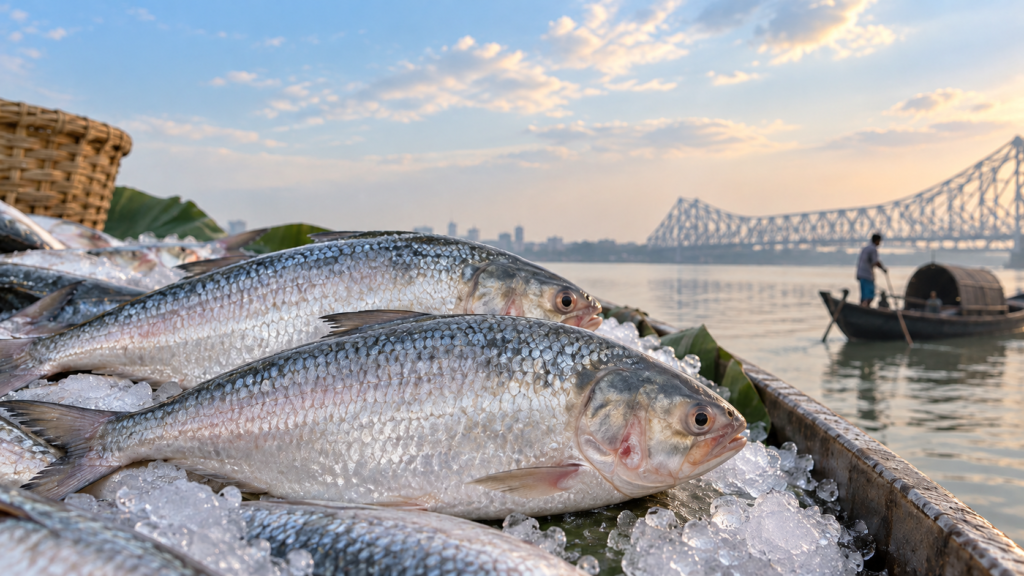
India has exported around 500 tons of hilsa fish to Bangladesh over the past two months, in a significant reversal of the traditional trade flow of the prized fish between the two neighboring countries.
Another 150-200 tons of hilsa, mostly sourced from Bharuch in Gujarat, is expected to be exported from India to Bangladesh over the next few weeks, fish traders have said.
The hilsa exports to Bangladesh come amid reports of lower hilsa production in the country this year, prompting fish traders to look to India to meet domestic demand for the popular fish.
Most of the consignments are sourced from Gujarat and shipped through Bharuch port, while some supplies are routed through the Howrah wholesale fish market in West Bengal, traders said.
Advertisement
“Bangladesh has been importing hilsa from India for the first time. ..This year, there is a shortage of hilsa there,” said Syed Anwar Maqsood, secretary of the Howrah Wholesale Fish Importers’ Association, Daily Sun reported.
“In the last two months, some 500 tons have been exported, and another 150-200 tons are slated to be sent in the coming weeks,” he said.
Bangladesh imported 352,787kg of hilsa fish from India through the Benapole-Petrapole land port during the first two months of 2026-27, with imports surging in August.
Only 29,440kg entered the country in July, but the volume jumped to 323,346kg in August, nearly 11 times the previous month’s figure.
Customs and Fisheries Quarantine Office data put the declared value of the consignments at around Tk6.92 crore ($562,460), reports Daily Sun.
Three companies imported hilsa in July. The number rose to 19 in August, bringing the total number of importers using Benapole during the two months to 22.
Bangladesh was once an exporter of hilsa to India. Imports of Indian hilsa into Bangladesh are a much more recent development, with growing quantities now reaching domestic markets.
National Board of Revenue data shows that Bangladesh began importing hilsa from India in July 2025, when around 17,850kg entered the country. Imports increased sharply afterwards, with several hundred thousand kilograms arriving in the current fiscal year.
Traders said a significant share of the Indian hilsa comes from western parts of the country, including Bharuch in Gujarat, where the fish are caught in rivers and estuaries connected to the Arabian Sea. They said the fish differ in size and taste from hilsa caught in Bangladesh’s Padma-Meghna river system.
Customs and business sources said the imports are being carried out legally through letters of credit, with duties and taxes paid before the consignments are cleared.
Ruhul Amin, acting director of Benapole Land Port, said the hilsa imported in July and August was carried by Bangladeshi trucks to different parts of the country after customs clearance and completion of other formalities.
Ashwadul Alam, a fisheries quarantine official at Benapole, said quarantine certificates were issued only after the fish had undergone the required inspections.
He said the hilsa arriving through Benapole was Indian in origin and that there was no information to suggest Myanmar hilsa was being brought into Bangladesh through the port. Fish from Myanmar generally enters Bangladesh through Chattogram Port, he said.
Bangladeshi hilsa once held a strong position in the Indian market. Since 2019, Bangladesh had allowed specified quantities of hilsa to be exported to India each year ahead of Durga Puja.
The pattern has changed sharply since the last fiscal year. Bangladesh exported about 125,000kg of hilsa in 2025-26 but imported around 10.62 lakh kg.
In the current fiscal year, Bangladesh has not exported any hilsa so far, while imports have already reached about 591,000kg.
Bangladesh has also imported hilsa from Myanmar for years.
The country remains one of the world’s biggest hilsa producers but has faced a shortage in local catches. Environmental experts have linked the decline to river pollution, worsening navigability and changing climate conditions that are affecting the fish’s normal migration patterns.
Traders say the fish sourced from India tend to contain a high amount of roe, which has relatively weak demand in some Indian markets but is highly sought after in parts of Bangladesh, including Chittagong and Sylhet.
According to traders, some of the imported fish is processed for its roe, while the remaining fish can be dried and sold as salted hilsa.
As domestic catches are unable to meet demand, local hilsa prices have risen sharply in the country, leading to the cheaper imported fish from regions outside, particularly West Bengal, finding a growing market in Bangladesh, which traders say is helping ease some of the pressure on retail prices.