Join WhatsApp Channel

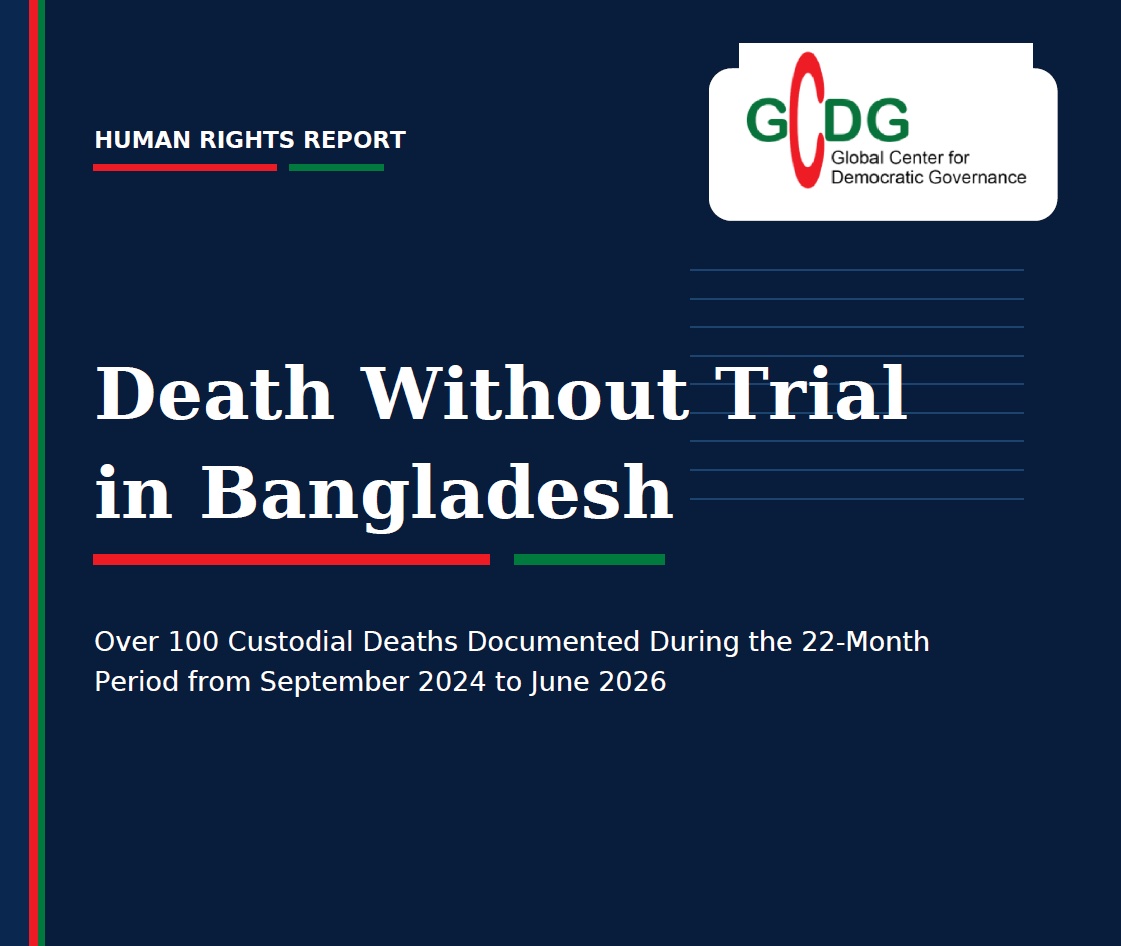
More than 100 people died in custody in Bangladesh over the past 22 months, according to a new report by the Global Center for Democratic Governance (GCDG), which alleges a pattern of custodial abuse, arbitrary detention and inadequate accountability while calling for independent international investigations into the deaths.
The report, Death Without Trial in Bangladesh, documents 101 custodial deaths between September 2024 and June 2026, averaging more than four deaths every month, and argues that the true figure could be significantly higher because of restrictions on media reporting, censorship and intimidation of journalists and human rights defenders.
The Canada-based organization said the documented deaths raise “serious concerns regarding the protection of the right to life, due process and accountability within the criminal justice system” and urged the Bangladesh government to ensure prompt, impartial and transparent investigations into every custodial death.
According to the report, the highest monthly toll was recorded in July 2025 with 10 documented deaths, followed by May 2025 with nine, October 2024 and June 2025 with eight each, while most other months reported between one and seven fatalities. The report covers the period from September 2024 through June 2026.
The victims span a wide cross-section of Bangladeshi society, including political leaders and activists, elected local representatives, students, garment workers, fishermen, businessmen, lawyers, teachers, laborers and ordinary civilians.
A significant proportion of those named in the report were associated with the Awami League and its affiliated organizations, including the Youth League, Students League, Workers League, Volunteer League and local party units. The list also includes former ministers, former members of parliament, union parishad chairpersons, councilors, lawyers, freedom fighters, trade workers and individuals with no recorded political affiliation.
Among the individuals listed are former Industries Minister Nurul Majid Mahmud Humayun, former Water Resources Minister Ramesh Chandra Sen, local government representatives, public prosecutors and several senior district-level political leaders. The report also records the deaths of garment workers, auto-rickshaw drivers, barbers, fishermen, college students and businessmen, suggesting that custodial fatalities affected both politically active individuals and ordinary citizens.
The GCDG said each documented case is accompanied by publicly available media references and supporting documentation, but cautioned that restrictions on independent reporting mean the actual number of custodial deaths could be considerably higher than those recorded.
“The documented cases raise profound concerns about the continued occurrence of deaths in state custody, the effectiveness of judicial oversight and the enforcement of the rule of law,” the report said, adding that allegations include arbitrary detention, denial of fair trial guarantees and impunity for those responsible.
Calling for international scrutiny, the organization urged the United Nations, democratic governments and regional human rights mechanisms to support independent investigations into custodial deaths in Bangladesh where credible evidence exists. It also sought institutional reforms to strengthen accountability within the country’s criminal justice system.
“Justice for victims, accountability for perpetrators and institutional reform are essential to restoring public confidence in the rule of law and preventing future human rights violations,” the report concluded.
The report does not present responses from the Bangladesh government or law enforcement agencies regarding the allegations. Authorities have previously maintained that security forces operate within the law and that allegations of custodial abuse are investigated in accordance with legal procedures.