 Join WhatsApp Channel

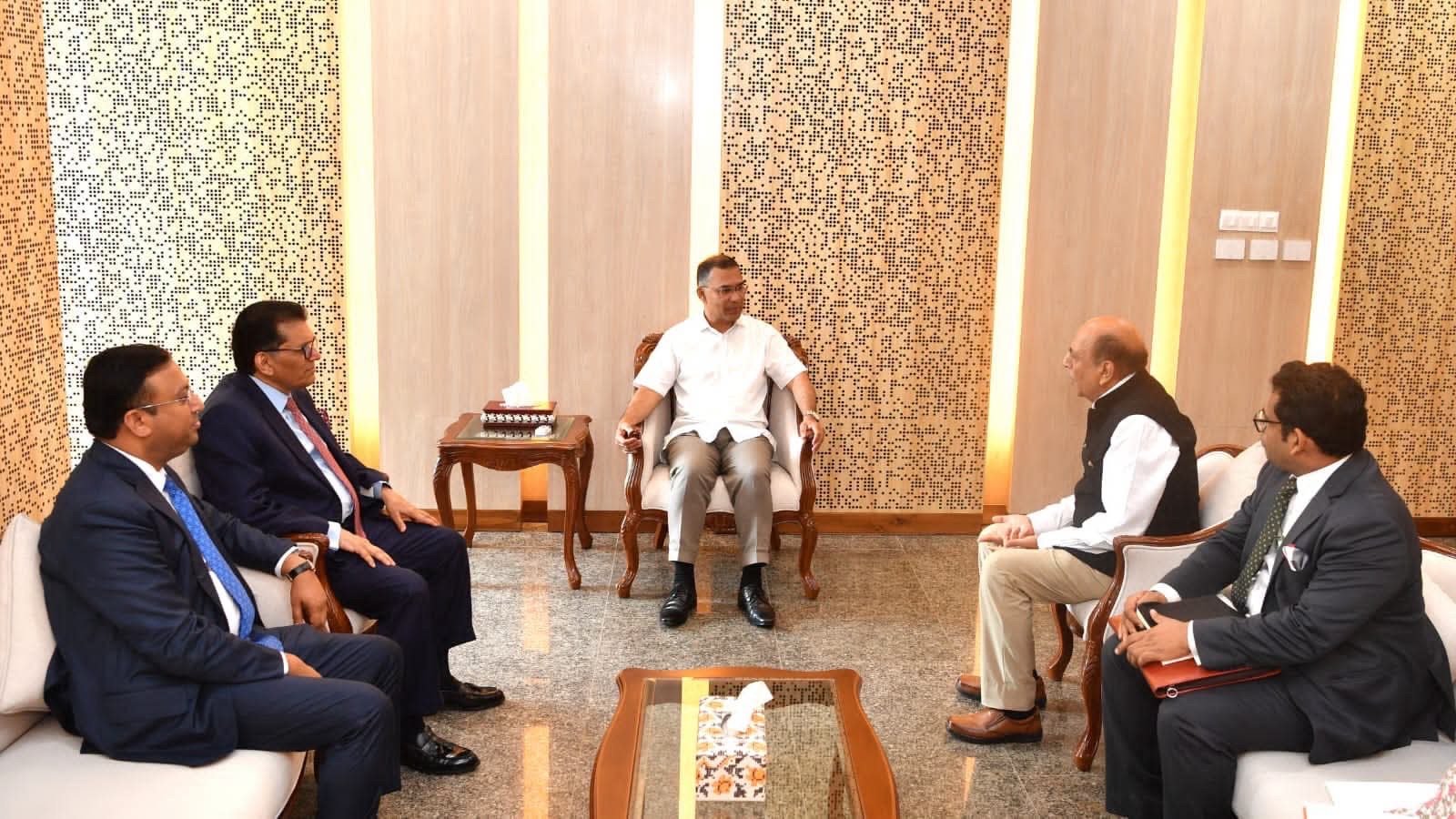
In what could prove to be a significant thaw in India-Bangladesh relations, two significant meetings took place in Bangladesh’s capital – firstly, Prime Minister Tariq Rahman met Indian High Commissioner Dinesh Trivedi, marking the first such high-level engagement after months of Trivedi’s tenure in Dhaka.
Almost simultaneously, RAW chief Parag Jain, accompanied by a senior delegation from India’s external intelligence agency, held talks in Dhaka with his Bangladeshi counterparts in the riverine country’s intelligence establishment. Jain and his team are believed to have flown in on Sunday afternoon.
It is believed that Rahman may soon now send his travel plans to visit New Delhi for the BRICS summit, to be held in September, where he has been invited in his capacity as chair of BIMSTEC, another regional economic grouping.
Trivedi told newspersons on Monday, “We are looking forward. Our invitation is there in place. We are positive that if the two leaders meet together, there will be a discussion. It’s a win-win situation if there is a good relationship.”
The twin meetings held on Monday come after an unusual flurry of diplomatic activity involving the Delhi-based American Ambassador to Central and South Asia, Sergio Gor, who recently travelled to Dhaka, where he met both Rahman and Trivedi.
It also comes a week after Sheikh Hasina announced at an online press briefing in Delhi that she intends to travel to Dhaka in December, regardless of the consequences. The speech caused consternation in Dhaka’s political circles and led to an angry official press release against the event to be uploaded on social media, though it did not result in any official diplomatic spat.
Dhaka, under the newly elected BNP government, which needs to wrap up a number of treaties, including the Ganges water-sharing and trade concession agreements, quickly with India, has for some time been trying to play both the China and the Pakistan card with India to pressurize New Delhi into granting concessions. The BNP regime has been threatening to draw close to nations with which India has had inimical relations in the past.
While Rahman travelled to Beijing in June and signed a number of construction project deals which irked India for being sited close to the Indian border, his government went ahead with talks with Pakistan to buy 16 to 48 JF-17 Block III multi-role combat aircraft and upgrade Bangladesh’s aging tank, both red flags for India.
The breakthrough possibly comes from messaging by Gor, who, sources believe, pointed out both India’s and the West’s concerns over the reported regrouping of Islamic terror groups in Bangladesh, besides delivering a warning against drawing close to China, the USA’s chief rival in the Indo-Pacific region.
New Delhi has been watching closely the re-emergence of extremist and militant networks following the release of a large number of terrorism-related detainees from Bangladeshi prisons during the previous Muhammad Yunus-led interim administration. And has quietly passed on intelligence and warnings about their intent and activities.
Jain is likely to reinvigorate relations with Bangladesh’s intelligence agencies in jointly combating terror groups that have caused much harm to the riverine nation, which has a long history of peaceful Sufi Islam, as well as to other countries in the region, including India.
Analysts said that for the government in Dhaka, the convergence of several developments ranging from the possibility of Hasina’s return, to renewed Indian diplomatic engagement, heightened intelligence cooperation, and Washington’s pressure, have made stabilizing relations with New Delhi an immediate necessity. (UNI SPECIAL)
Related posts:
 Why Bangladesh’s Pivot Toward Türkiye Could Redefine South Asia’s Geopolitical Landscape
 From Dhaka to Washington: A Strategic Partnership That Could Reconfigure South Asia’s Geopolitical Landscape
 Whispers Before the Reset: Intelligence Diplomacy and the Fragile Recalibration of Bangladesh–India Relations
 India’s Expanding Defense Ties with Europe and Bangladesh’s Strategic Balancing in South Asia
