Join WhatsApp Channel


India’s Independence Day is not only a celebration of our freedom; it is a reminder that India’s story has never been confined to the borders of the subcontinent. For millennia, the ideas, epics and aesthetics of Indian civilization have sailed with the monsoon winds, walked with pilgrims, and travelled with traders to the lands of Southeast Asia. Today, as we mark 15 August, we also celebrate this shared civilizational journey with Indonesia, Malaysia, Singapore, Thailand, Vietnam, Cambodia, Lao PDR, and Myanmar, as a living, breathing bridge between our peoples.
In the Indian tradition, a yatra is never just a physical journey; it is a voyage of the soul. One such voyage still lives in the memory of eastern India: the historic Bali Yatra of Kalinga, in present-day Odisha. Each year, on the banks of the Mahanadi, people float tiny boats to commemorate ancient sailors who set out for Bali and beyond, carrying textiles, spices and stories. They did not go merely as traders; they went as storytellers of the Ramayana and Mahabharata, as builders of temples, as bearers of the idea that the Divine resides in all creation. Centuries later, when we walk through Bali’s villages and see Hindu shrines, hear Ramayana stories woven into local arts, we realize that this maritime bridge never truly broke. It simply changed form.
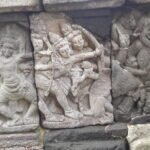
That bridge is being consciously strengthened today. During his recent State Visit to Indonesia in July 2026, Prime Minister Narendra Modi visited the magnificent Prambanan Temple Complex near Yogyakarta, the largest temple dedicated to Lord Shiva in Indonesia. There, alongside President Prabowo Subianto, he unveiled a plaque marking the beginning of the Archaeological Survey of India’s conservation and restoration work at this UNESCO World Heritage Site. Prambanan is not just stone on stone; it is poetry in basalt. Its famed Ramayana performances are regarded as among the purest and most sophisticated in the world, Indonesian artistry giving new life to an Indian epic and Indian experts now helping to preserve that shared heritage for future generations.
This spirit of partnership is visible across the Mekong and beyond. In Lao PDR, India has joined hands in restoring Vat Phou, an ancient Lord Shiva temple turned Buddhist site at the base of the sacred Lingaparvata mountain. Here, the stones speak of Shaivism and Buddhism embracing each other, and of how our cultures have never seen faith as a wall but as a window. India is also supporting the preservation of the Ramayana art form Pha Lak Pha Lam, shadow puppet theatre, and murals in Wat Pa Khae that depict Jataka and Ramayana tales, ensuring that local artists remain the living custodians of this epic, not just its audiences.
In Cambodia, India was the first country to step forward to help conserve Angkor Wat after the trauma of conflict. That commitment has continued through restoration projects at Ta Prohm and Preah Vihear, as well as assistance to Ashram Maha Russey Temple and Wat Raja Bo Pagoda paintings. These are not only technical projects; they are acts of faith in a shared future. Each cleaned stone, each strengthened pillar says to the world that our past is a common inheritance, and its protection is a common responsibility.
Vietnam too has welcomed Indian collaboration. At My Son, another UNESCO World Heritage Site, Indian archaeologists have worked closely with Vietnamese partners to restore temple groups that echo with the memory of Cham kings and Shaivite rituals. India is also supporting conservation at Nhan Tower and the digitization of Cham manuscripts, bringing ancient wisdom into the digital age so that a young researcher in Hanoi or Chennai can access this shared legacy with a click.
The story of our cultural connect is not limited to monuments. It is carried in sacred relics and living devotion. The recent exposition of holy relics of Lord Buddha and his disciples in Thailand and Vietnam saw millions come forward to pay homage, royalty, leaders and ordinary citizens alike. As these relics travelled from India to Southeast Asia, they retraced the ancient path of the Dhamma, reminding us that compassion and wisdom have always flowed freely across Asia’s borders.
Sometimes, history returns home in tangible form. The repatriation of the Leiden copper plates from Belgium, linked to the great Chola rulers and their maritime exchanges with Southeast Asia, is one such moment. Those plates are a metal manuscript of connectivity, evidence that Indian merchants and rulers engaged with Indonesia and other lands in a spirit of respect and mutual benefit. Their return is not just an emotional event for India; it underlines the shared pride that we and our Southeast Asian partners feel in our intertwined histories.
To weave these strands together, India and its Mekong partners have also created new spaces of dialogue. The MGC Asian Traditional Textile Museum in Siem Reap, established under the Mekong–Ganga Cooperation framework, showcases the rich textile traditions of India, Cambodia, Lao PDR, Myanmar, Thailand and Vietnam. When visitors walk through its galleries and see Ikat from Odisha, silk from Thailand, weaves from Myanmar and brocades from Cambodia displayed side by side, they understand that the loom has always been a diplomat, quietly building trust and familiarity across borders.
New chapters are being written even now. Forthcoming projects include the restoration of Ramayana murals at Wat Pa Khae in Luang Prabang and at the Royal Palace in Phnom Penh, as well as continued support for Buddhist heritage conservation in Bagan, Myanmar. Each project is a promise: that India’s engagement with Southeast Asia will always be respectful of local traditions, grounded in shared values, and focused on empowering communities.
On this Independence Day, as India celebrates its journey from colonial rule to confident modernity, we do so with gratitude for our civilizational companions. Southeast Asia is not a distant region for us; it is family. Our temples may be separated by seas, our scripts may differ, our languages may sound distinct, but the stories carved on stone and sung on stage tell us that we are part of one great Asian saga.
As we look ahead, India’s resolve is clear. We will continue to invest in preserving shared heritage, in celebrating shared epics, and in creating new avenues, whether in culture, education, tourism or technology, for our peoples to know each other better. For when civilizations that have walked together for two thousand years renew their friendship in the twenty-first, they do more than honor the past. They light a lamp for the future, one that can guide all of us, across the Mekong and the Ganga, towards peace, prosperity and a deeper understanding of one another.
Disclaimer: The opinions and views expressed in this article/column are those of the author(s) and do not necessarily reflect the views or positions of South Asian Herald.