Join WhatsApp Channel

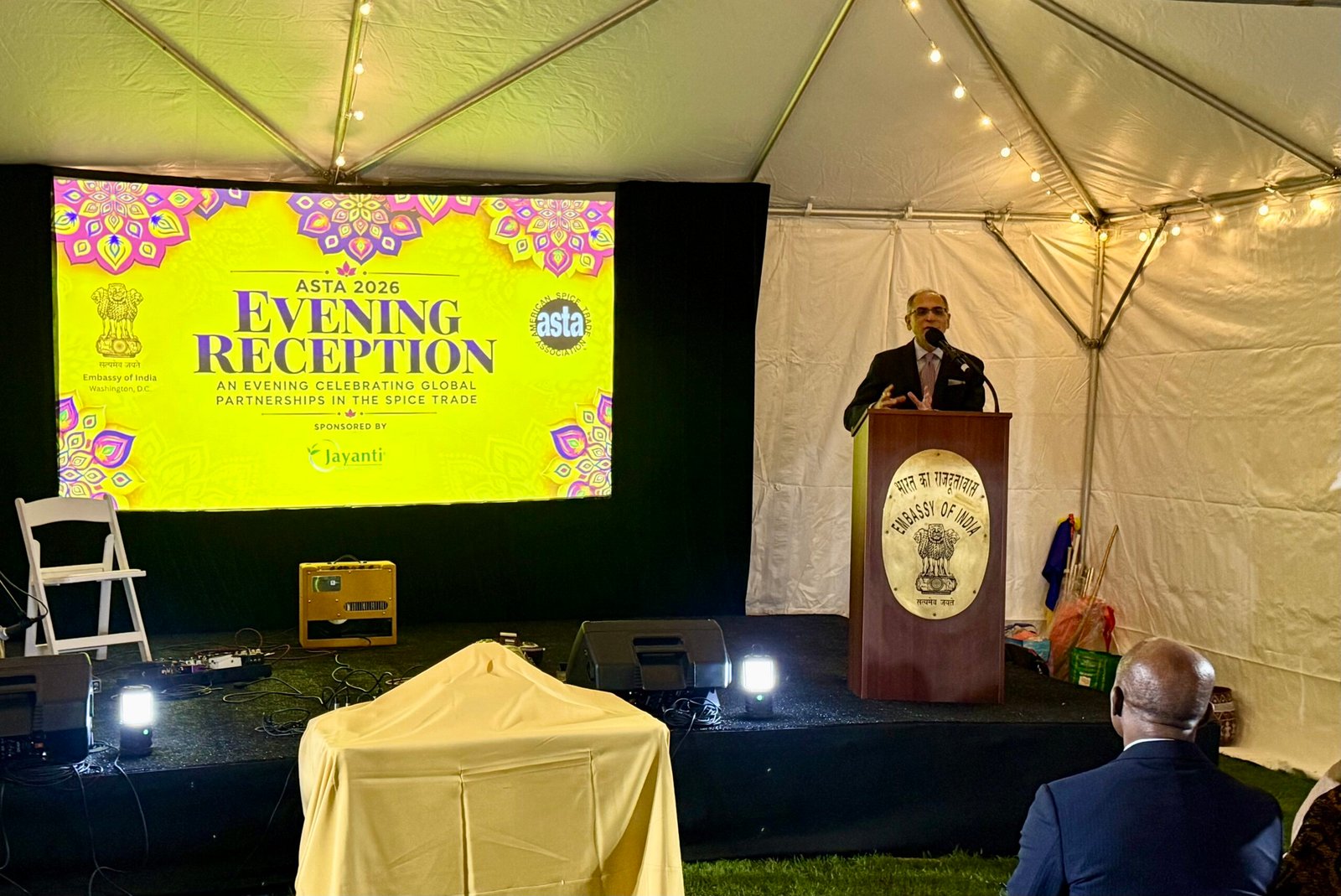
The Embassy of India in Washington, D.C., partnered with the American Spice Trade Association (ASTA) to host a reception on October 6 at India House, highlighting the cultural and economic significance of the India-U.S. spice trade and cooperation on food safety and trade policy.
Welcoming guests, Indian Ambassador to the United States Vinay Kwatra described ASTA and its members as “instrumental” in bringing Indian spices to American households.
“What you do at the American Spice Trade Association obviously is very crucial to how this fits into the larger trade relationship between our two countries,” Kwatra said. He noted that India exports nearly $700 million worth of spices to the United States annually, while emphasizing their significance beyond commerce.
“But I think what is more crucial, in my personal view, is that through these spices, we bring a very important part of Indianness to American homes, and I think that’s what is crucial,” he said. “Because for us, spices have been a very distinct part of our civilization. I always tell people, and I firmly believe in it, that if there is one thing which, through the generations stretching back millennia, has not changed in Indian society, it is spices.”
Kwatra reflected on how culinary traditions pass from one generation to the next, noting that he uses the same spices his mother introduced to him, just as she learned from her mother. Those traditions, he said, now reach households around the world.
Pointing to turmeric lattes on cafe menus in the United States, Kwatra described their emergence since 2014 as an example of the growing visibility of Indian spices. He traced the practice of combining turmeric with dairy to Indian households as early as 250 or 300 B.C. and discussed its use with milk and clarified butter in Ayurveda.
Describing his observations as “episodic” and “anecdotal,” Kwatra said turmeric consumption had increased during disease outbreaks, including COVID-19. He linked that consumption to turmeric’s traditional role in Ayurvedic practices.
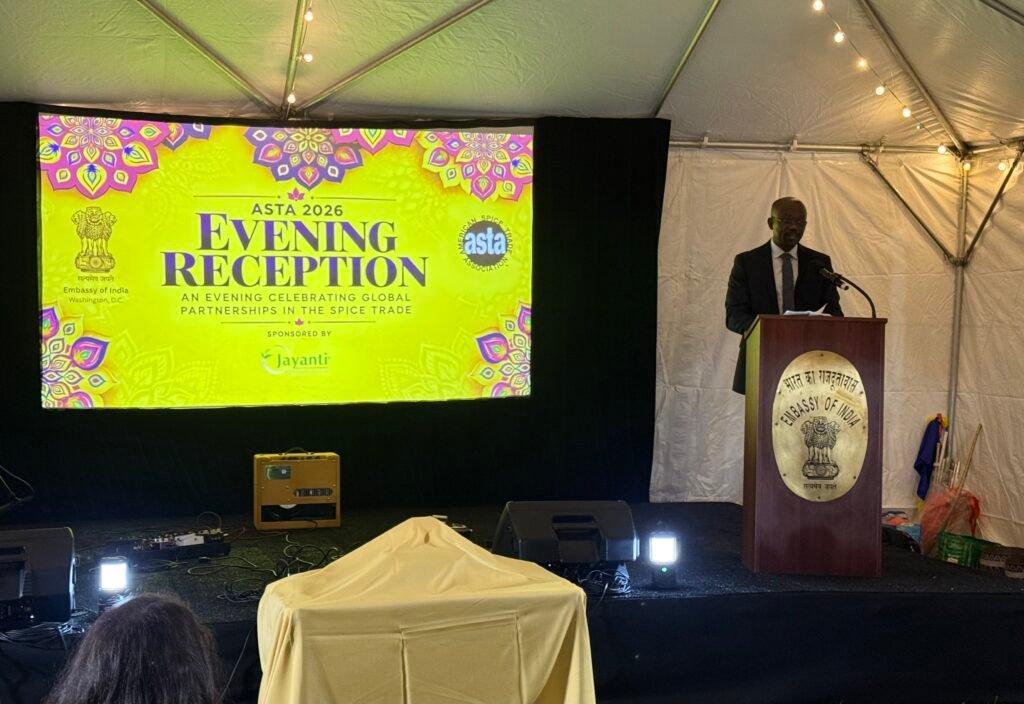
Kwatra said sharing the stories that connect spices to Indian civilization and everyday living can help communicate their cultural significance.
“It’s not a marketing play. I don’t consume spice because it’s marketed to me. It’s part of my upbringing, and I don’t think you can market spice that way,” he added.
ASTA President Donald Pratt of McCormick & Company emphasized India’s importance to the U.S. spice industry and its role in strengthening trade ties between the two countries.
India grows more than half of the 109 spices recognized by the International Organization for Standardization, Pratt said. He described the United States as the largest market for Indian spices, with imports exceeding $700 million last year, and said he expected the trade to continue growing.
“Here’s the reality for our industry: the United States grows only a small fraction of the spices we use. Many spices simply can’t be grown here at scale,” he said.
Pratt explained that many spices require specific growing conditions and said ASTA works to support the longevity and sustainability of the trade. He noted that the U.S. industry relies on India for cumin, fennel, chilies and dozens of other spices used in foods Americans consume daily.
“As my CEO at McCormick likes to say, we don’t actually make the food, but we actually add the flavor to the food. In my work at McCormick, I see the partnerships up close. They’re built on trust and on long relationships,” he added.

Looking ahead, Pratt pointed to consumer demand and continued investment in production standards as reasons for optimism.
“I’m optimistic. American consumers want bold, authentic flavors. India is the heart of bold, authentic flavors. Investment in quality, food safety, and sustainable farming will keep the supply strong. A thriving Indian spice sector means a thriving U.S. spice industry.”
Comparing the bilateral relationship to a masala blend, Pratt said bringing different elements together creates something richer than any single ingredient.
“Our two countries work the same way. We succeed together. Of course, tonight is about more than trade policy. It’s a celebration of Indian culture and its gift to the whole world,” he added.
Roberto Fanni of Jayanti Foods, who introduced Pratt, described his company as an agricultural commodities business that sources and farms spices in several countries. India, he said, remains its most important source.
The Spices Board of India and Jayanti Foods also collaborated for the reception.