Join WhatsApp Channel

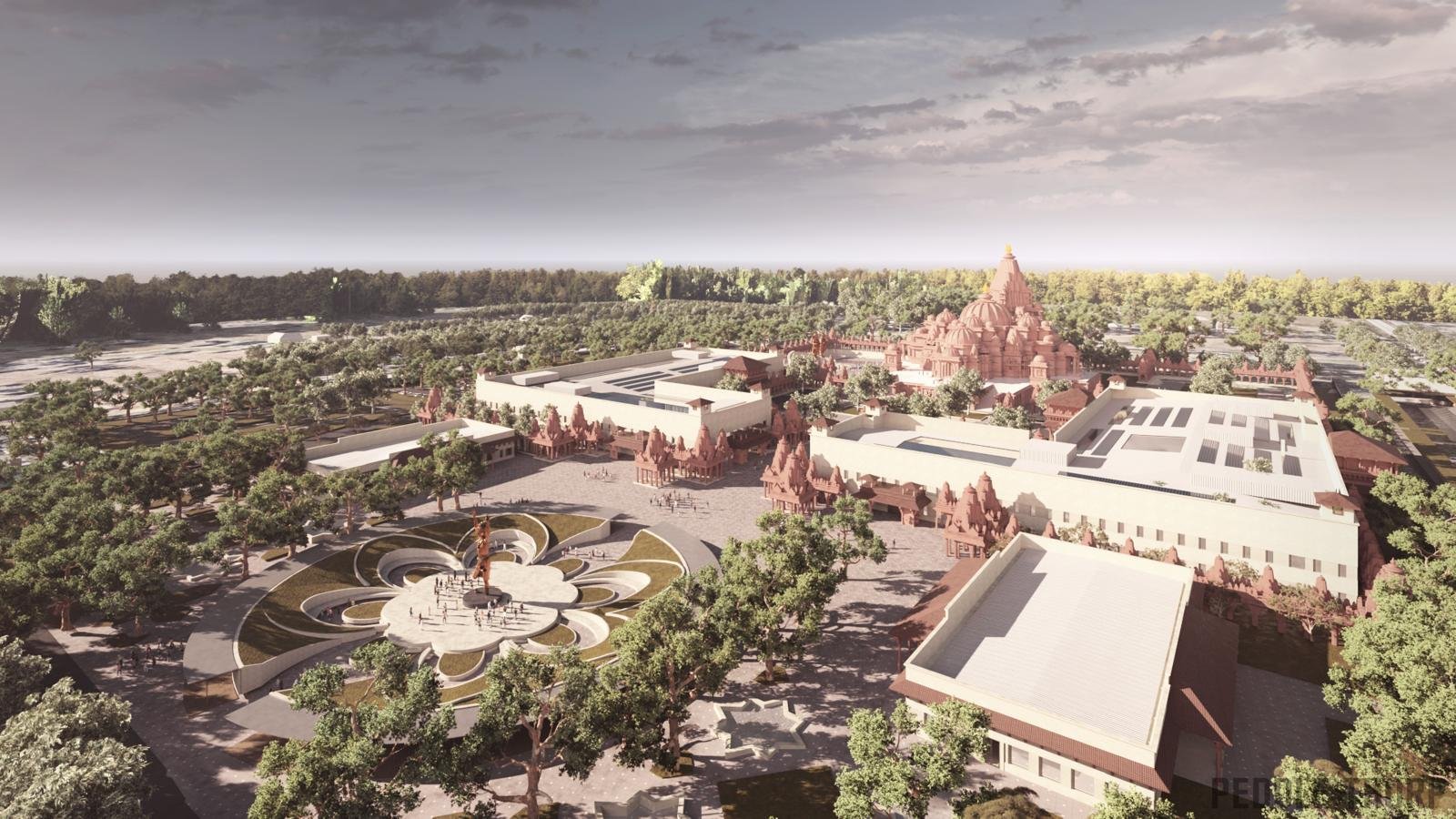
Public consultation has opened on plans for the BAPS Hindu Mahā-Mandir at Cranbourne South, and they tell a story of their own. Over the life of the project the design has been shaped and reshaped, by the land, by the animals living on it, and by more than 30 technical consultants working to Victorian and Australian standards.
The glossy grass skink is a small lizard, easy to miss and listed as endangered in Victoria, living in the southern part of the 103-acre property on Western Port Highway where the Mahā-Mandir is proposed.
When its presence was confirmed in 2025, the organization behind the project changed the design of the entire site and removed a whole building to keep out of the animal’s way, cutting the built form back by half. In the plans now lodged, every area of confirmed skink habitat is retained, with buffers of at least 30 meters around it, and the highest-quality remnant woodland on the site is kept in full. That habitat sits outside the development footprint, and the plans provide for it to be enhanced as well as protected.
That decision was not an accident of the planning process. BAPS Swaminarayan Sanstha, Australia, the Hindu organization proposing the mandir, is built around a teaching of its late guru, Pramukh Swami Maharaj: ‘in the joy of others lies our own’. Within BAPS, ‘others’ is not read narrowly. It includes animals as much as humans. It includes the people who live next door.
And it means the giving is not something that starts when the doors open; it runs through every stage of the project, including this one. The application is with the Victorian Department of Transport and Planning. It describes five buildings, a traditional stone temple and the supporting buildings around it, which together operate as a single place of worship and cover about 6% of the 103 acres. An additional 19% of the site is formalized landscape, and the remaining 75% or so stays in an undeveloped and preserved condition for long-term environmental protection, with its management set out in the land and wildlife management plans lodged with the application and funded on an ongoing basis.
The project has not taken shape in isolation. Across the life of the application, BAPS has engaged more than 30 technical consultants, whose work has shaped the project into its current form, with each discipline working to the governance and compliance standards set under Victorian and Australian law.
The skink redesign is the most visible result of that work, and the same approach runs through the rest of the plans, which consolidate development away from the most environmentally and culturally sensitive parts of the site wherever practicable. A Cultural Heritage Management Plan is also being prepared in consultation with the Bunurong Land Council Aboriginal Corporation, the Registered Aboriginal Party for the area.
What the mandir gives once it opens is easier to picture. It would be open to people of any faith or none, and a mandir is traditionally a building that expects visitors and explains itself to them, which is why the plans include interpretive displays and orientation spaces, alongside rooms for religious education for children, youth and adults. There is also a kitchen, and the food prepared there is offered in the mandir before it is shared as prasādam, making it part of the worship itself rather than a service attached to it.
Because worship in this tradition is continuous and not tied to a single ceremony, the site is designed for a steady flow of people through the day rather than crowds arriving at once. The application anticipates up to about 1,200 people on site at any one time on a typical weekday and about 1,650 on a weekend, with most staying for two to three hours. On-site parking spaces would be available to support the visitorship. On most days of the year, the prevailing condition of the site is intended to be a quiet one.
Major festival days could see an increase in visitors; however, BAPS are committing to deploying special event Traffic Management plans, along with over-flow parking arrangements to manage increased traffic on these busy days.
Then there is the ordinary economics of keeping such a place running – a property with gardens, a managed habitat area and a kitchen on it has to be staffed. An assessment lodged with the application estimates about 120 ongoing jobs on site of a distinctly local kind: gardening and horticulture, habitat management, cleaning, security, administration and maintenance. Those jobs are estimated to support another 23 across the state economy, about 143 in all, worth roughly $12.1 million a year in gross value added to Victoria. Those numbers deliberately leave out volunteers, of whom there will be many. Services such as landscaping, waste management and security are expected to be sourced from small and medium businesses in Cranbourne and the wider City of Casey where practicable.
The volunteering is not hypothetical. BAPS volunteers in Australia already run blood donation drives, charitable collections, environmental stewardship work and disaster relief support, and the mandir would give the people who already do that work a permanent place to gather.
The plans are now with the Department of Transport and Planning, and the story they tell is on the public record: a design redrawn around a lizard most people would never notice, and land set aside and funded to be cared for over the long term, all before the first stone is laid.
Disclaimer: The opinions and views expressed in this article/column are those of the author(s) and do not necessarily reflect the views or positions of South Asian Herald.
Related posts:
 Five Cubs, One Mother, and a Nation’s Hope: India’s Cheetah Comeback Grows at Kuno
 Gujarat Chief Minister Applauds BAPS Akshardham’s Heritage and Volunteer Service
 Four Rhinos Return to the Wild in Dudhwa, Signaling Revival of Terai Grasslands
 BAPS Shri Swaminarayan Mandir in Maryland Celebrates 25 Years of Faith, Unity, and Service