The institutions, communities, and nations that preserve and continually document their history leave a lasting legacy for future generations. Among them is the Sikh Union Club, Nairobi, which recently celebrated its centenary with a month-long series of events honoring its rich heritage and contributions over the past 100 years.
Widely regarded as one of the oldest clubs established by Indian expatriates, and Sikhs in particular, outside India, the Sikh Union Club marked the milestone with celebrations that brought together Olympians, international athletes, business leaders, academics, and professionals from diverse fields. The commemorative events highlighted the Club’s enduring influence and set a benchmark for similar organizations worldwide.
As part of the celebrations, the Club honored its oldest member, six-time Olympian Avtar Singh Sohal, with a Lifetime Achievement Award. It also recognized its Secretary-General, researcher, historian, and organizer Daljinder Singh Mudher for his significant contributions to preserving and expanding the Club’s archives.

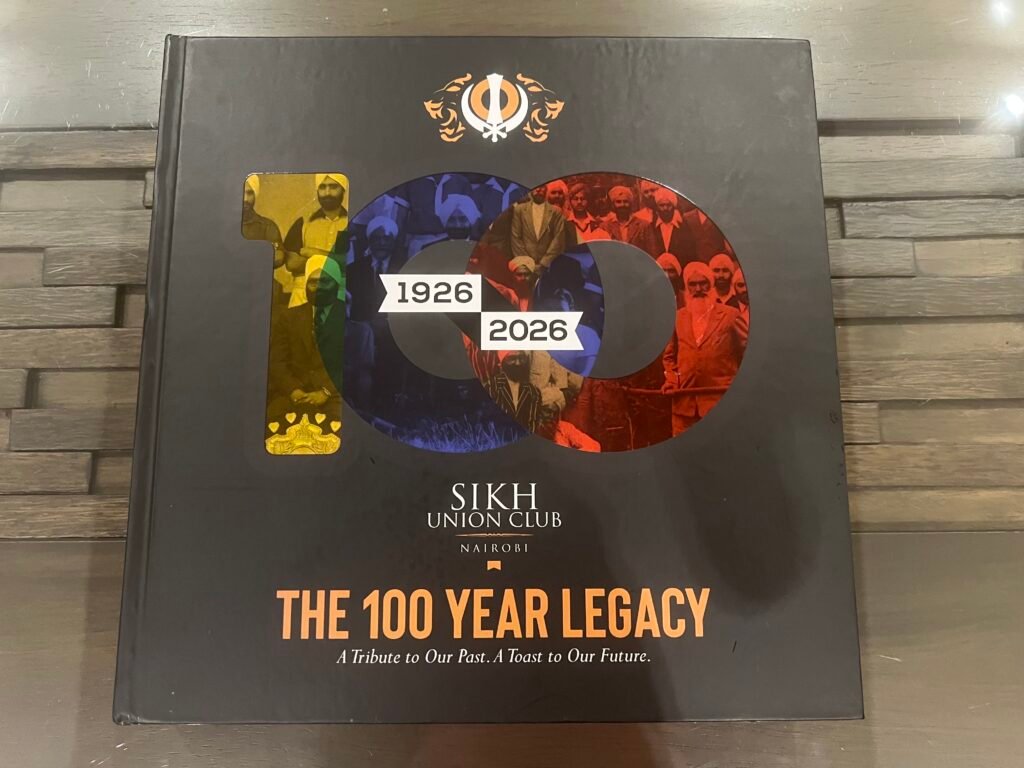
Mudher, along with London-based Sikh hockey historian Diljit Bahra, played a leading role in a five-member team that undertook the extensive task of compiling Sikh Union Club, Nairobi – The 100 Year Legacy – A Tribute to our Past. A Toast to our Future. The publication chronicles the Club’s journey from its founding through its centenary year.
Advertisement
The comprehensive volume documents the institution’s evolution in remarkable detail. Produced with a high degree of professionalism and historical rigor, it serves as both a coffee-table book and an archival record of a club renowned for producing 26 Sikh hockey Olympians and 11 Hockey World Cup players outside India. The Club’s sporting legacy also extends to cricket, motor sports, tennis, badminton, darts, rifle shooting, and several other disciplines.
The anthology brings together generations of stories and achievements of expatriate Indians and Sikhs connected to Kenya and the Club since the early decades of the twentieth century. For years, Mudher and his family have worked to preserve the history of Kenyan Sikh athletes and community leaders. Their efforts have helped safeguard valuable memorabilia and records that might otherwise have been lost.
The publication features a foreword by Jaswant Kaur Grewal, daughter of Mahan Singh Sandhu, and Gurminder Singh Grewal, son of Sardar Jasmer Singh Grewal, both of whom were among the pioneers of the Sikh Union Club movement in Kenya. Their contributions continue to be commemorated within the Club, including through galleries dedicated to prominent figures such as Mahan Singh Sandhu and Avtar Singh Sohal.
Spanning 506 pages, the illustrated volume includes hundreds of historical documents, rare photographs, newspaper clippings, official communications, souvenirs, posters, rule books, insignias, badges, and other archival materials. Together, they provide a detailed record of the Club’s history and its impact on the Sikh and Indian diaspora in East Africa.
Visitors attending the centenary celebrations were also given an opportunity to tour the Club’s archives gallery, where Mudher and his daughter, Namrita, showcased the extensive collection that has been assembled through years of dedicated research, outreach, and preservation efforts.
In addition to Bahra and Mudher, key contributors to the project included Kenyan Sikh historian Khalsa Lakhvir Singh, Alex Mwenda Kaumburchu, and Namrita Kaur Mudher. Their collective efforts culminated in the production of the commemorative volume, which was presented to select guests attending the centennial celebrations.
The publication is expected to become a treasured collector’s item for clubs, institutions, researchers, and families alike, serving as a lasting tribute to generations of Sikh expatriates whose contributions helped shape the societies and countries they called home.