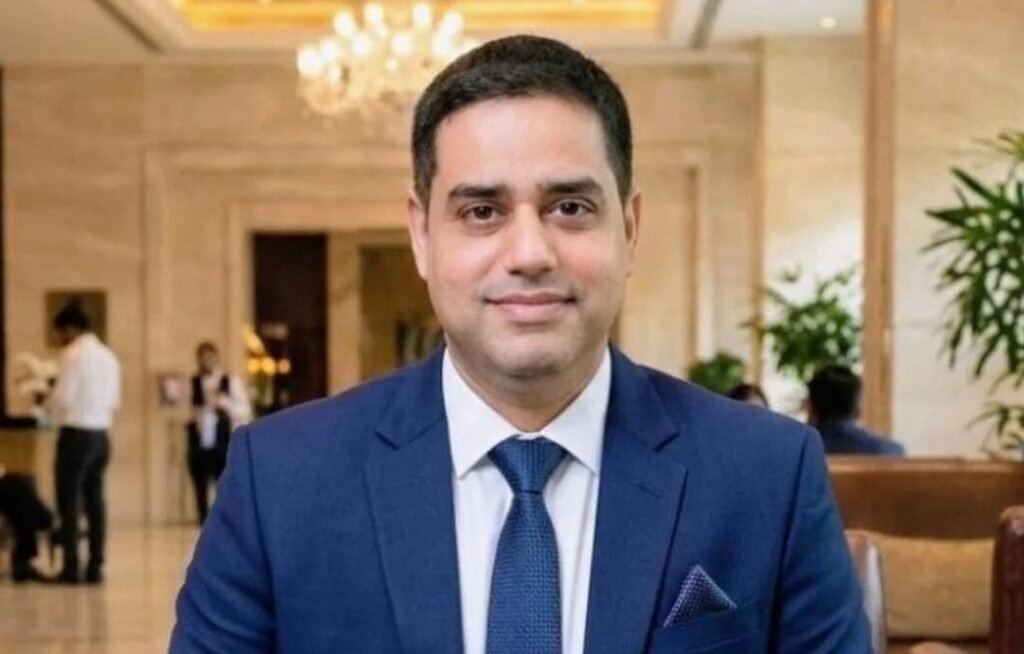
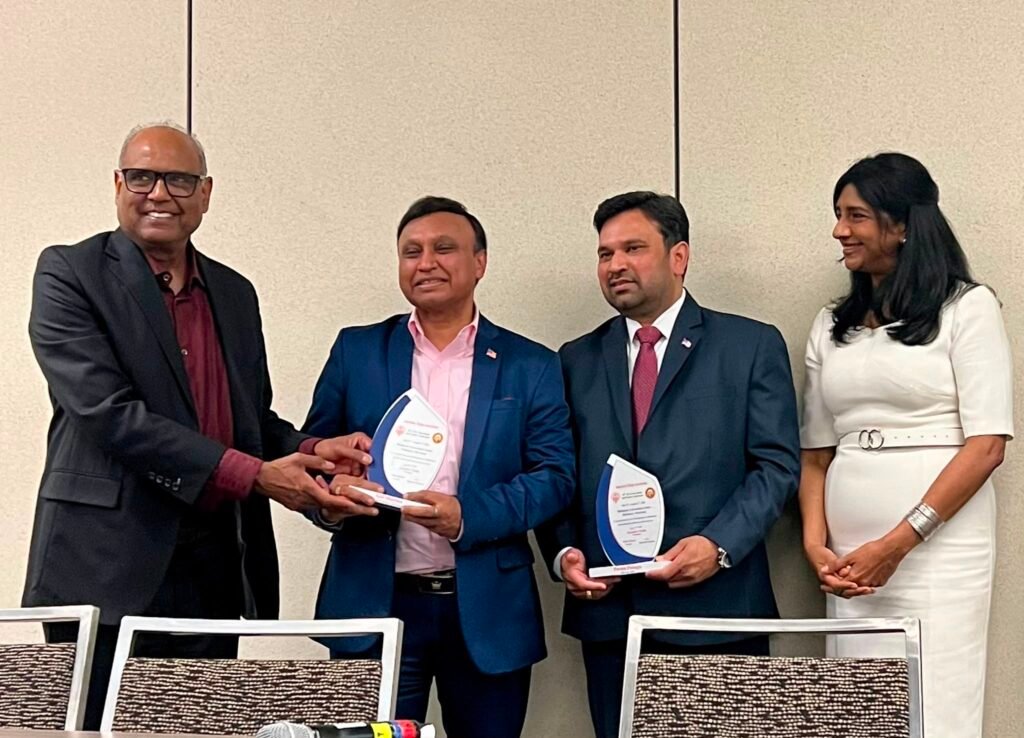
The Chief Executive Officer of 22nd Century Technologies, Anil Sharma, reflected on his entrepreneurial journey, saying he was once the company’s “Chief Everything Officer” when it began as a small IT consulting operation. ATA Moderator Anil Boinapalli
Delivering the keynote address at the Business Forum during the 19th American Telugu Association (ATA) Conference and Youth Convention in Baltimore on July 31, 2026, Sharma recounted the challenges of launching his business from the ground up.
“It wasn’t dramatic. It was terrifying. A small business has no margin for error and no brand name to hide behind. My own skills were the brand,” Sharma said. He recalled handling every aspect of the business himself, including project delivery, business development, accounting, and recruiting.
“But we had decided not to give up. We worked hard, won the trust of customers. And we started growing until we got knocked down. The dot-com bust,” he said.
Advertisement
Sharma also reflected on the impact of 9/11, which forced him to make difficult decisions and nearly shut down the business. “I took a corporate job. But the entrepreneur bug was still there, so I started again,” he said.
Today, 22nd Century Technologies supports mission-critical digital transformation initiatives for federal, defense, state, and local government agencies across all 50 states. “We grew from a small startup into one of the leading government IT services providers in the country,” Sharma said. He added that artificial intelligence and innovation are at the core of the company’s work in delivering secure digital transformation across government while making public services “smarter, simpler, and more citizen-friendly.”
He added, “We see our role as more than a service provider. We think of ourselves as partner and translators, merging cutting-edge ideas and customer needs and making them practical, secure, and mission-ready.”
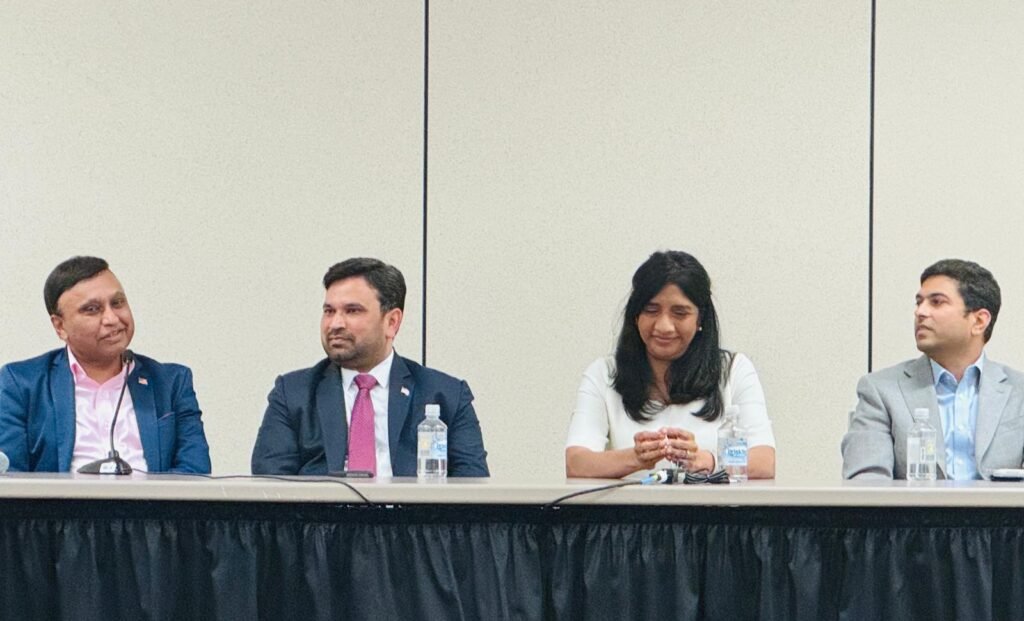
Sharma said his remarks on entrepreneurship, scaling technology solutions, and public-private innovation were rooted in his own experiences.
“My story is no different. I was asked to speak today about entrepreneurship, scaling technology solutions, and public-private innovation, so let me tell you all three, through my own journey,” he said.
Reflecting on the early days of his career, Sharma recalled unexpectedly losing his first job shortly after arriving in the United States.
“I found out later I’d been hired as a temporary replacement for someone on maternity leave. Nobody mentioned that on day one. My wife and our seven-month-old daughter had just joined me,” he said. “I knew almost no one in that city. I remember standing there thinking: the ground I thought was solid just disappeared under me.”
He described the uncertainty his family faced during that period. “I still remember the quiet of that apartment. My daughter asleep. My wife asking, gently, what the plan was. I didn’t have one. I had a hundred dollars and a decision to make: go home, or figure it out,” he said, adding that in the weeks that followed, he focused on finding a way to provide for his family.
Sharma said he ultimately turned that “struggle” into an “opportunity,” leading to the founding of 22nd Century Technologies.
Illustrating the company’s growth, Sharma said its first U.S. Army contract, valued at $42,000, eventually expanded into more than $42 million in business from the same customer.
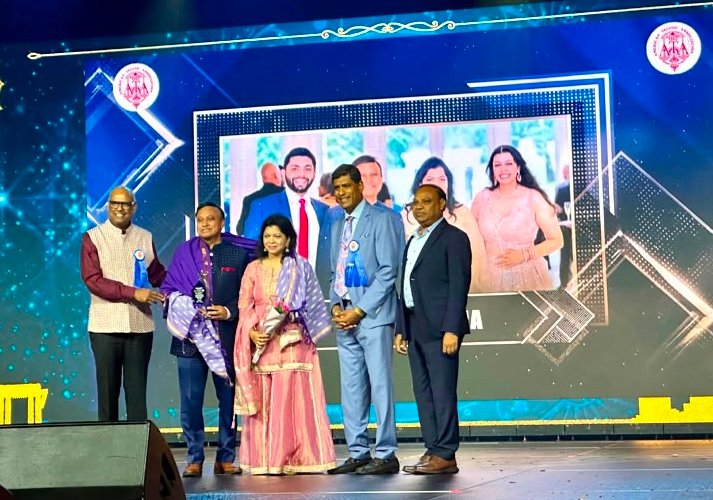
He also highlighted the company’s role in the Internal Revenue Service’s paperless initiative. “Paperless IRS initiative, announced right at our own offices by Treasury leadership, a small symbol of how far we’d come from a two-person consulting shop to a partner trusted inside the country’s most sensitive institutions,” he said, emphasizing, “It’s all about building trust.”
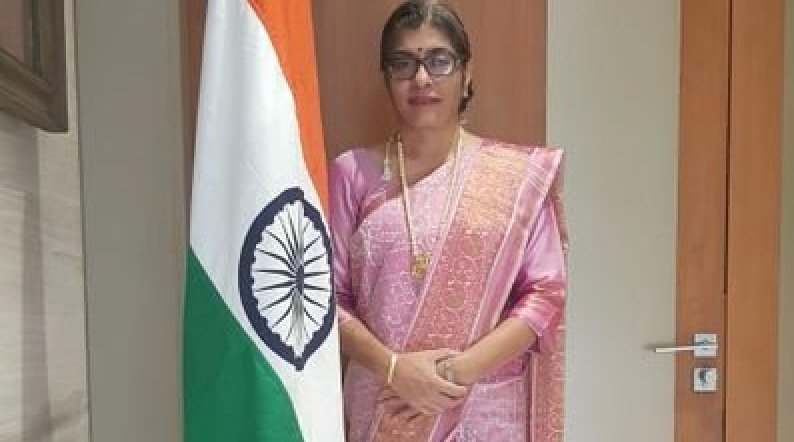
Maryland Lieutenant Governor Aruna Miller and Chief Digital and Information Officer of the U.S. Department of Transportation Pavan Pidugu also participated in the forum.
Reflecting on their achievements including himself, Sharma said, “Three very different professions, public service, government technology, and entrepreneurship. Different journeys, different paths, but one common belief: that through hard work, education, and perseverance, anything is possible in America.”
Describing his own experience as an immigrant, Sharma said, “I am a first-generation immigrant. I landed in this country with a suitcase, an engineering degree, and ambition, but very little certainty. No roadmap. No guarantees. No safety net.”
He said he arrived with dreams and the belief that hard work could create opportunities not only for himself but also for others.
Sharma said the story of Indian Americans continues to evolve and encouraged the audience to give back to the community. “Let’s invest in our community, mentor the next generation, and open the doors that were once closed. Because when one of us rises, we all rise. When we lead, we reshape the narrative,” he said.
He also thanked Miller and Pidugu for demonstrating leadership in public service. “Watching people who look like us, sound like us, and carry our values into such big positions is inspiration to so many people, especially our young generations,” Sharma said.
Addressing aspiring entrepreneurs who are building their own companies, “Your own contract, your own version of that first terrifying leap: the invisible years don’t last forever. None of the late nights, the doubt, the folding table, none of it is wasted. It’s the foundation. It’s a journey. Success will come.”