Join WhatsApp Channel

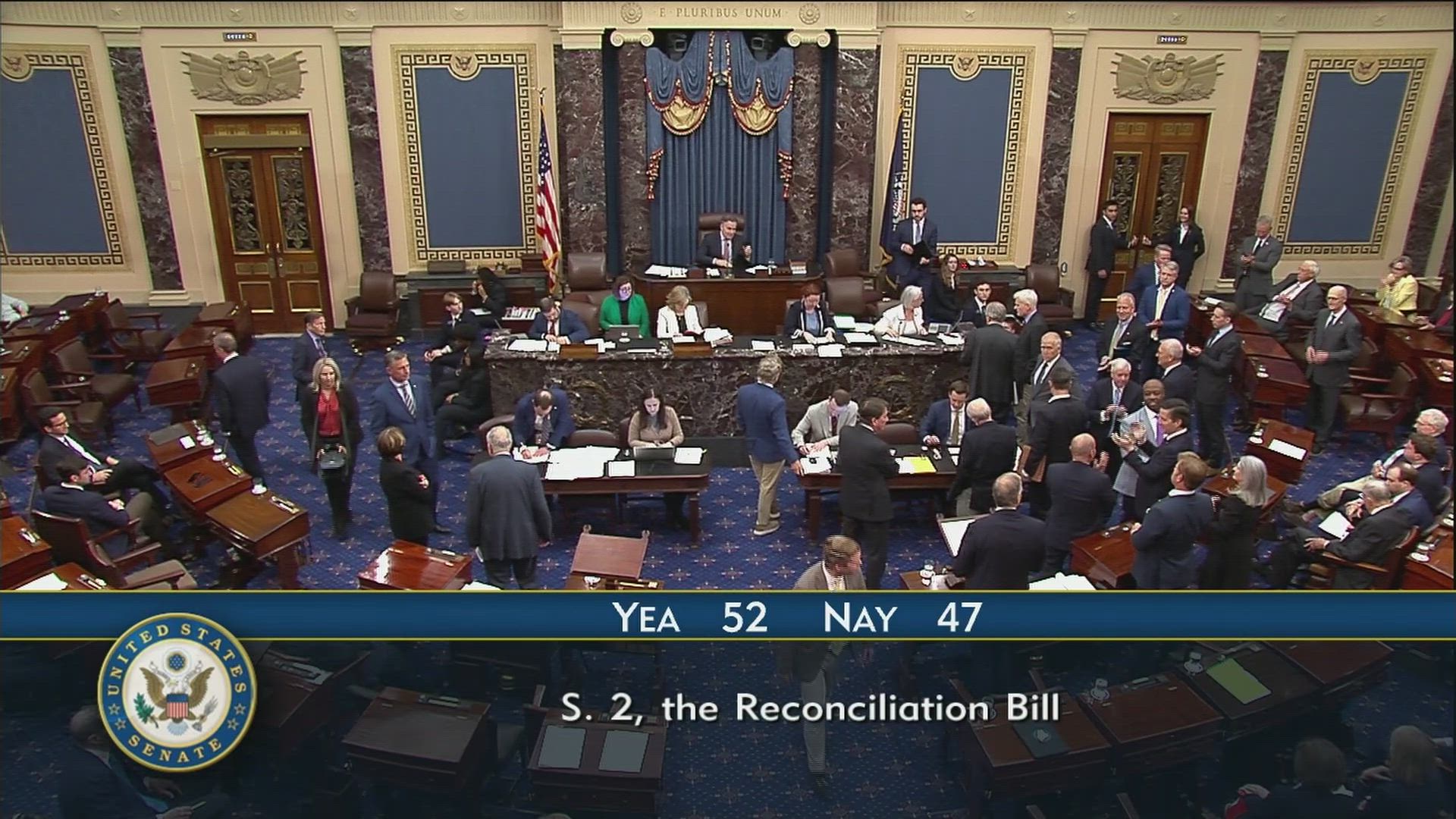
The US Senate has approved a long-delayed funding package for the Department of Homeland Security’s immigration enforcement agencies following an arduous overnight legislative battle which was dominated by disputes over the Trump administration’s “anti-weaponization” fund.
Lawmakers passed the roughly $70 billion package by a marginal 52-47 vote on June 5 morning, securing funding for Immigration and Customs Enforcement (ICE) and the Border Patrol through the remainder of President Donald Trump’s term.
Republican Senator Lisa Murkowski of Alaska joined the Democrats in opposing the measure, which is now headed to the House of Representatives.
GOP lawmakers pushed the package through using the budget reconciliation process – a method of fast-tracking fiscal and tax legislation in the US Congress – allowing it to pass without Democratic support. The final approval for the bill came after a marathon “vote-a-rama” which lasted more than 18 hours, during which senators considered dozens of amendments, reports CBS News.
While the bill focused on immigration enforcement funding, much of the debate centered on the Justice Department’s controversial anti-weaponization fund, a proposal that would have provided taxpayer-funded compensation to individuals who claimed to have been unfairly targeted by the previous federal government.
The fund faced scathing criticism from Democrats and had greatly divided Republicans, causing enough discord within the GOP ranks to delay the earlier plans to have it greenlit before the Memorial Day recess.
Ahead of the vote, Republican leaders sought assurances from the administration that the fund would not move forward.
Acting Attorney General Todd Blanche told lawmakers this week that the administration was “not moving forward” with the programme, but some senators remained unconvinced after he declined to provide a written commitment and Trump continued to publicly praise the idea.
Democrats repeatedly sought to exploit those concerns during the lengthy amendment process.
An early Democratic-led amendment aimed at blocking funding linked to the programme failed to go by a single 50-49 vote. Republican senators Susan Collins, Jon Husted and Dan Sullivan joined Democrats in backing the measure.
A separate amendment from Republican Senator Thom Tillis sought to redirect money earmarked for the fund towards fraud enforcement. It attracted bipartisan support though ultimately failed.
Several other amendments designed to restrict, reshape or redirect the proposed fund were also introduced throughout the day and night, though none secured the votes required for passage.
One of the more notable proposals came from Republican Senator Bill Cassidy and Democratic Senator Chris Van Hollen, who sought to redirect the money towards law enforcement officers who defended the US Capitol during the January 6 attack. That amendment was defeated 52-46.
The debate highlighted lingering unease among some Republicans, even as party leaders worked to keep the broader funding package on track.
Senate Majority Leader John Thune defended the administration’s assurances, describing Blanche’s statement as “definitive.”
“I know that the president has mixed views about this, but the person who would set that up would be the attorney general,” Thune told reporters.
The fight over the DOJ fund came after Republicans were already forced to abandon funding for the president’s $1bn renovation package of the White House’s East Wing, where he plans to build a massive ballroom.
The vote brought Congress closer to ending the prolonged dispute over fiscal year 2026 funding, following a 43-day government shutdown last autumn and a partial shutdown earlier this year.
Opening the debate on the Senate floor Thursday morning, Thune said “We are here today only because Democrats refuse to appropriate a single dollar for our border and immigration law enforcement.”