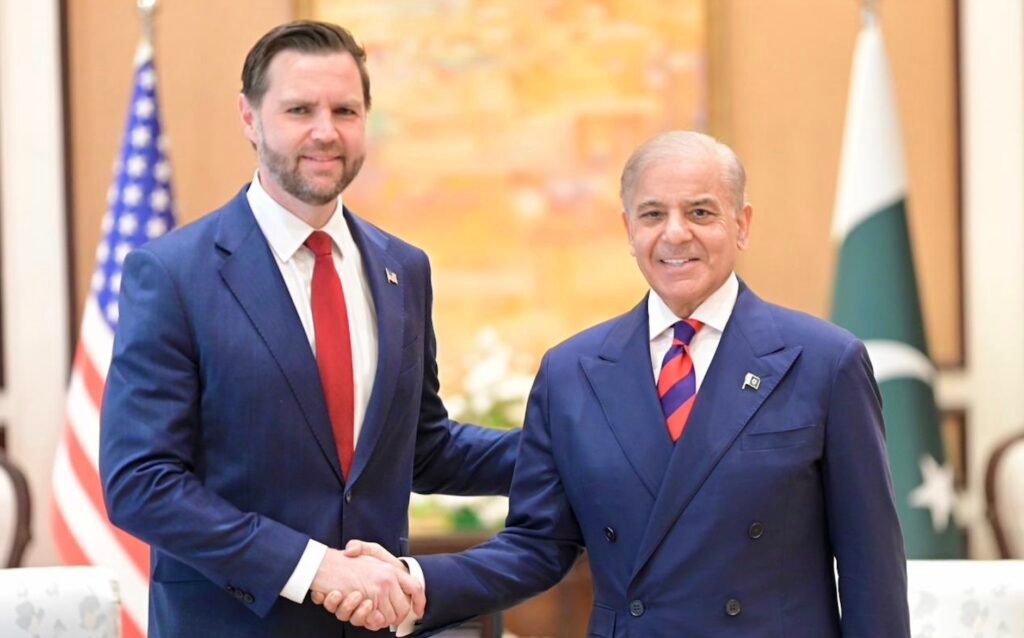
It is a last thing that the government of Prime Minister Shahbaz Sharif needed: a media spotlight on its credibility as a mediator in the ongoing talks between Iran and the United States. A top American broadcaster has flagged a story that speaks of Islamabad quietly allowing Iranian military aircraft to park in its airfields so as to avoid being hit in the ongoing operations. The allegation has also been that Tehran had also made use of Afghanistan for safe keeping its civilian aircrafts, the last word on any military component yet to be said.
The sensational disclosures by CBS News have been attributed to unnamed American officials in what appears to be an effort to shield military and civilian aviation assets in a conflict that does not seem to have any timeline. What has added an element of curiosity is the response of Pakistan. On the one hand the official refrain of the claims being “speculative” and “misleading.” But on the other hand, Pakistan’s Foreign Ministry has said that some Iranian aircraft had stayed put temporarily, only for “routing logistical and administrative support” to the ongoing talks, not for military protection.
The CBS report is “misleading and sensationalized. Such speculative narratives appear aimed at undermining ongoing efforts for regional stability and peace” is the official refrain. Also, the “plain sight” argument that the base in question is at the heart of Rawalpindi and hence impossible to hide from the public eye. But administration officials have reportedly said that after the ceasefire was announced by President Donald Trump in early April, Iran had sent multiple aircraft to Pakistan’s Nur Khan Air Force Base.
But even allies of President Trump on Capitol Hill are up in arms and are demanding that Washington ought to be looking for another mediator. “I don’t trust Pakistan as far as I can throw them. If they actually have Iranian aircraft parked in Pakistan bases to protect Iranian military assets, that tells me maybe we should be looking for somebody else to mediate. No wonder this damn thing is going nowhere,” said Senator Lindsey Graham of South Carolina at a hearing in which the Defence Secretary Pete Hegseth was testifying. Republican Senator Graham is one of the top allies of the White House in Congress.
Advertisement
Asked if it would be “consistent” for Islamabad to act as a fair mediator if the news report is confirmed, Hegseth maintained “ I wouldn’t want to get into the middle of these negotiations.” Blunt was the reply of Senator Graham: “ I do. I want to get in the middle of those negotiations.” But President Trump has come to the defence of Pakistan stressing that he is not reconsidering that country as a mediator. “They’re great. I think the Pakistanis have been great. The field marshal and the prime minister of Pakistan have been absolutely great,” President Trump has said.
Israel has long been unhappy with Pakistan as a mediator but has chosen to remain silent because it is not involved in the talks between Tehran and Washington. Even recently Israeli media had taken note of Islamabad’s credentials: does not recognise Israel; no diplomatic relations and Defence Minister Khawaja Asif asking the Muslim world to identify Israel and India as “true and eternal enemies.” Maintaining that Tel Aviv is not happy with Pakistan’s role as mediator, Isreal’s Consul General in Mumbai Yaniv Revach has been quoted as saying “… my government is not happy that Pakistan is the one mediating. However Israel is not part of this negotiation. We are not negotiating with Pakistan… we trust the American government to take care of Israeli security interests in this matter.
In all the noise generated, some media reports have not failed to recollect that this could actually be a way of Pakistan returning a favor extended to it some five decades earlier. During the 1971 India-Pakistan war over Bangladesh, Iran under the Shah had played host to stationing Pakistan’s hardware assets perhaps at the nudging of the Nixon administration. In the last fifty years Pakistan’s bilateral and trilateral relations with Iran and Israel have taken on different phases and more dangerously so in the nuclear games played out in the current scheme of things.
For Iran there is another history it need to bear in mind if it has indeed sent military aircraft to third countries. During the first Gulf War in 1991, seeing the allied destructive power, President Saddam Hussein of Iraq sent an estimated 140 aircrafts to its “arch enemy” Iran for “safekeeping.” But when it all ended, Tehran refused to return the MIGs and Sukhois and kept them back as compensation or reparation for the 1980-1988 Iran-Iraq war. It is said that Iran integrated some of the Soviet era planes into its air force but a good part of the package is believed to have rotted due to inclement weather conditions.
Disclaimer: The opinions and views expressed in this article/column are those of the author(s) and do not necessarily reflect the views or positions of South Asian Herald.