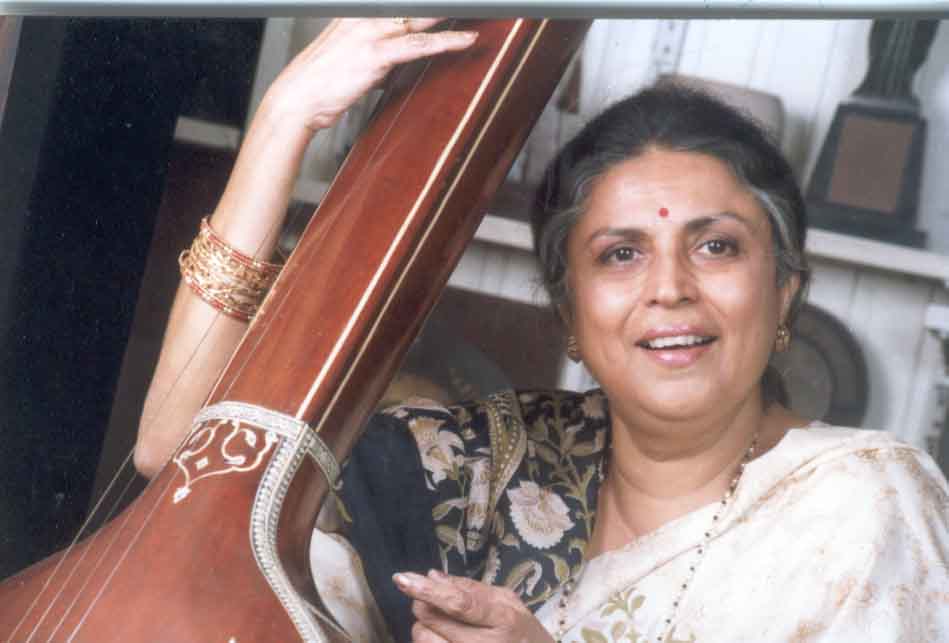
She led a characteristically low-profile and simple life. One could superficially mistake Suman Kalyanpur for any graceful housewife, but to term her a mere hausfrau would be doing a tremendous injustice to her enormous talent. And this gigantic talent breathed her last on May 31 at the age of 89.
Here is a lady who took to the recording microphone far less frequently than her talent deserved, and yet spawned an enviably extensive repertoire of fabulous numbers and sensational hits, primarily in Hindi and Marathi films, but also in the arenas of devotionals, Marathi bhavgeet and ghazals. Add her occasional tryst with a thumri and songs in several languages spanning from Gujarati, Kannada (interestingly the only songs she recorded in this language were under Hindi film composer Jaidev!), Bengali, Punjabi, Maithili, Rajasthani, Assamese, Bhojpuri, Odia and other languages including Chhatisgarhi and you get an inkling of her vocal range and skills.
The voice that mesmerized the nation and beyond in HINDI cinema from the 1954 to 1984 (Rajesh Roshan’s Yaadon Ki Zanjeer and Bappi Lahiri’s Waqt Ki Pukar) sang for almost every top heroine from Meena Kumari to Shabana Azmi and Poonam Dhillon. Her last hit song was Zindagi imtihan leti hai from the 1981 Naseeb with two then young-generation singers Anwar and Kamlesh Awasthi under Laxmikant Pyarelal.
Born Suman Hemmady in 1937 in Dhaka, she later married industrialist Ramanand Kalyanpur in 1958, and she never craved public attention. “What is the reason for this interview?” she wanted to know when I had called for an appointment. Wasn’t it enough that she was THE Suman Kalyanpur? That woman who stood tall in the pantheon of singers alongside Lata Mangeshkar and Geeta in the 1950s and Asha Bhosle as well in the 1960s and 1970s?
Advertisement
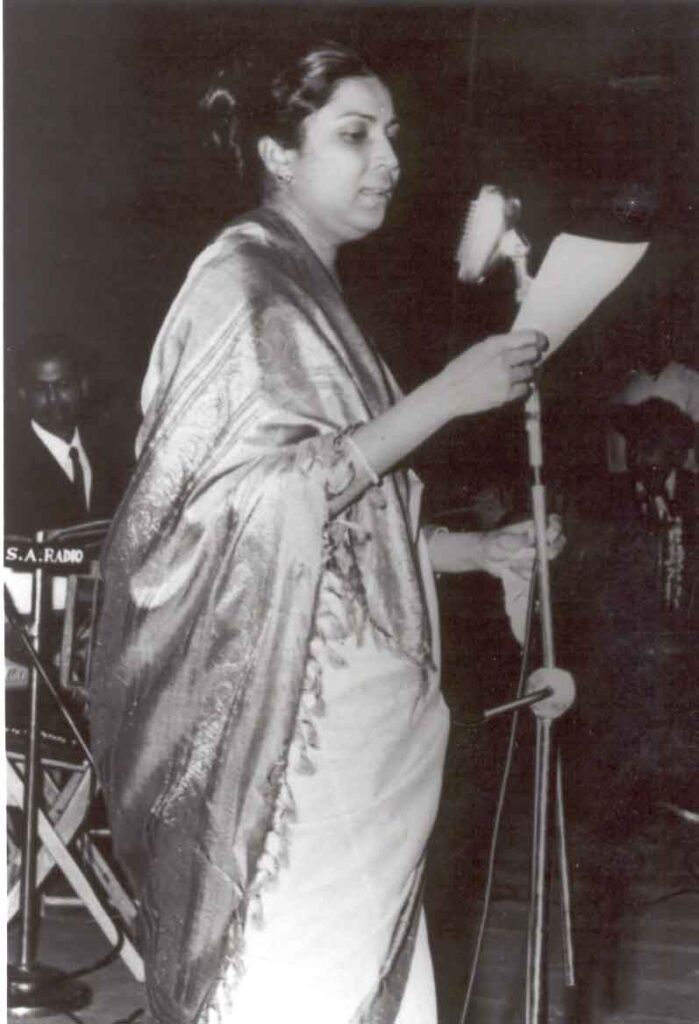
In her own words, “From 1976 to 1977, I declined a good amount of work as I was preoccupied with my husband’s ill-health. After that I never recorded for Marathi films as the trends had changed. But I did the occasional Hindi film song, and my songs from Badaltey Rishtey (the title song) and Naseeb were hits. I also recorded for new composers like Rajesh Roshan, Bappi Lahiri and Anu Malik. But I also worked on various albums.”
She went on, “T-Series released Sunehri Yaadein, a two-volume pack of my film hits, in 1997. I recorded my songs afresh for it and Sonu Nigam and Babla Mehta sang the Rafi and Mukesh duets respectively. I also did Asthavinayak, a Marathi album in 1994, followed by an album of Sant Tukaram’s Abhangs. I have done albums like He Govind He Gopal, Te Sur Aikataa and Kaise Karu Dhyan. I am open to albums that have quality, but the offers must come to me. Otherwise, I am happy with my family, taking it easy and doing my riyaaz.”
Suman would never blame the alleged “Mangeshkar Monopoly” for her limited output. She declared, “I like to look back and think that whatever was in my destiny came to me. I never had any burning ambitions, and I think that I had a great career. I may have had 10 percent of the quantity, but a very huge percentage of my songs have become hits. Actually, I never had any specific intention of becoming a playback singer, and one more factor could be that someone always accompanied me to the recordings, so that a certain kind of associate was kept away!”
Suman never sang cabarets, mujras or any songs with lyrics or situations whereby the visuals would have offended her sensibilities, joint family and later in-laws. Said the songstress, “In any case, I always felt that I could not do justice to that kind of song. My skills and tastes were both towards soft, melody-based numbers.”
Suman’s interests also lay in painting, embroidery, flower arrangements and gardening, and she was in her second year of Arts (at Mumbai’s famous J.J. School of Art) when she recorded her first song. As she put it, “My family always loved music and I was quite fond of singing. Our neighbors included famed Marathi musicians Keshavrao and his wife Jyotsna Bhole.”
At one point she joined the music class in a school where the famous music director Yeshwant Deo was a teacher. As she said, “When I sang at a cultural program in the school, a relative of the Bholes was impressed and signed Yeshwant Deo and me for a Marathi film called Shukraachee Chandani. My friends coerced me too. The film was launched on Dassera day in 1953 with a recording but never took off. After that I never sang in Marathi for a year.”
Talat Mehmood had heard Suman and put her in touch with HMV, where she gave a voice-test. Mohammed Shafi also heard her and signed her for Mangu. She also sang for small-time composer Nashad in Darwaza, but her breakthrough came with Meri preet mera pyar (Teerth-Yatra) in 1958.
The similar vocal flavor to Lata Mangeshkar she had, when even composers, other singers and musicians mistook many of her songs for Lata, seemed to prove a professional liability, but Suman denied that, and even mentioned their duet, Kabhi aaj kabhi kal kabhi parson from the 1959 film Chand composed by Hemant Kumar. And she added, “Why should I artificially change my voice? And how was it possible to change my style just to make it totally different from Latabai’s?”
Quantity-wise, in Hindi cinema, Suman sang most for Usha Khanna—over 100 songs – and Shankar-Jaikishan—over 50 songs that were mostly hits. Considered lucky for duets, she still sang several solos, like her chartbusting Sun le Bapu yeh paigham (Balak), Dil ek mandir hai (Dil Ek Mandir) and Allah karam karna (Dada).
In her mother-tongue Marathi, her first song was Bhaatuklichaa khel maandila under Vasant Prabhu for the film Pasant Aahe Mulgi, after which she never looked back for over 20 years.
My final question to her was: was she satisfied with what she achieved? And her instant reply was, “Which musical artiste can ever be truly satisfied? Can you ever reach perfection or complete satisfaction in the matter of learning music?”
Major Honors
- Padma Bhushan, 2023 (third-highest Civilian award in India)
- Maharashtra Vaibhav Puraskar – 1998
- P. Savlaram Memorial Award – 1997
- Dr TMA Pai Foundation award for Outstanding Konkani Artiste – 1999
- Sur-Singar Samsad Miya Tansen Award for Manmohan man mein / Kaise Kahoon – 1964
- Same award in 1969 – Ankhiyaan barsan laagi /Boond Jo Ban Gaye Moti
- Same award in 1970 –Aayi re aayi re /Sati Sulochana
- 1970 to 1973: Four consecutive Gujarat State Awards
- 1972: 5th Annual Punjabi Film and Drama Award for Dupatta
- 1965 & 1966: Maharashtra State awards for Best Playback Singer (Marathi)
- 1965: Best Playback Singer Award in Bhojpuri
Some Firsts:
- First Indian artiste to appear on BBC (1971) and Trinidad Television (West Indies) in 1969
- First Indian artiste to perform in USA in 1969 and UK in 1971, and at Wembley Stadium in 1974