
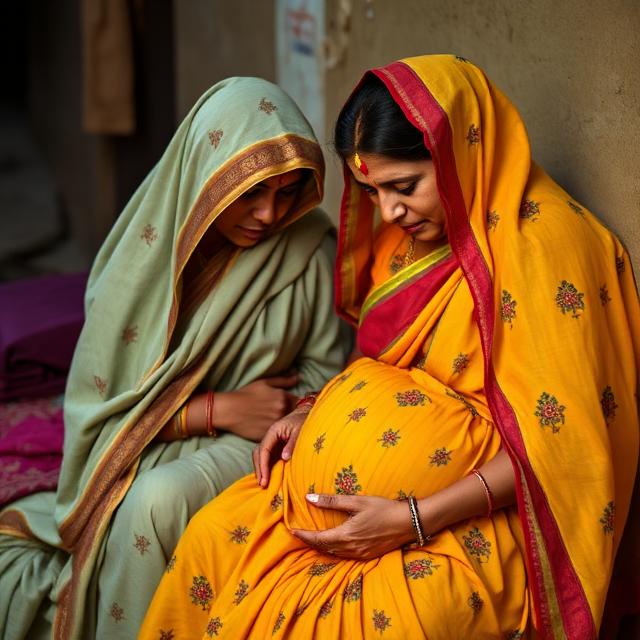
India has made remarkable strides in reducing maternal deaths over the past two decades, expanding hospital births and improving access to healthcare for millions of women. Yet in parts of the country, childbirth remains a perilous journey measured not only in hours but in kilometers walked.
In the remote district of Sidhi in central India, villagers still carry pregnant women on makeshift cots across muddy tracks and uneven terrain to reach ambulances waiting on the nearest road.
For at least 53 women, that journey ended in tragedy.
The deaths, recorded between April 2025 and March 2026, have prompted India’s National Human Rights Commission (NHRC) to seek an explanation from the state government of Madhya Pradesh after reports highlighted severe shortages of doctors, poor healthcare infrastructure and inadequate transport links.
Advertisement
The figures reveal a troubling reality behind India’s broader public health success story.
Most of the women who died were around 26 years old. Many were expecting their first or second child. Their deaths occurred in a district where healthcare facilities often lack specialist doctors and emergency care services, forcing critically ill patients to travel long distances for treatment.
For women facing pregnancy complications, those delays can prove fatal.
“Time is everything in obstetric emergencies,” public health specialists say. Severe bleeding, high blood pressure, infections and obstructed labor can quickly become life-threatening if treatment is not immediately available.
In Sidhi, immediate care is often out of reach.
Residents and ambulance operators describe villages cut off from reliable road networks, particularly during the annual monsoon rains. In some communities, vehicles cannot reach homes at all. Families and neighbors must carry women in labor for several kilometers before they can access motorized transport.
The images are strikingly at odds with the narrative of a rapidly modernizing India that is investing heavily in digital infrastructure, high-speed rail and advanced technology.
Yet they also underscore one of the country’s most persistent development challenges: ensuring that economic growth reaches its most remote communities.
Official state data suggests that Sidhi has consistently ranked among the poorest-performing districts in Madhya Pradesh on maternal health indicators. Local health centers and district hospitals reportedly struggle with shortages of doctors, nurses and technical staff. Patients requiring specialist treatment are frequently referred to hospitals in the neighboring city of Rewa, adding crucial hours to emergency care.
The National Human Rights Commission said the allegations raise concerns about the fundamental right to life and healthcare. It has ordered state authorities to submit a detailed report on maternal health services, staffing levels and corrective measures within two weeks.
The intervention has renewed attention on the uneven geography of healthcare access across developing economies, where national averages often conceal deep regional disparities.
India’s maternal mortality ratio has fallen sharply over the last two decades, reflecting improvements in institutional deliveries, prenatal care and public health programs. But experts note that progress remains fragile in isolated rural districts where poverty, poor transport and understaffed health facilities continue to shape outcomes.
For families in Sidhi, the statistics are deeply personal.
Each death represents a mother who never returned home, a child who may grow up without maternal care and a family left to grapple with loss that many believe could have been prevented.
As officials investigate the causes, residents say the solutions are neither complicated nor expensive: better roads, functioning health centers, trained medical staff and ambulances that can reach every village.
Until then, for many women in this corner of India, the journey to motherhood remains a test of survival.