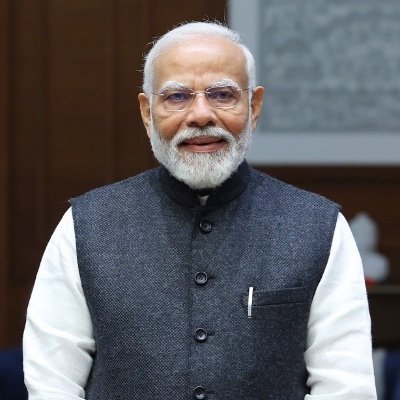
As Prime Minister Narendra Modi embarks on a five-nation diplomatic tour spanning the United Arab Emirates, Netherlands, Sweden, Norway and Italy between May 15 and 20, policymakers, exporters and strategic analysts are increasingly viewing the visit less as a routine diplomatic exercise and more as an urgent attempt to insulate India’s economy from a rapidly deteriorating global environment marked by Middle East tensions, rising crude prices, tightening supply chains and mounting pressure on foreign exchange reserves.
The timing of the visit has sharpened expectations. With oil markets rattled by escalating US-Iran tensions and Brent crude remaining volatile, New Delhi is expected to use the UAE leg of the tour to secure assurances on energy stability, long-term supply arrangements and investment flows at a time when India’s import bill risks widening sharply. Officials and analysts say the outreach to Abu Dhabi carries implications extending well beyond hydrocarbons, particularly because the UAE has emerged simultaneously as India’s third-largest trading partner, a major investment source and a critical financial corridor for Indian businesses operating across West Asia and Africa.
The political messaging around the visit has also drawn attention because it comes immediately after Modi’s public appeal urging Indians to conserve fuel, reduce discretionary imports such as gold and postpone non-essential foreign travel in view of global uncertainty. While opposition parties questioned the optics of a multi-country overseas tour during a period of domestic austerity messaging, government officials and trade bodies argue that the diplomatic outreach is fundamentally linked to India’s economic stabilization strategy.
Trade analysts expect the European leg of the visit to focus heavily on technology partnerships, resilient manufacturing ecosystems and investment-led industrial cooperation, especially after the momentum generated by the India-EU trade negotiations and the India-EFTA Trade and Economic Partnership Agreement. The expectation in policy circles is that India will attempt to leverage geopolitical fragmentation to position itself as an alternative manufacturing and technology destination for European companies seeking to reduce excessive dependence on China-centric supply chains.
Advertisement
The visit to the Netherlands is expected to carry particular significance in semiconductors, water management, defense technology and green hydrogen. With bilateral trade already touching nearly USD 28 billion and Dutch cumulative investments crossing USD 55 billion, analysts believe discussions may increasingly move from traditional trade expansion towards strategic industrial partnerships, especially in advanced manufacturing and logistics infrastructure.
Similarly, Modi’s Sweden and Norway engagements are being viewed through the lens of India’s long-term technological transition. Sweden’s strengths in innovation, clean mobility, defense systems and AI-driven industrial ecosystems align closely with India’s push to build domestic capabilities in emerging sectors. Expectations are also high around Modi’s participation alongside Ursula von der Leyen at the European Round Table for Industry, where business leaders are likely to focus on investment predictability, digital trade architecture and supply chain diversification.
The Nordic outreach, particularly through the India-Nordic Summit in Oslo, is expected to deepen cooperation in renewable energy, maritime technologies, climate adaptation, Arctic research and the blue economy. Strategic experts say the Nordic region’s expertise in sustainability and clean technologies could become increasingly relevant for India as it balances industrial growth with energy-transition commitments. Norway’s sovereign wealth investments in Indian capital markets, estimated at nearly USD 28 billion, are also likely to feature prominently in discussions around long-term infrastructure financing and green investments.
The Italy leg of the tour is being interpreted as part of a broader effort to consolidate India’s emerging strategic alignment with southern Europe, particularly in defense manufacturing, clean energy and advanced engineering. Under the India-Italy Joint Strategic Action Plan 2025–2029, both countries are expected to push for deeper industrial cooperation at a time when Europe itself is attempting to reconfigure economic and strategic dependencies amid global uncertainty.
Exporters and industry groups have projected the visit as a potentially important trigger for investment announcements and market access gains. The Federation of Indian Export Organizations said the countries covered during the visit collectively account for bilateral trade exceeding USD 70 billion and remain central to India’s ambitions in engineering goods, pharmaceuticals, digital trade, clean technologies and logistics.
Yet analysts caution that expectations from the visit will ultimately be measured less by diplomatic symbolism and more by whether India secures tangible outcomes — including energy supply assurances, technology transfer frameworks, semiconductor collaborations, sovereign investment commitments and market access improvements. In an increasingly fractured global economy where energy insecurity, trade protectionism and geopolitical rivalries are converging simultaneously, Modi’s five-nation outreach is being seen as an attempt to secure strategic economic buffers before external shocks begin exerting deeper pressure on India’s growth trajectory.