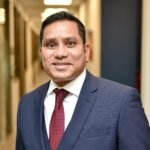
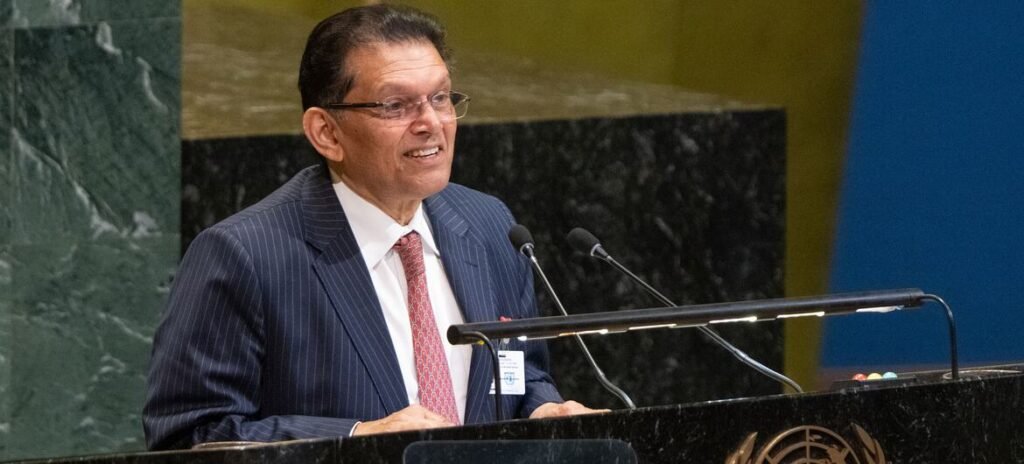
The United Nations General Assembly on June 2 elected Bangladesh Foreign Minister Khalilur Rahman as President of its eighty-first session, set to begin in September. Rahman secured 99 votes in a secret-ballot election, defeating Cyprus candidate Andreas Kakouris, who received 91 votes.
Addressing Member States after the election, Rahman emphasized the need for the United Nations to strengthen its effectiveness and rebuild confidence in the institution.
“We must collectively demonstrate that the UN can adapt, reform and better deliver, and justify every penny Member States — all of you — contribute, in order to restore trust in our Organization,” he said according to a statement from the United Nations.
Rahman, a career diplomat who joined Bangladesh’s foreign service in 1979, has held several senior positions within the United Nations system. He was nominated by the Asia-Pacific Group under the UN’s regional rotation system, which is designed to ensure equitable geographic representation.
Advertisement
Acknowledging the challenges facing the international community, Rahman said he would assume office at a time when the United Nations is confronting growing conflicts, shrinking humanitarian space, setbacks in human rights, and slowing development progress.
“All this is happening at a time when multilateralism is coming under increasing pressure, and our Organization is facing financial stress,” he said.
Rahman pledged to work closely with Member States to address these issues and said Bangladesh’s longstanding contribution to UN peacekeeping operations would help shape his approach to conflict prevention and civilian protection.
He also highlighted the importance of advancing the 2030 Agenda for Sustainable Development, noting that significant gaps remain between commitments and implementation. Pointing to ongoing energy insecurity, particularly in developing nations, he warned that the current global energy crisis could become one of the most severe in decades.
“I intend to work closely Member States [to] prevent another lost decade on development, in particular in developing countries,” he said.
In addition, according to the United Nations, Rahman pledged to advocate for closing sustainability financing gaps, addressing gender inequality, strengthening human rights initiatives, promoting the safe and equitable use of artificial intelligence, and advancing implementation of global agreements, including the Doha Programme of Action for Least Developed Countries.
Outgoing General Assembly President Annalena Baerbock of Germany congratulated Rahman and expressed confidence in his leadership.
“This is one of the best jobs in the world that you can have,” she said, adding that his extensive multilateral experience would be particularly valuable at a time when achieving consensus has become increasingly difficult.
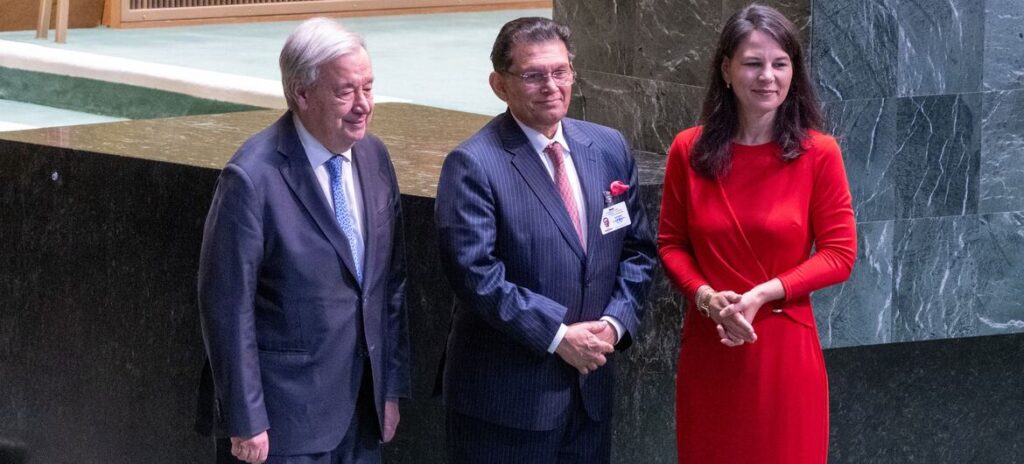
Baerbock noted that the remaining three months of the current session would serve as a transition period and compared the handover to preparing for the next football match before the current one has ended.
“And like in football, in these days, we are definitely not knowing what is going to happen in the next three months,” she said. “We will play the last part of this session together.”
United Nations Secretary-General António Guterres said the eighty-first session would present both significant challenges and opportunities. He underscored the importance of diplomacy, dialogue, and cooperation in addressing global issues.
For eight decades, he noted, the United Nations has provided a platform for countries to work together on common challenges. “I have enormous hope that the eighty-first General Assembly will live up to this great promise,” he said.
Several Member States highlighted the significance of the upcoming session, which will include the selection process for the next UN Secretary-General. Delegations called for a transparent and inclusive process, while emphasizing the General Assembly’s central role in promoting multilateral cooperation and international solidarity, the UN added.
Representatives from the Asia-Pacific, Latin American and Caribbean, African, Western European and Other States groups expressed support for Rahman’s leadership and urged continued efforts on issues including Security Council reform, development, transparency, and engagement with civil society.
The United States delegation congratulated Rahman and described the current moment as “critical” for the United Nations. It called for continued institutional reforms, improved efficiency, cost reductions, and a stronger focus on measurable outcomes.
Canada, speaking on behalf of the Western European and Other States group, stressed the importance of maintaining trust in international law and the multilateral system. The delegation expressed confidence that the incoming president would support an inclusive and transparent agenda responsive to the concerns of all Member States.
During the meeting, Secretary-General Guterres also conducted the traditional drawing of lots to determine seating arrangements for the upcoming session. Morocco was selected to occupy the first seat in the General Assembly Hall, with other countries following in English alphabetical order.
The Assembly also elected 16 Member States as Vice-Presidents of the plenary, alongside the five permanent members of the Security Council, which serve annually in that role. In separate meetings held afterward, the Assembly’s six Main Committees elected their respective bureau members by acclamation for the upcoming session.