The Quadrilateral Security Dialogue, better known as the Quad, has come a long way. What began as a loose conversation among four democracies in 2007 has steadily evolved into a key strategic grouping in the Indo-Pacific.
Composed of Australia, India, Japan, and the United States, the Quad entered a near-decade-long hiatus. After its revival in 2017 during the first Trump administration, the Quad now sits at the center of debates over regional security, economic resilience, and the shifting balance of power in Asia.
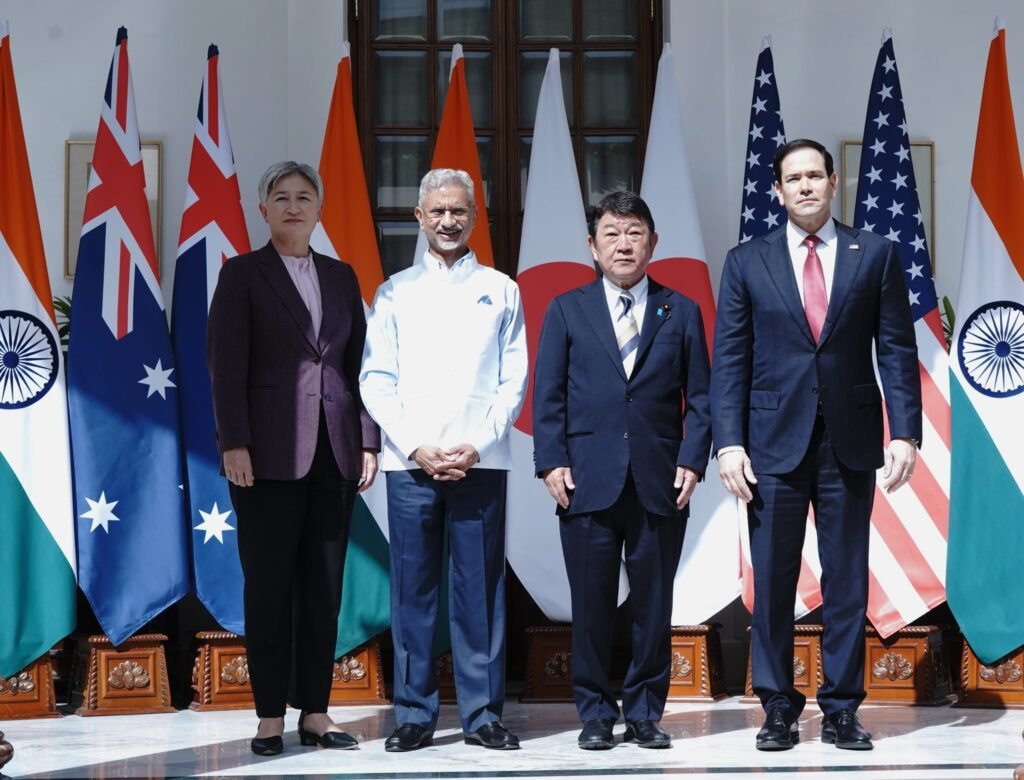
During their May meeting in New Delhi, Quad foreign ministers reaffirmed their commitment to a free, open, and inclusive Indo-Pacific. To that end, they announced, among other things, the Indo-Pacific Energy Security Initiative, the Critical Minerals Initiative Framework, the Indo-Pacific Maritime Surveillance Collaboration, and the Ports of the Future Partnership. Still, the failure to hold a summit while India chaired the assemblage has given grist to those writing the grouping’s obituary.
Pivotal Crossroads
Advertisement
The Quad finds itself at a crucial turning point. Its ability to translate inspiring words into real results will determine how meaningful it remains. If successful, it could become a strong and steady pillar in the Indo-Pacific framework. Otherwise, the group might just be seen as another diplomatic forum known more for its statements than for its real achievements.
The revival of the Quad illustrates the changing landscape of global politics. Amid China’s growing military presence, assertive maritime claims and rising economic influence, these four nations are finding new ways of enhancing cooperation. While leaders often insist that the group is not aimed at any country, China’s rise remains a key factor fueling its renewed energy.
Admittedly, the Quad’s strategic rationale is persuasive. Each participant offers unique assets. The United States provides global influence and military capability. Japan supplies financial robustness and cutting-edge technology. Australia contributes strategic geographical positioning and essential minerals. India delivers demographic magnitude, market potential and a pivotal role in the Indian Ocean. Collectively, they constitute a capable coalition dedicated to a free, open and rules-based Indo-Pacific.
Yet shared concerns do not automatically translate into shared priorities. Managing differences is one of the Quad’s biggest challenges. Washington increasingly views competition with China as the defining geopolitical issue of the century. Yet the recent reversion of the US Indo-Pacific Command to Pacific Command has raised questions about the broader US commitment to the Indo-Pacific. Japan largely shares Washington’s perspective, particularly on maritime security and Taiwan.
India takes a more cautious approach. Despite differences on a variety of issues, New Delhi values its partnership with Washington but remains committed to strategic autonomy. Amid ongoing border tensions, India’s economic ties with China endure. New Delhi is unlikely to support anything resembling a formal military alliance.
Australia, too, walks a careful line. It is more outspoken on security concerns. Yet Canberra is deeply tied to Beijing as its largest trading partner.
These differing perspectives can make consensus difficult, especially in times of crisis.
The Quad also faces questions about its credibility. Despite its visibility, the grouping lacks the institutional depth of alliances like NATO. It has no mutual defense pact, no standing secretariat and no binding treaty commitments. Its flexibility is a strength but it can also limit its ability to act quickly and decisively.
Across the wider region, many countries remain wary of being drawn into great-power competition. Members of the Association of Southeast Asian Nations, in particular, have sought to maintain a careful balance between Washington and Beijing rather than choosing sides. If the Quad is viewed primarily as an instrument for containing China, it could end up distancing the very countries whose support and cooperation it hopes to secure.
Economic competition presents another challenge. Security cooperation on its own is not enough. The region cares deeply about infrastructure, supply chains, digital connectivity, clean energy and development. China’s influence is still strong in these areas. For the Quad to remain meaningful and effective, it needs to offer trustworthy and appealing alternatives that can truly make a difference.
However, these challenges also open up exciting opportunities. The Quad has already proven it can do more than just ensure security. Its teamwork on COVID‑19 vaccine distribution highlights its capacity to deliver real benefits to the public. There is much promising potential in emerging tech areas such as cybersecurity, artificial intelligence, climate resilience and supply chain security.
The Quad has an opportunity to redefine its identity not just as a group united by opposition but also by what it creates together. Focusing on economic security is especially promising. All four countries are teaming up to strengthen critical technologies and supply chains. By working together on semiconductors, rare earths, telecommunications, and clean energy, the Quad can help create a more resilient and diverse global system that benefits everyone.
Maritime security is another important area where the grouping can truly make a positive difference. The sea lanes across the Indo-Pacific are essential to global trade. Working together through coordinated efforts in surveillance, disaster response and anti-piracy activities can help build regional trust while keeping tensions in check.
Right Balance
The Quad’s significance ultimately lies in its potential to shape the Indo-Pacific’s future. As the region becomes the center of global economic and strategic activity, today’s choices on technology standards, trade rules and maritime governance will have long-term consequences. Working together, the Quad can promote open, fair principles grounded in international law.
Ambition alone, however, will not be enough. The Quad’s next phase will depend on its ability to deliver concrete outcomes, including improved security, stronger economic resilience and support for regional prosperity. It must strike the right balance by being flexible enough to accommodate differences yet effective enough to act.
Disclaimer: The opinions and views expressed in this article/column are those of the author(s) and do not necessarily reflect the views or positions of South Asian Herald.