Join WhatsApp Channel

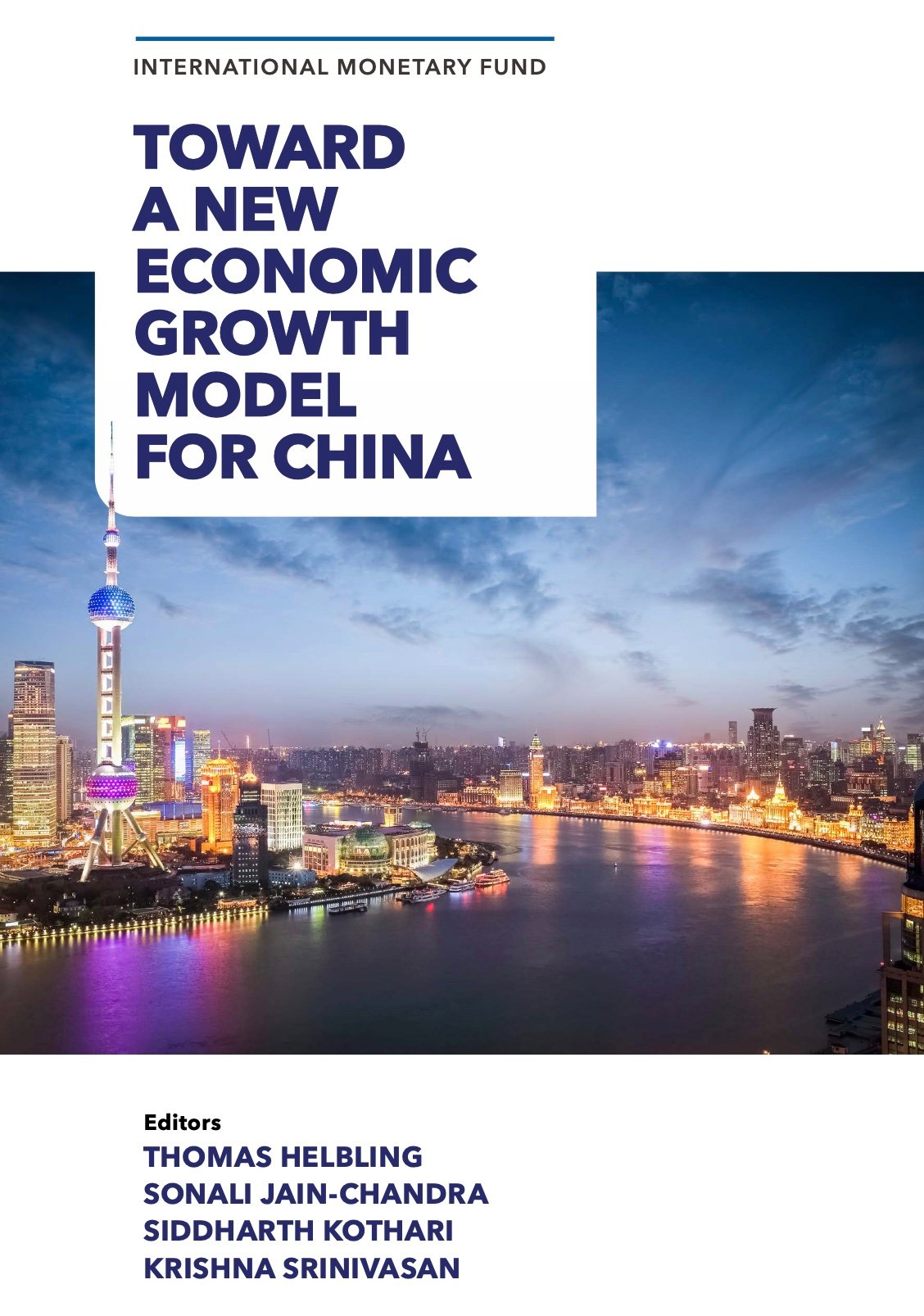
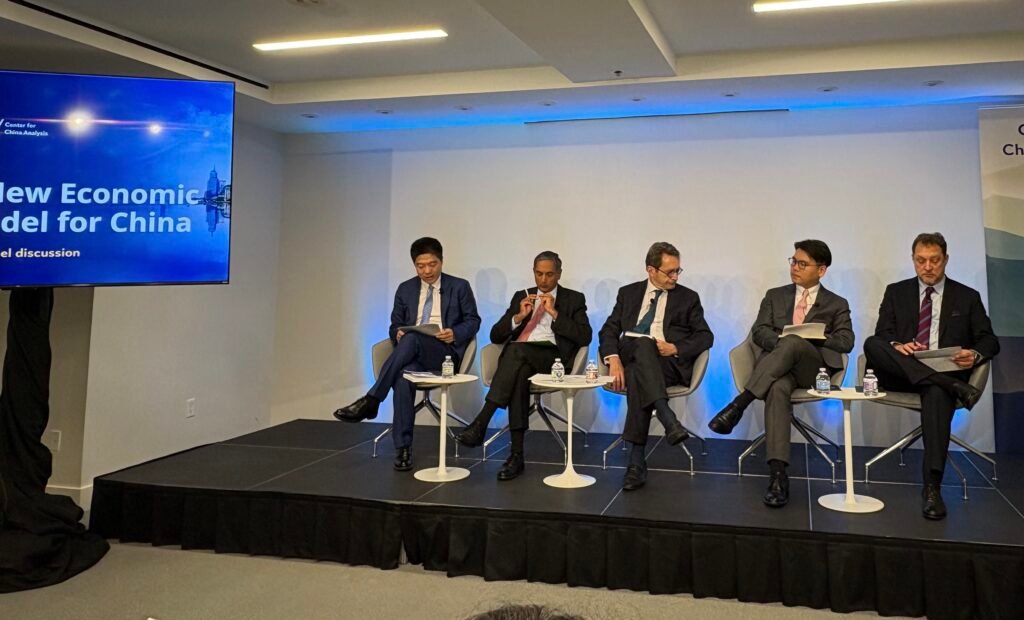
The International Monetary Fund’s (IMF) Asia and Pacific Department launched “Toward a New Economic Growth Model for China” on September 23 at the Asia Society Policy Institute’s Center for China Analysis in Washington, D.C.
The publication argues that China needs a growth model built more firmly on household consumption, services and productivity as its reliance on investment faces mounting challenges.
Krishna Srinivasan, director of the IMF’s Asia and Pacific Department and one of the book’s editors, said the launch comes ahead of the 2026 IMF–World Bank Annual Meetings in Bangkok next month. He described the meetings as an opportunity for the IMF to deepen its engagement with Asia and strengthen its policy dialogue across the region.
“To support that engagement, we are publishing two books,” Srinivasan said. The first focuses on China because developments in its economy will affect both the region and the wider world, he explained.
“Any serious discussion of Asia’s outlook is therefore incomplete without taking a careful look at China,” he said.
A second publication, “Shaping the Future of Asia: Opportunities and Challenges,” will examine trends affecting Asia and the Pacific from a regional perspective. It is scheduled to launch in Bangkok on October 12.
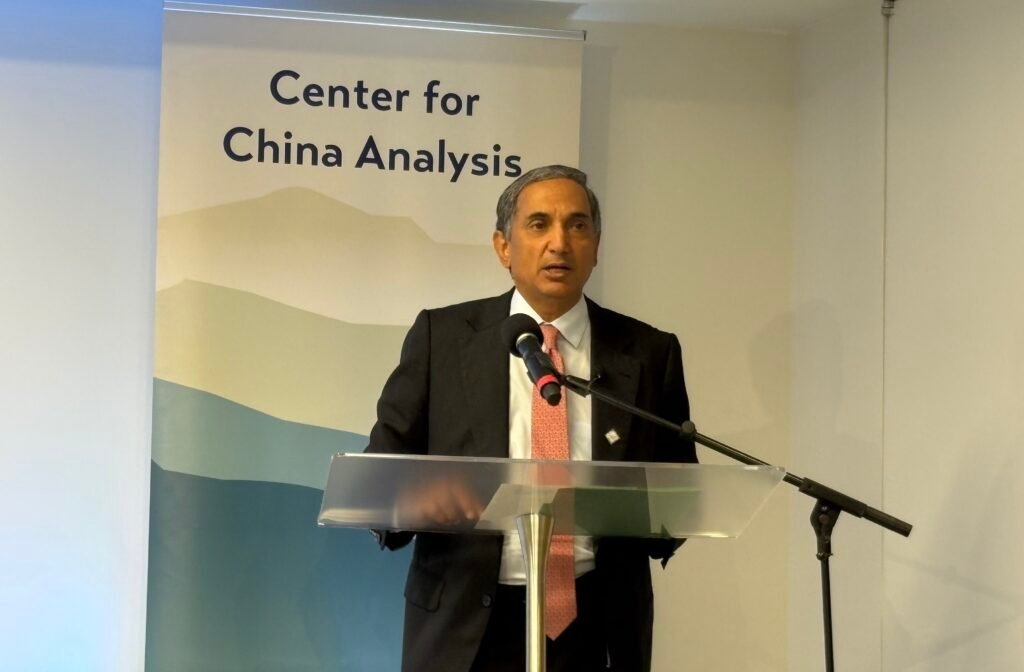
Srinivasan said the timing of the China publication reflects a pivotal moment for the country’s economy. Reforms over several decades changed economic incentives, opened China to the world and expanded the role of markets, helping drive substantial gains in income and productivity. The growth model that supported that expansion, however, is under increasing strain, he said.
“Investment-led growth has hit diminishing returns, the property sector correction has weighed on household confidence and local government finances, and subdued domestic demand has left the economy facing persistent disinflationary pressures,” Srinivasan said.
Growth has nevertheless held up relatively well, supported in part by strong net exports, he said. Low inflation compared with China’s trading partners has strengthened the competitiveness of its exports, contributing to large current account surpluses. Those developments have also fueled tensions with trading partners and increased scrutiny of Chinese policies.
Srinivasan said Chinese authorities recognize many of the challenges, and priorities in the 15th Five-Year Plan point in a useful direction. The book argues, however, that addressing the pressures on the economy will require changes to incentives, the balance between domestic and external sources of demand, and policy frameworks.
The proposed reforms would primarily benefit China by encouraging consumption, improving living standards, supporting healthier growth and reducing financial vulnerabilities, Srinivasan said. They could also help narrow external imbalances, ease trade tensions and reduce pressures toward fragmentation in the global economy.
The book’s abstract traces China’s economic rise over four decades to market-oriented reforms and its integration into global value chains. It says the more recent reliance on debt-financed investment has brought growing challenges, including inefficient allocation of resources, a declining labor force, weak domestic demand, financial risks and geoeconomic tensions.
The publication calls for a transition toward growth driven by household spending, services and productivity gains. Its proposed agenda includes stronger social safety nets, expansion of the service sector, measures to improve business dynamism, changes to industrial policies and updates to fiscal, monetary, financial and insolvency frameworks.
In the preface, editors Thomas Helbling, Sonali Jain-Chandra, Siddharth Kothari and Srinivasan write that reforms beginning in the late 1970s, high investment and integration into the global economy helped China achieve average growth of about 9 percent between 1981 and 2024.
The editors also point to gains in social development. Life expectancy at birth rose from 65 years in 1981 to 79 years in 2025, they write, while hundreds of millions of people were lifted out of poverty. They cite World Bank figures showing a decline in the poverty headcount from about 90 percent to zero over that period. Chinese companies have also become leaders in technology and innovation in some industries, according to the preface.
Despite those achievements, the editors argue that exports cannot continue to serve as a major engine of growth for an economy of China’s size. They say China will increasingly need domestic sources of demand, while continued dependence on exports could add to global trade tensions and geoeconomic fragmentation.
Demographic change presents another challenge. Pressure on the labor force could weigh on growth and public finances, the editors write, while greater government intervention in the economy could weaken business dynamism and future productivity growth.
They note that the 15th Five-Year Plan identifies stronger consumption as a priority and that Chinese authorities recognize the need to shift economic activity from goods toward services. The chapters examine how to reduce high household savings and encourage spending, adjust industrial policies, support innovation and strengthen monetary and fiscal policy. They also address financial sector oversight and insolvency rules.
The editors write that a more balanced Chinese economy could benefit both the country and the wider world. The book draws on IMF staff research and lessons from the organization’s engagement with Chinese authorities, including annual consultations and technical collaboration.
They thanked the book’s authors, many of whom are current or former members of the China team in the IMF’s Asia and Pacific Department. They said much of the work was undertaken under the guidance of Gita Gopinath, who also commented on the book after leaving the IMF. In a post on X, Gopinath wrote “A must read book on China, on what’s worked, what hasn’t, and what is needed. Rigorous and thoughtful analysis from IMF.”
The editors also acknowledged feedback from colleagues across the IMF. Although they were not directly involved in preparing the book, Tobias Adrian, Jennifer Elliot, Mark Flanagan, Pierre-Olivier Gourinchas, Matthew Jones, Kenneth Kang and Martin Kauffman contributed to the editors’ understanding of China’s economy through discussions over the years, they wrote.
They thanked Chinese authorities, particularly colleagues at the People’s Bank of China and the Ministry of Finance, for their engagement and comments on the manuscript. The editors also recognized Cheryl Toksoz and Patricia Loo of the IMF’s Communications Department for helping bring the project to publication, Alessandra Balestieri, Paige Brewer and Mariam Souleyman for administrative support, Jibingxin Han for research support, and Cristian Alonso for his contributions.
Related posts:
 IMF Country Focus: Business Growth and Innovation Can Boost India’s Productivity
 Dragon and Elephant’s Dance: China’s Consumer as India’s Next Big Opportunity
 IMF Forecasts Mixed Outlook for South Asia: India Leads, Bangladesh and Sri Lanka Stabilize
 International Monetary Fund Lowers India’s 2025 Growth Forecast to 6.2 Per Cent Amid Global Trade Tensions