Join WhatsApp Channel

United Nations, New York: Senior Japanese officials outlined the growing scope of Japan-India cooperation during a special briefing on September 22, 2026, focusing on Prime Minister Sanae Takaichi’s visit to the United Nations, New York and the two countries’ strategic partnership.
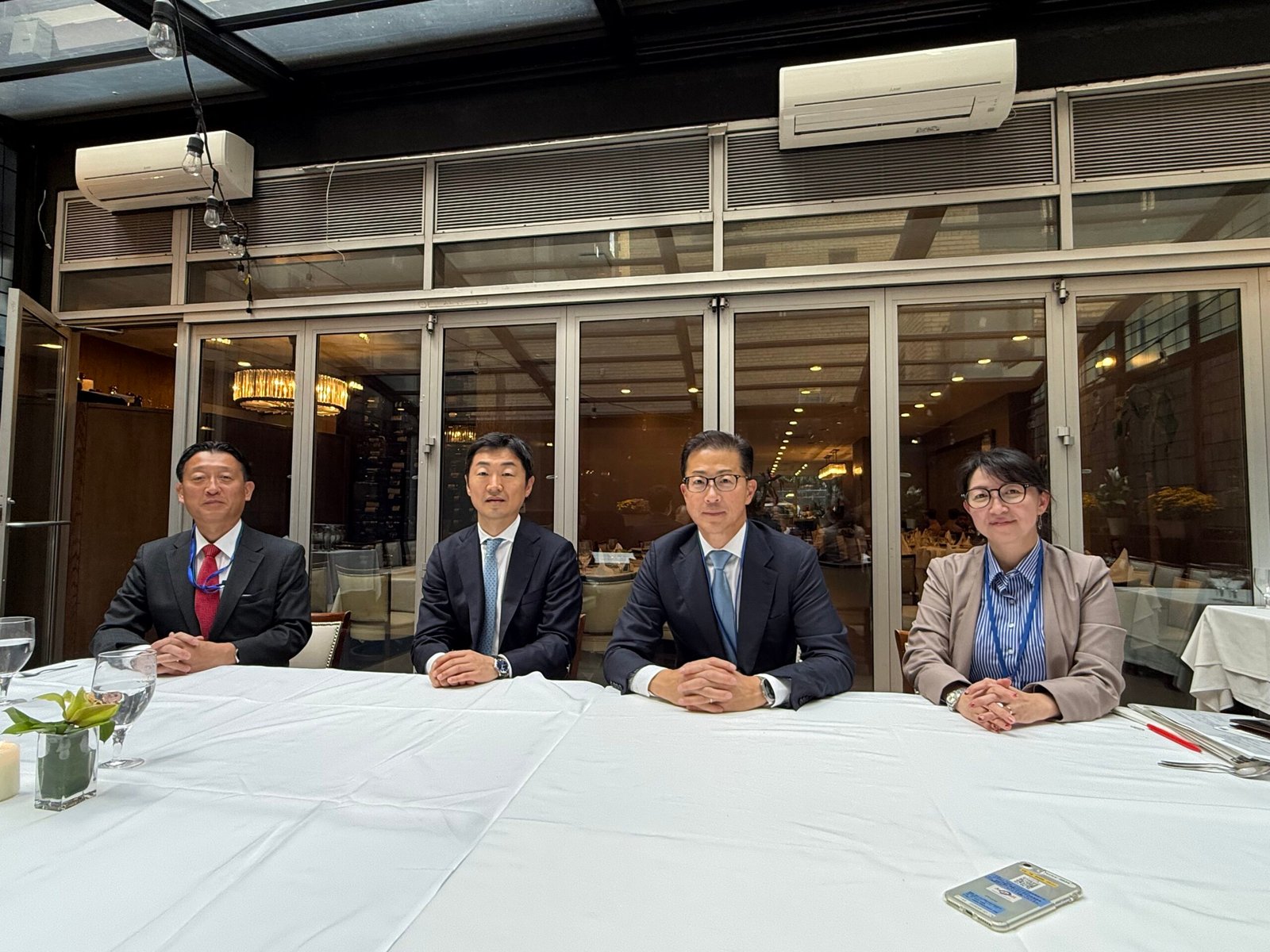
The briefing was led by Kitamura Toshihiro, press secretary, assistant minister and Director-General for Press and Public Diplomacy, and Ichiba Hiroaki, director of global communications and Deputy Cabinet Secretary for Public Affairs.
“Japan and India, as major democracies and economies, share a responsibility to shape and uphold a free and open international order based on the rule of law,” Toshihiro told South Asian Herald.
He said both countries are committed to advancing concrete cooperation guided by a shared strategic vision under their “Special Strategic and Global Partnership.” This cooperation is reflected in Takaichi’s vision for an evolved “Free and Open Indo-Pacific (FOIP)” and Indian Prime Minister Narendra Modi’s “MAHASAGAR” initiative.
Japan also supports solidarity with the Global South, for which India serves as an important advocate, and remains firmly committed to multilateralism, Toshihiro said.
He added that the leaders of Japan and India have agreed to pursue practical cooperation through the Quad to advance a free and open Indo-Pacific. The two countries are also strengthening coordination across a range of issues affecting the international community.
Against this backdrop, cooperation with India has become indispensable to Japan, both in the broader international community and within the Quad framework, Toshihiro said. He cited the two countries’ shared values and strategic direction as the foundation of the partnership.
Hiroaki emphasized the economic potential of closer cooperation between India, a major emerging market and manufacturing hub, and Japan, which possesses advanced technological capabilities.
He said combining the strengths of the two countries would allow them to generate shared growth and contribute to the sustainable development of the global economy.
As uncertainty surrounding the global economy increases, it has become increasingly important for Japan and India, as like-minded countries with shared fundamental values and strategic interests, to strengthen economic cooperation, Hiroaki said.
He identified investment, innovation and economic security as key areas of collaboration that could help address challenges facing future generations in both countries. Such efforts would establish a foundation for mutually beneficial and complementary cooperation while strengthening the resilience and stability of the global economy, he added.
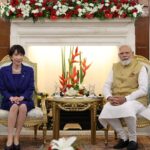
Hiroaki said key outcomes from Takaichi’s visit to India in July included approximately 2 trillion yen in investment commitments and the signing of about 120 memoranda of understanding.
The visit also resulted in expanded economic security cooperation in five priority sectors: semiconductors, critical minerals, information and communications technology, clean energy and pharmaceuticals.
According to Hiroaki, the Takaichi administration aims to build a strong economy guided by the principle of responsible and proactive public finances. To achieve this goal, Japan must address its critical lack of domestic investment.
To break the cycle of underinvestment, the Takaichi administration will promote public-private investment totaling more than 370 trillion yen (US$2.328 trillion) in strategic sectors by fiscal year 2040. Through these efforts, we aim to increase annual domestic investment to 250 trillion yen (US$1.573 trillion) by fiscal year 2040.
“We also aim to accelerate the growth of foreign direct investment in Japan. There is significant potential for further capital inflows from overseas, and now is the time for global investors to invest in Japan and reap the benefits,” he added.