Join WhatsApp Channel

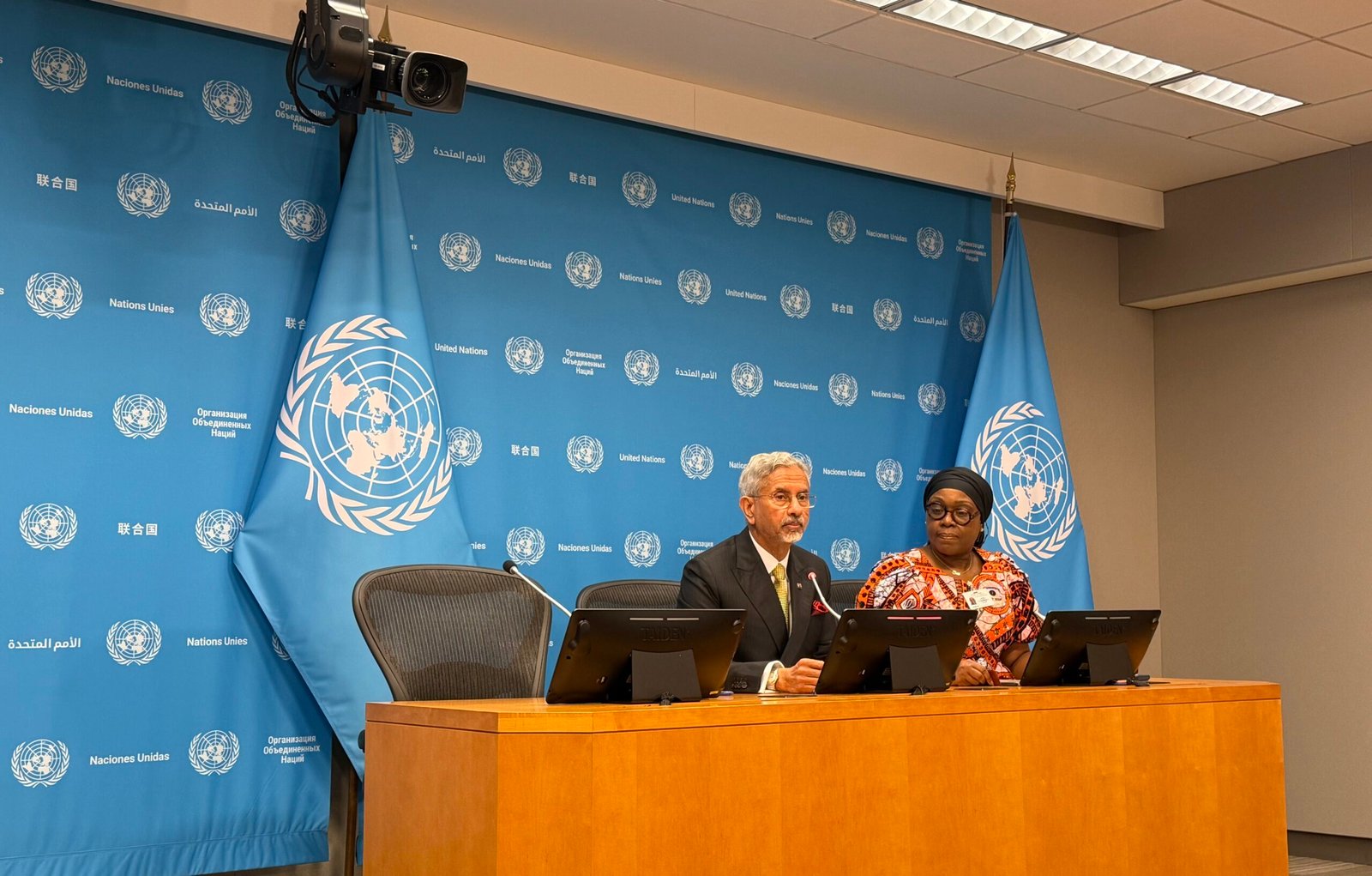
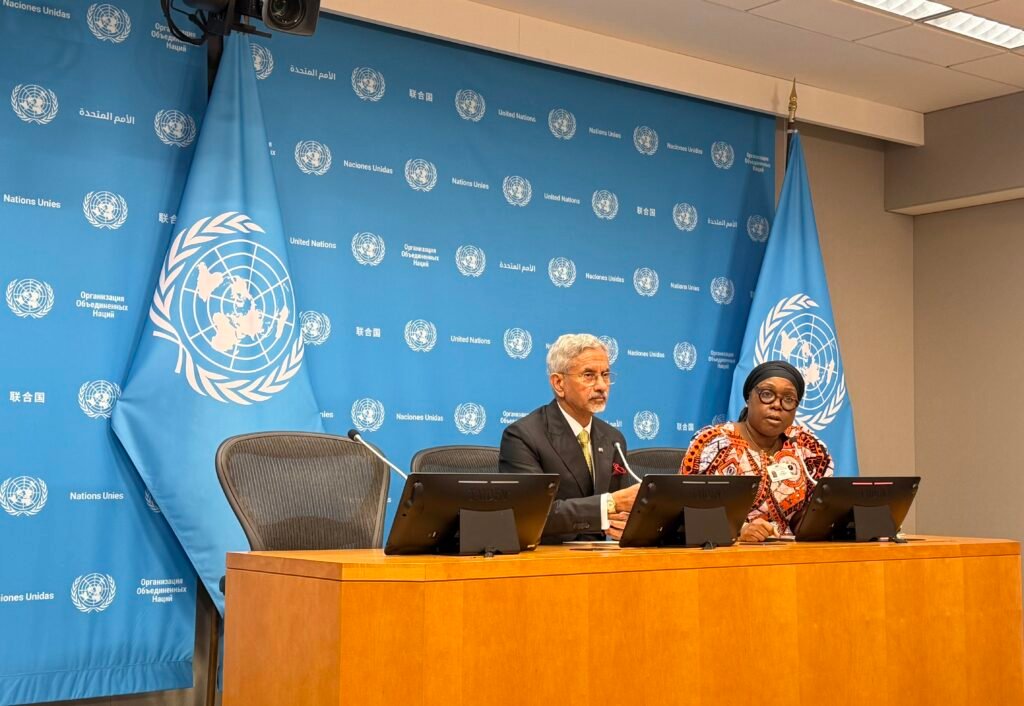
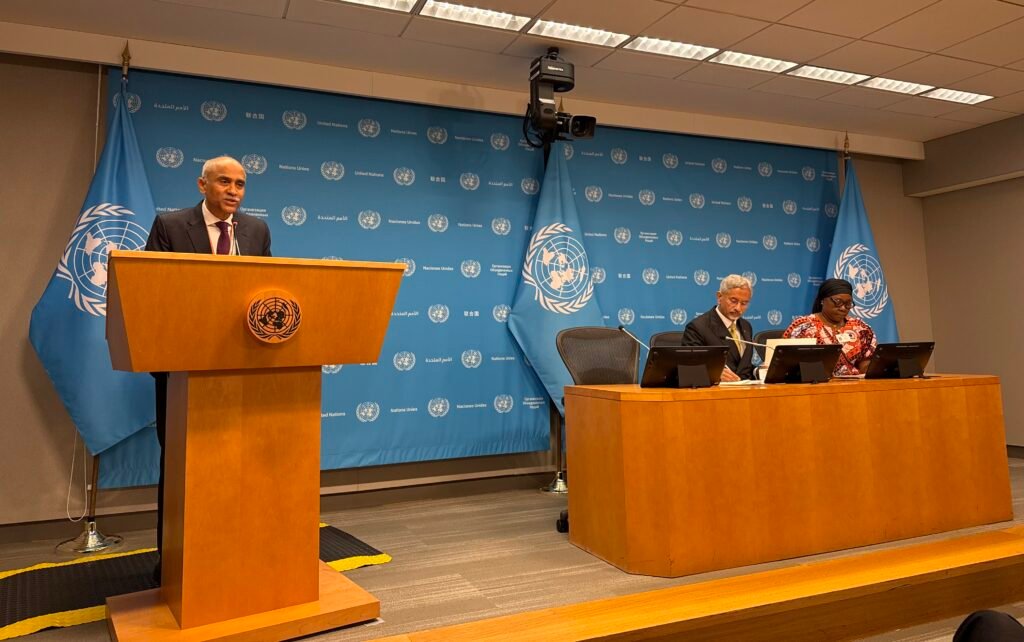
United Nations, New York: India and Liberia launched the Group of Friends on Safety, Security of Shipping and Seafarers at the United Nations in New York on September 25, seeking greater international cooperation against threats to commercial vessels and their crews.
Speaking to journalists at the UN press briefing room soon after launching the initiative, Indian External Affairs Minister S. Jaishankar said the two countries brought together other states with maritime interests, including major shipowning nations. India is a major source of seafarers, while Liberia has the world’s largest shipping registry by tonnage, he said.
Jaishankar condemned attacks on commercial shipping and merchant mariners in areas ranging from the Strait of Hormuz and the Gulf to the Red Sea and the Black Sea, calling the violence legally and morally “indefensible.”
“We believe that there can be no justification for such violence and loss of lives. Put simply, these attacks must stop,” he said.
Representatives of 25 countries attended the group’s first meeting on September 25, according to Jaishankar. He said the initiative would draw greater attention to the safety of seafarers and the security of the commercial shipping industry.
Nearly 2 million seafarers operate the world’s merchant fleet, he said. Beyond the risk of physical attacks, they face prolonged confinement aboard vessels, delayed crew changes and repatriation, separation from their families, and psychological distress.
Jaishankar said maritime shipping carries about four-fifths of global trade, which he valued at $35 trillion last year.
“This group, which we have started today, will be an inclusive, voluntary, and action-oriented platform aimed at deepening cooperation among member states and other stakeholders,” he said. “It will promote the exchange of views, the sharing of experiences, and practical cooperation. It will complement and strengthen the existing international frameworks, mandates, and instruments in these areas.”
The group plans to raise shipping and seafarer issues in forums including the United Nations, the International Maritime Organization and the International Labour Organization. India and Liberia will serve as co-chairs. Jaishankar said members would meet regularly and develop the initiative through consultation.
“We have had a very productive session this morning. We will meet regularly and hope to build on that as we move forward. And we agreed that the details of this initiative would be worked out in a consultative manner, based on the inputs and views of the group,” he said.
Jaishankar said conflicts and confrontations were threatening access to essential goods and resources, including food, fuel, fertilizer and finance. He described the initiative as an effort to support stability amid those pressures.
“Our initiative is meant to add to the factor of stability and confidence in what is otherwise an uncertain and turbulent world and to signal that the international community cannot just be a spectator or, indeed, a victim of violence. We are hopeful that it will make some difference,” he said.
Liberian Foreign Minister Sara Beyosolow Nyanti said more than 80 percent of the goods that “power, feed, and heal the world” move by sea. She cited geopolitical tensions, threats to shipping routes, and gaps in maritime safety and labor standards as challenges facing the industry.
“The global economy does not run on abstract figures; it moves on water. Yet today, commercial shipping operates under compounding pressures: shifting geopolitical friction, escalating threats to transit corridors, and persistent gaps in maritime safety and labor standards,” she said.
Nyanti said Liberia’s shipping registry and India’s maritime workforce give the countries a shared responsibility to address those challenges. She outlined three priorities for the group: vessel safety and environmental protection, the security of commercial sea lanes, and the welfare of seafarers.
“Seafarers” are the “human beings who keep our world running,” she said, adding that they must never be treated as expendable.
Related posts:
 India Stresses Maritime Security and Anti-Terrorism as Pillars of National Strategy
 Over 1,100 Indian Sailors Trapped as War Chokes the World’s Oil Lifeline
 India’s Foreign Minister Launches 2028-29 UNSC Campaign at United Nations
 Foreign Minister Jaishankar Highlights Quad Progress, US-India Ties, and Political Unity