Join WhatsApp Channel


Everyone wants good teachers. Education policies routinely speak of teachers who are reflective, critical, creative, empathetic and capable of responding to the diverse needs of their students.
India is no exception. In fact, some of the country’s most important teacher-education policy documents have articulated precisely such an ambitious vision.
The National Curriculum Framework for Teacher Education (NCFTE) 2009 envisaged teachers not merely as transmitters of prescribed knowledge but as professionals capable of reflecting on their practice, understanding learners and engaging critically with the social contexts of education. The Justice Verma Commission on Teacher Education, constituted in 2012, similarly drew attention to the need to strengthen teacher preparation, improve the quality of teacher education institutions and bridge the persistent gap between theory and practice.
Yet there is a question that deserves greater attention: can we prepare reflective teachers without transforming the conditions in which they teach?
This is not an argument against teacher education reform. It is an argument for taking its ambitions seriously.
A reflective practitioner requires more than a course on reflective practice. Reflection requires time, professional autonomy, opportunities for dialogue and an institutional culture in which questioning existing practices is possible. It requires teachers to be treated as professionals whose judgement matters.
This is where India’s social context makes the question particularly complex. The Indian teacher is not a socially homogeneous professional. Teachers enter classrooms carrying their own histories, identities and social locations. Caste, tribe, gender, class, language, geography and family circumstances can shape their experiences of teaching just as profoundly as they shape those of their students.
Consider teachers from communities that have historically faced social exclusion. A person may acquire a professional qualification, enter a school and formally occupy the status of a teacher, while continuing to encounter social hierarchies outside and sometimes within the school. For teachers from Denotified Tribes and other historically marginalized communities, professional status does not necessarily erase older forms of stigma.
The same complexity emerges around gender. In some communities, women teachers may continue to face expectations about mobility, working hours and the extent of their participation in public life. If a woman is expected to limit the amount of time she spends at school, or her professional engagement is constrained by family and community expectations, what does it mean to ask her to become a fully reflective practitioner?
This is not an argument about individual commitment. It is an institutional question. We frequently ask teachers to understand the social worlds of children: their families, communities, languages, identities and inequalities. But perhaps we need to ask the same questions about teachers. Who are the people we are asking to transform children’s educational experiences, and what social conditions shape their own professional lives?
India’s policy vision has, in many ways, recognized the complexity of the teacher’s role. The NCFTE 2009 placed considerable emphasis on understanding the learner, developing reflective capacities and connecting theory with practice. The Justice Verma Commission subsequently highlighted persistent problems in teacher education, including weak institutional structures, inadequate practical preparation and the need to restore teacher education as a serious professional endeavor.
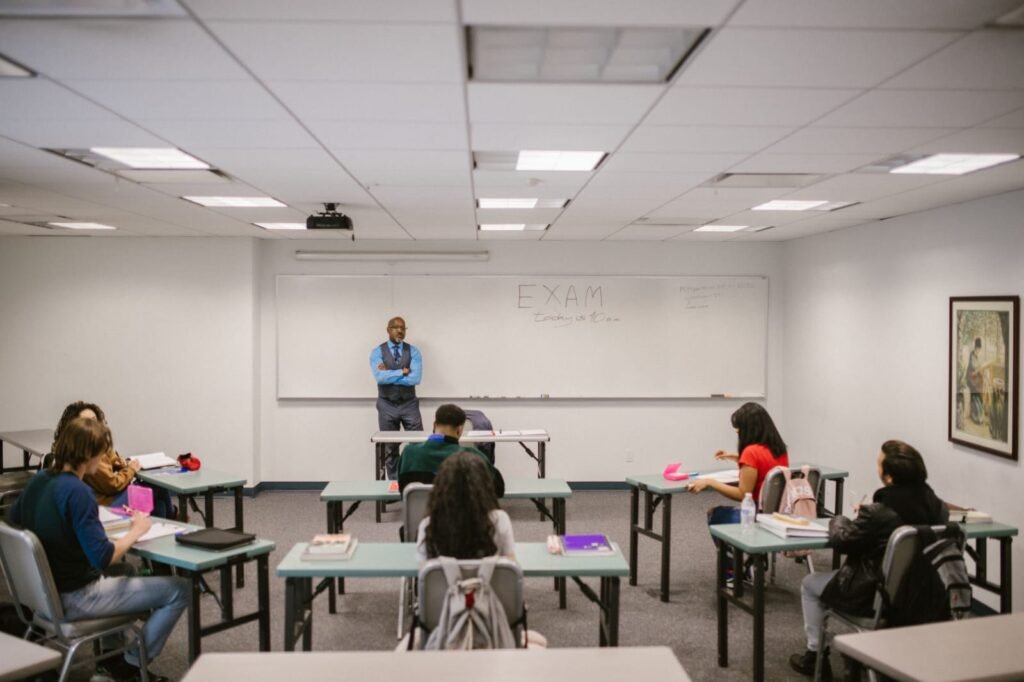
The difficulty lies in the distance between such aspirations and their implementation. Teacher education can become overly focused on completing coursework, fulfilling regulatory requirements and obtaining certification. School experience may become a formal component rather than an opportunity for sustained engagement with classrooms. Reflection can itself become another assignment rather than a habit of professional inquiry.
But this is not uniquely an Indian problem. The more interesting question is what other education systems have done to create conditions in which teacher professionalism can flourish. Finland provides one useful point of comparison, although it is important not to treat it as a model that can simply be transplanted to India. Finnish teachers undergo academically demanding preparation, and teaching has traditionally been positioned as a high-status profession. Teacher education is closely connected with research, and teachers are afforded considerable professional trust and autonomy.
The Nordic experience more broadly also offers an important contrast in the relationship between teachers, schools and the state. While these systems differ considerably among themselves, they tend to place greater emphasis on teachers as professionals who exercise judgement rather than merely implement centrally prescribed instructions.
The lesson for India is not that Finnish or Nordic arrangements should simply be copied. India is a vastly different society, with enormous linguistic, cultural and socioeconomic diversity, as well as considerable differences in state capacity and school conditions.
The more useful lesson concerns the relationship between preparation and professional status. If we want teachers to make informed professional decisions, they need opportunities to develop the knowledge and judgement required to make those decisions. If we want them to reflect critically on their practice, they need time and institutional spaces for reflection. If we want them to respond creatively to local contexts, they need some autonomy to do so.
In other words, professional responsibility and professional freedom must develop together. This also complicates the way we think about teacher education in India. The answer is not necessarily to make teacher education programmes longer. A longer programme does not automatically produce a better teacher. What matters is what happens within it.
A rigorous teacher education programme should bring together theory, research, school experience and reflection. A student teacher should encounter real classrooms, not simply read about them. She should learn to examine evidence, question assumptions and understand the social contexts in which schooling takes place. She should have opportunities to connect educational theory with what she observes in practice.
And perhaps most importantly, teacher education should help future teachers understand that classrooms are not socially neutral spaces. A child enters a classroom carrying a caste identity, a language, a family history, a gender identity, an economic position and a set of experiences. The teacher does too.
That is why teacher education cannot be reduced to teaching teachers how to “deliver” a curriculum. It must prepare them to interpret classrooms. Yet the ability to interpret one’s classroom critically is connected to the ability to interpret one’s own position within society. A teacher who has experienced discrimination may see aspects of inequality that another teacher does not. A teacher from a marginalized community may understand forms of exclusion that are invisible to others. At the same time, teachers can also reproduce the social prejudices of the communities and institutions in which they are embedded.
Teacher education therefore has an important democratic role: it can create opportunities for teachers to examine not only how they teach, but also how their own assumptions have been formed.
This is where India’s challenge is also its opportunity. The country does not need to choose between learning from international experience and responding to its own realities. It can do both. The question is not whether India should become Finland. It is whether India can build a form of teacher professionalism appropriate to its own extraordinary social diversity.
We want teachers who can encourage children to question inequality, think independently and participate in democratic life. But such expectations require teachers themselves to experience professional dignity, autonomy and meaningful preparation.
A reflective teacher needs more than a reflective-practice course. She needs time to think, freedom to exercise judgement, institutional support to question practice and a professional environment in which her judgement is taken seriously.
Perhaps the most important lesson from comparing India with Finland and the Nordic countries is therefore not about teacher-training curricula at all. It is about the conditions surrounding the teacher.
If India wants teachers who can help children understand and question the inequalities around them, it must also ask whether its teachers have been given the professional and social space to question the inequalities they themselves inhabit.
The future of teacher education may depend less on how many courses we add to teacher preparation and more on whether we are willing to create the conditions in which teachers can actually become the reflective professionals our policies have long imagined them to be.
Disclaimer: The opinions and views expressed in this article/column are those of the author(s) and do not necessarily reflect the views or positions of South Asian Herald.