Join WhatsApp Channel

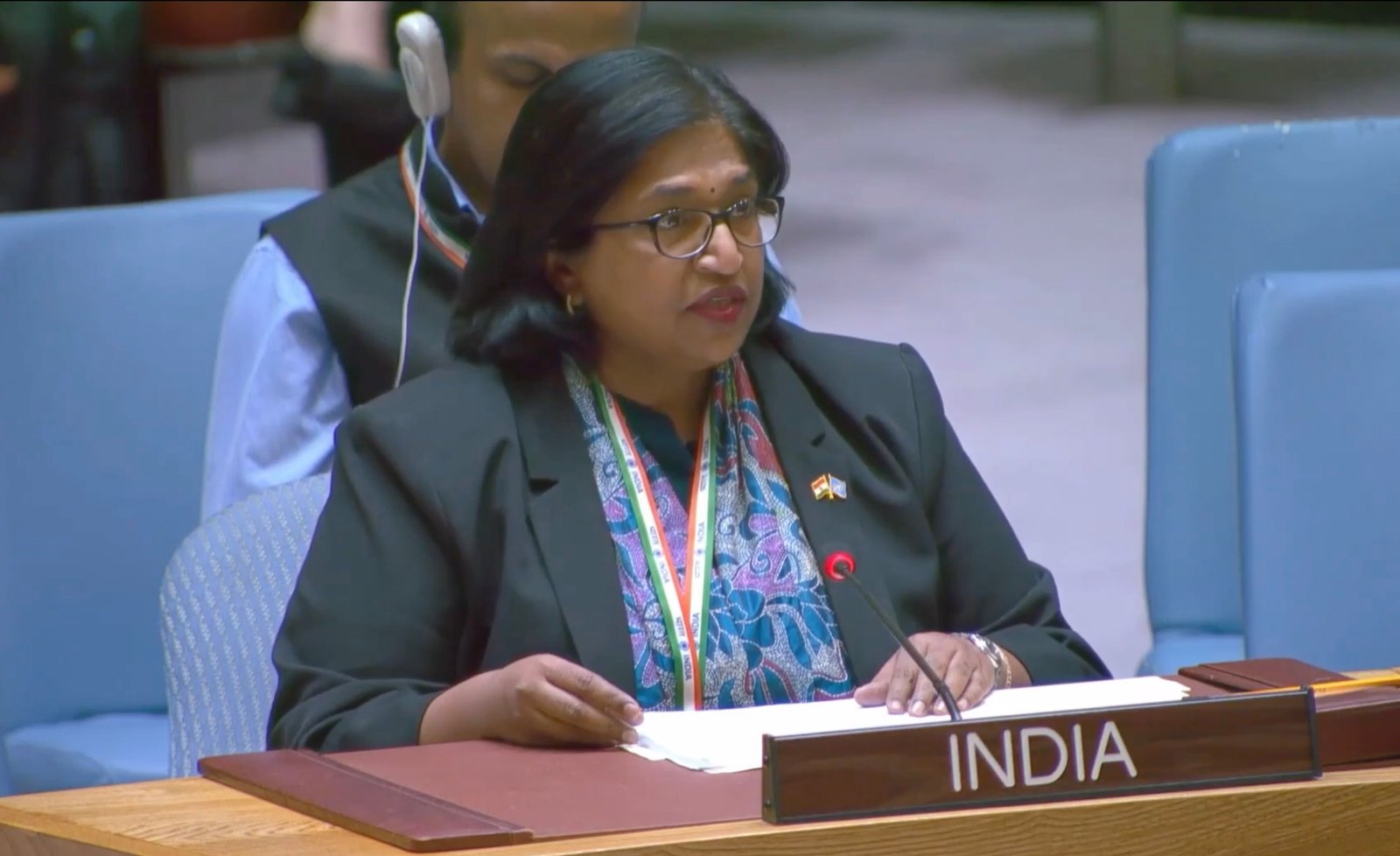
Ambassador Yojna Patel, chargé d’affaires at the Permanent Mission of India to the United Nations, has emphasized that the need to reform the UN Security Council is more “pronounced” and “pressing” than ever.
Speaking at the Security Council’s annual open debate on working methods on August 19, 2026, Patel said the institution must be better equipped to confront current and emerging global challenges.
“The need for reforming the Security Council is more pronounced and pressing than ever before. Our joint endeavor must be on appropriately equipping the UNSC to address contemporary and future challenges,” Patel said.
She noted that the world has changed significantly since the United Nations was established in 1945, with its membership increasing fourfold over the past eight decades.
Patel said the outcome of a conflict that ended more than 80 years ago should not continue to determine the council’s “composition, dynamics, approaches and working methods for perpetuity.” She called for changes to be implemented at the earliest opportunity.
According to Patel, the open debate carried “particular salience” as citizens of member states increasingly question the “credibility, efficacy and legitimacy” of the Security Council and its decision-making processes.
She attributed those concerns to the council’s inability to intervene effectively in ongoing conflicts around the world, which she said has resulted in immense human suffering.
Reiterating India’s longstanding position on Security Council reform, Patel called for greater representation for developing countries and the wider Global South.
“We seek an expansion in both categories, with greater representation for the Global South. This could be achieved only through text-based negotiations, with clearly defined milestones and timelines. Against this backdrop, I would like to make the following specific points with regard to working methods,” she said.
Patel then outlined five areas that India believes should guide discussions on the council’s working methods and broader institutional reform.
First, she said changes to the council’s working methods should not be considered separately from the broader reform process. According to Patel, questions concerning membership categories, regional representation, veto power and operational procedures are interconnected and must be addressed collectively for reform to be comprehensive and meaningful.
Second, Patel pointed out that the Security Council’s rules of procedure remain provisional more than 80 years after the institution was established. She argued that their provisional status allows them to be revised when necessary. Existing procedures, she said, should not be treated as barriers to reforms, including an expansion of the council’s membership. She added that the provisional framework itself also requires correction.
Third, Patel called for equal access to documents for all Security Council members. She noted that nonpermanent members are elected by the broader UN membership through the General Assembly and carry responsibilities on its behalf. To contribute effectively during their two-year terms, she said, elected members should receive the same access to current and historical documents as permanent members.
She also advocated greater transparency in the council’s procedures and a larger role for elected members, and by extension the General Assembly, in consequential decisions such as selecting the UN secretary-general.
On peacekeeping, Patel said troop-contributing countries and police-contributing countries extend well beyond the Security Council’s membership. As direct stakeholders, she argued, they should participate in decisions involving peacekeeping mandates, resources and other key operational matters.
Fourth, Patel addressed delays in selecting the chairs of Security Council subsidiary bodies, which help implement the council’s mandates. She said the bodies have been unable to function at their full capacity because their leadership has not been finalized promptly.
Noting that no decision had been reached for the current year, Patel urged the council to appoint the chairs as a priority. She also called for amendments to Note 507 that would establish a firm, nonnegotiable deadline for completing the selection process.
Fifth, Patel warned that Security Council membership should not be used to advance narrow political objectives. She cited decisions to list or delist individuals and organizations under sanctions regimes as an area requiring greater transparency and objectivity.
According to Patel, council membership should not be used to legitimize terrorists by seeking their removal from sanctions lists. Nor should organizations be designated as terrorist entities solely for political reasons without objective criteria or supporting evidence, she said.
Concluding her remarks, Patel called for stronger coordination between the Security Council and the United Nations’ other principal organs, particularly the General Assembly, which she described as the organization’s most universal and democratic body.
“Institutional mechanisms such as consideration of the UNSC Annual Report by UNGA must not become a mere procedural formality. Working methods of the Security Council must be reviewed suitably in order to pave the way for closer interaction of the Security Council with the other principal organs. Future consideration of the working methods must, therefore, be seen in this light,” she said.
Patel also congratulated Denmark on assuming the presidency of the Security Council and thanked the country for convening the annual open debate on working methods.
Related posts:
 India Calls for Overhaul of UNSC Rules and Greater Transparency in Security Council Functioning
 India Calls for Urgent UN Security Council Reform Amid Growing Global Fragmentation
 G4 Ministers Renew Push for UN Security Council Reform at 80th UNGA
 At UN Security Council, India Defends Operation Sindoor, Rejects Pakistan’s Claims, Calls for Stronger Rule of Law and UN Reforms