Join WhatsApp Channel

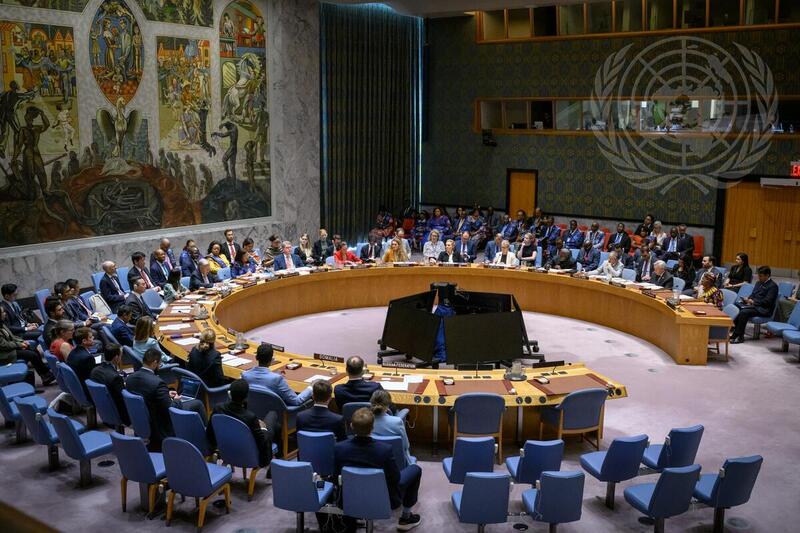
The United Nations Security Council (UNSC) election delivered a historic diplomatic shockwave when Germany failed to secure a non-permanent seat, revealing critical lessons for India’s own global ambitions. Berlin’s bid collapsed in the first round of voting at the UN General Assembly. It secured a mere 104 votes, well short of the required 127 two-thirds majority. Instead, its competitors within the Western European and Others Group (WEOG), Portugal and Austria, easily clinched the available seats, with 134 and 131 votes, respectively.
This marks the first time since 1977 that Germany has lost an UNSC election, as fellow partners in the G4 coalition (India, Brazil, Germany, and Japan) advocate for text-based negotiations to expand permanent council seats. It’s important for India to examine Germany’s defeat closely as it starts the campaign for elections for its candidature of UNSC in 2028-29. The election outcome serves as a stark reminder that monetary contributions alone do not buy diplomatic loyalty, and structural shifts in aid paradigms can trigger a massive backlash among voting nations.
Financial Might vs. Diplomatic Capital
For decades, Berlin operated under the assumption that its status as a top-tier financial contributor coupled with its massive foreign aid machinery guaranteed automatic entry into the UNSC. The General Assembly thoroughly dismantled this assumption. The election proved that when the ballots are secret, developing nations will not hesitate to humiliate a wealthy Western donor.
India can’t rely solely on its status as the world’s fastest-growing major economy, its contribution to UN peacekeeping, or its expanding financial pledges to global initiatives. While New Delhi’s financial aid, digital public infrastructure partnerships, and vaccine diplomacy have built goodwill across the Global South, the German defeat proves that structural influence requires active, reciprocal, and localized diplomatic engagement rather than transactional expectations.
The GIZ Cautionary Tale: Will India’s Partnership Model Suffice?
A pivotal factor in Germany’s diplomatic erosion was the rapid unwinding of its premier international development apparatus, the Deutsche Gesellschaft für Internationale Zusammenarbeit (GIZ). Facing domestic economic strains, Berlin aggressively slashed its Federal Ministry for Economic Cooperation and Development (BMZ) budget by over 20 per cent. GIZ was forced to aggressively narrow its global footprint, pivot from grants to loans, and completely phase out high-demand academic and development networks with the Global South.
This sudden retrenchment created a severe global backlash. Leaders in the Global South felt abandoned by a once-dependable partner whose aid programs increasingly looked like a “Berlin-led administrative project” rather than an equitable partnership. When Election Day arrived, affected nations retaliated at the ballot box.
India’s external aid strategy, channeled through the Ministry of External Affairs
- Development Partnership Administration (DPA), stands at a critical crossroads. To ensure its development partnerships “pay” diplomatically rather than suffering the same fate as GIZ, India must aggressively lean into its distinct structural advantages while avoiding Berlin’s budgetary vulnerabilities:
- Sovereignty over Conditionalities: India’s DPA must double down on its signature demand-driven, grant-heavy model that strictly respects recipient sovereignty.
- Low-Cost, High-Impact Scalability: India can outpace Western agencies by exporting high-utility, low-cost assets like Digital Public Infrastructure (DPI), such as Unified Payments Interface (UPI) stacks and digital identity frameworks, which yield immediate domestic dividends for partner nations.
- The Fiscal Sustainability Imperative: The GIZ collapse proves how fragile foreign capital is when tied to unpredictable domestic budget cycles. India must insulate its DPA funding from domestic economic fluctuations to prevent diplomatic resentment.
The Perils of Rigid Geopolitical Alignment
Beyond aid cuts, Germany’s defeat was accelerated by its rigid foreign policy alignment on contemporary global conflicts. Berlin’s uncompromising defense of Israel alienated crucial voting blocs across Africa, the Middle East, and Asia. Concurrently, its hyper-fixation on the Ukraine war was perceived by non-aligned states as Eurocentric, leading to a severe diplomatic backlash.
Diplomats noted that Russia capitalized on these frustrations, actively lobbying African and Global South delegations to deny Germany their votes. By contrast, Portugal and Austria positioned themselves effectively:
Portugal leveraged its extensive diplomatic relationships across Lusophone African nations and maintained a highly balanced, nuanced stance on international conflicts.
Austria capitalized heavily on its traditional, constitutional reputation for neutrality and its history as a trusted, non-aligned UN headquarters hub in Vienna.
India’s long-standing strategy of strategic autonomy is its greatest asset and must be fiercely guarded — New Delhi’s ability to maintain strong ties with Western powers through the Quad while actively participating in BRICS and the Shanghai Cooperation Organization (SCO) positions it uniquely. If India veers too close to Western-centric security frameworks or fails to articulate a balanced position on volatile global issues, it risks alienating the very Global South nations whose collective votes are essential for structural UN reform.
Reassessing the G4 Alliance Strategy
India, Germany, Japan, and Brazil have historically operated as a unified voting bloc via the G4 coalition, advocating for a comprehensive restructuring that expands both permanent and non-permanent UNSC categories. However, Germany’s massive loss reveals that the G4 partners do not possess equal diplomatic weight or broad-based acceptance across regions.
Germany’s bid at the UNSC faces intense regional opposition from Italy and the Uniting for Consensus (“Coffee Club”) movement, which argues that granting Germany a permanent seat would over-represent Europe. This argument gained immense traction during the election, as many developing nations questioned why a third major European nation should be prioritized when Africa and Latin America lack permanent representation.
While India continues to back the G4’s formal push for text-based negotiations and flexibility on deferred veto powers, it must avoid allowing its individual candidacy to be dragged down by the specific geopolitical baggage of its alliance partners. India’s claim to a permanent seat rests on entirely different pillars than Germany’s: India represents nearly 1.4 billion people, is the world’s largest democracy, and serves as an indispensable voice for developing nations. New Delhi must ensure that its bilateral campaigns remain distinct, highlighting its unique identity rather than tying its fate unconditionally to a rigid four-nation package.
The Critical Importance of Early and Omnidirectional Campaigning
Post-election autopsies from European analysts revealed a stark tactical failure: Austria and Portugal launched their UNSC campaigns years earlier than Germany. Berlin relied heavily on a late, high-intensity blitz led by its foreign ministry, assuming its international profile would carry it across the finish line. This bureaucratic complacency allowed its competitors to quietly lock in written and verbal voting commitments from smaller member states long before the ballots were cast.
India has already announced its official candidacy for a non-permanent UNSC seat for the 2028–2029 term. It cannot afford any degree of complacency. New Delhi must systematically implement an aggressive, multi-year, omni-directional campaign that leaves no region overlooked. Special diplomatic focus must be directed toward microstates and small island nations across the Caribbean, the Pacific, and Africa. In the UN General Assembly, the vote of the smallest Pacific island nation carries the exact same weight as that of a global superpower, and these relationships must be nurtured well in advance.
Crafting a Pragmatic Roadmap
Germany’s historic defeat at the United Nations is a warning sign of how quickly a major power’s global standing can erode when its foreign policy becomes detached from the geopolitical realities of the wider General Assembly. For India, the roadmap forward requires a clear-eyed synthesis of these takeaways:
- Insulate and Institutionalize Development Aid: Ensure the DPA model remains well-funded, predictable, and distinctly demand-driven, preventing the abrupt retrenchments that doomed GIZ’s global goodwill.
- Maintain Strict Strategic Autonomy: India must resist the pressure to join rigid security alliances that require absolute conformity, ensuring its voting record and diplomatic stances reflect its independent national interests.
- De-link Bilateral Campaigns: While remaining a constructive member of the G4 for macro-level structural negotiations, India must run its individual candidacy on a standalone platform that emphasizes its distinct global credentials.
- Treat Small States as Equals: Run an aggressive, multi-year campaign targeting small island nations and African states, treating their secret ballots with the same strategic weight as a major global power.
By absorbing these lessons from Berlin’s missteps, India can build a more resilient, inclusive, and effective diplomatic strategy—one that secures its rightful place at the high table of global governance.
Disclaimer: The opinions and views expressed in this article/column are those of the author(s) and do not necessarily reflect the views or positions of South Asian Herald.
Related posts:
 Germany Defeats India 5-1 in Junior Men’s Hockey World Cup Semifinal; Hosts to Play Argentina for Bronze
 Why Bangladesh’s Pivot Toward Türkiye Could Redefine South Asia’s Geopolitical Landscape
 Between Opportunity and Entrapment: Bangladesh Must Tread Carefully on the EU Partnership Deal
 Germany, Netherlands Exit World Cup in Shootouts