Join WhatsApp Channel

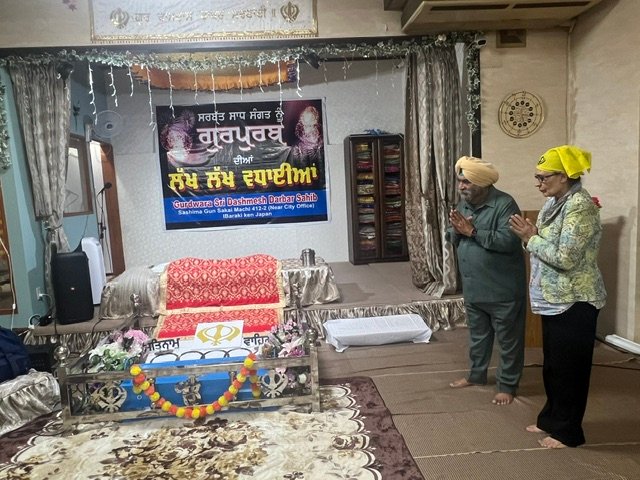
Japan’s gurdwaras serve as places of worship and community gathering for members of the Indian diaspora, welcoming people across religious backgrounds through prayer, fellowship, and langar, the traditional Sikh community kitchen.
One of the country’s oldest Sikh shrines is in Kobe, while Gurdwara Sri Dasmesh Darbar Sahib in Sakai, Ibaraki Prefecture, draws regular congregations. Some gurdwaras hold gatherings on alternate Sundays, providing opportunities for families to connect and share meals.
Guided by the Sikh principle of “sarbat da bhalla,” or the well-being of all humanity, these institutions welcome visitors of every faith. Alongside Hindu temples, they provide spaces for religious observance and community life.
During a visit to Japan for the 2026 Aichi-Nagoya Asian Games, we visited Gurdwara Sri Dasmesh Darbar Sahib. Located in a semi-urban neighborhood where several families of Indian descent live, the gurdwara is approximately two to three hours from Tokyo by public transportation.
Head Granthi Jagroop Singh welcomed us at a nearby bus station. Originally from Haryana’s Kurukshetra district, he has performed religious duties at the gurdwara for several years while also working in the transportation business.
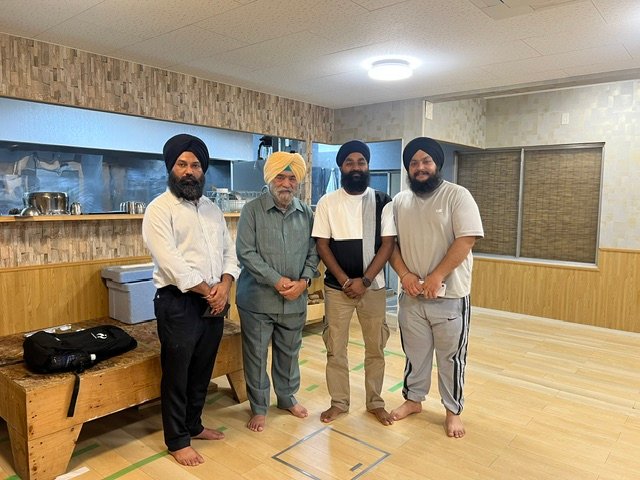
He is occasionally assisted by Baldeep Singh Punchee of Jammu, who hopes to return to India and resume his work as a tabla player with the Shiromani Gurdwara Parbandhak Committee.
Gurwinder Singh, president of the Gurdwara Management Committee, comes from a family of Sikh preachers in Chandigarh. His father served at the Sector 7 gurdwara in Chandigarh before settling in Mohali. Gurwinder Singh operates a restaurant in Ibaraki.
Having arrived in Japan more than a decade ago, Gurwinder Singh initially attended special congregations at Tokyo’s Gurdwara Guru Nanak Darbar, which began in a basement more than two decades ago. He said construction and other activities sometimes limit access to that gurdwara, although it remains open for Sunday congregations.
After moving from Tokyo to Ibaraki, Gurwinder Singh and other community members began gathering weekly in their homes to recite Sukhmani Sahib. They later secured the current premises, which provided the space they needed for worship and community activities.
Initially, the congregation used gutkas, collections of Sikh prayers, for Gurbani recitations because it did not have a copy of Sri Guru Granth Sahib. In 2022, the management of the gurdwara in Kobe helped provide one.

“We brought Sri Guru Granth Sahib in a specially arranged bus, and since then we have been performing all religious ceremonies, Prakash in the morning and Sukh Assan in the evening, besides performing Nitnem as laid down in Sikh Rehat Maryada,” said Gurwinder Singh.
“Every year, we hold Sri Akhand Path Sahib, continuous recitation from Sri Guru Granth Sahib, on the birth anniversary, Gurpurab, of Sri Guru Nanak Dev Ji and on Baisakhi, Srijana Divas of Khalsa. Last year, even a marriage ceremony in accordance with Sikh rituals was solemnized at the gurdwara.”
Regular congregations attract approximately 150 to 200 people, with attendance rising during the two major annual celebrations.
“Other than that, we have special congregations on alternate Sundays, where attendance varies between 150 and 200, while on the two special occasions, it touches 400 to 500,” said Gurwinder Singh.
The gurdwara also has three furnished rooms where visitors can stay. Nearby Indian grocery stores supply provisions for its community kitchen.
Jagroop Singh said volunteers gather the night before the Sunday congregations to prepare langar. Food service begins in the morning with bread pakoras and tea and continues throughout the day, including after the main community meal.
Related posts:
 How Vaisakhi Reflects Sikh Heritage and Diaspora Influence Worldwide
 Hardeep Singh Puri Seeks Central Intervention for Safekeeping of Guru Gobind Singh’s ‘Holy Jore Sahib’
 Brescia Emerges as Key Hub for Sikh Community in Europe, Hosts Grand Nagar Kirtan Celebrating Sikh New Year
 Gurdwara Makindu Sahib Emerges as Kenya’s Revered Sikh Shrine