 Join WhatsApp Channel

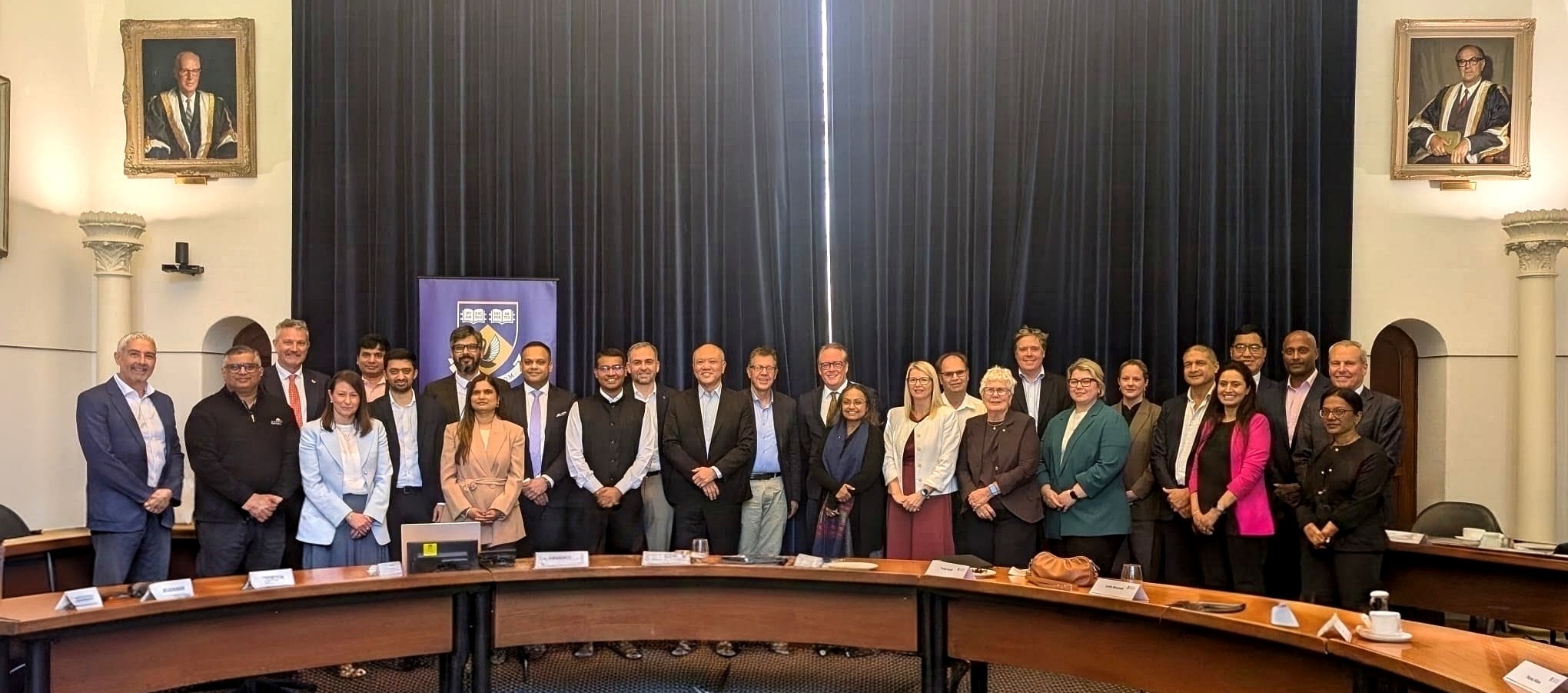
Direct air connectivity between Western Australia and India was the focus of a closed-door industry stakeholder dialogue on July 31, 2026. The event was hosted by the Asia Centre at UWA, in partnership with Invest and Trade Western Australia at Winthrop Hall on the University of Western Australia campus.
The roundtable, titled “Connecting Western Australia and India: Direct Air Connectivity Roundtable,” brought together senior representatives from the Western Australian Government, industry, airlines, airports, and the broader aviation sector from both India and Western Australia. The event was designed to identify opportunities to strengthen bilateral connectivity and economic engagement, and to explore how stronger direct air links could catalyze collaboration across trade, investment, tourism, education, research, and innovation.
Amit Chakma, Vice Chancellor of the University of Western Australia, delivered the welcome address as host of the event. Fiona Allan, Co-Director of the Asia Centre at UWA, served as master of ceremonies, while Raymond De Silva, Professor of Finance and Co-Director of the Asia Centre, moderated the facilitated roundtable discussion that followed the opening addresses. Stephen Chu, Chair of the Advisory Board of the Asia Centre, delivered the closing remarks.
Among the government representatives present were Bruce Reynolds, Lord Mayor of Perth, and David Scaife, Parliamentary Secretary to the Premier and Minister for State Development, Trade and Investment, and Economic Diversification, who represented the Premier.
Representing the Indian side were Nagesh Singh, High Commissioner of India to Australia; Kajari Biswas, Consul General of India to Western Australia; and Naresh Kumar, Consul at the Consulate General of India in Perth. Singh welcomed the discussion and said physical connectivity was a fundamental requirement for deepening ties, adding that “knowledge networks” would ultimately guide the world forward.
Akhtar Malik, whose team is serving as UWA’s knowledge partner on the research and connectivity initiative, presented alongside Hari Padmanabhan, Global and Industry Relations Manager at UWA’s Global Engagement Office.
On the trade and industry side, attendees included Ian Martinus, Western Australia’s Trade Commissioner to India; Raj Surendran, Chief Executive Officer of TLEA; Michael Carter, Head of International Trade and Investment at the Chamber of Commerce and Industry of Western Australia; David Eggleston, Assistant Director of the Centre for Australia India Relations; Jyothi Tegginamath, WA State President of the Australia India Business Council; and Rakesh Prabhakar, Country Head for Australia and New Zealand at Zoho.
Aviation and tourism were represented by Kate Holsgrove, Chief Commercial and Aviation Officer at Perth Airport; Jessica Woodford, Senior Aviation Manager at Tourism WA; Tom Upson, Director of Markets and Aviation at Tourism WA; and Amol Virkar, Airport Manager for the City of Karratha.
Academia, science, and the professions were represented by Sharath Sriram, Western Australia’s Chief Scientist; Gail McGowan, Chancellor of Murdoch University and Chair of WA Cricket; and Mark Paganin, Partner at Clayton Utz and Board Member of the UWA Business School.
According to the Asia Centre, its work is aimed at “strengthening UWA’s engagement and partnerships across the Asian region” with its neighbors in Asia, supporting “education, economic collaboration and cultural exchange.” The Centre describes itself as “a platform for knowledge sharing and engagement,” bringing together academics, policymakers, industry leaders, and community representatives to work on shared regional challenges, through conferences, workshops, and research programs.
Related posts:
 University of Western Australia to Establish Campuses in Mumbai and Chennai
 UWA Hosts Roundtable on Transforming Higher Education, Building Global Pathways from India
 India’s Aviation Paradox: Scale Without Competitiveness
 Air Disasters-4: Adanis, IndiGo Rule Indian Aviation as Government Agencies Get Elbowed Out
