Join WhatsApp Channel

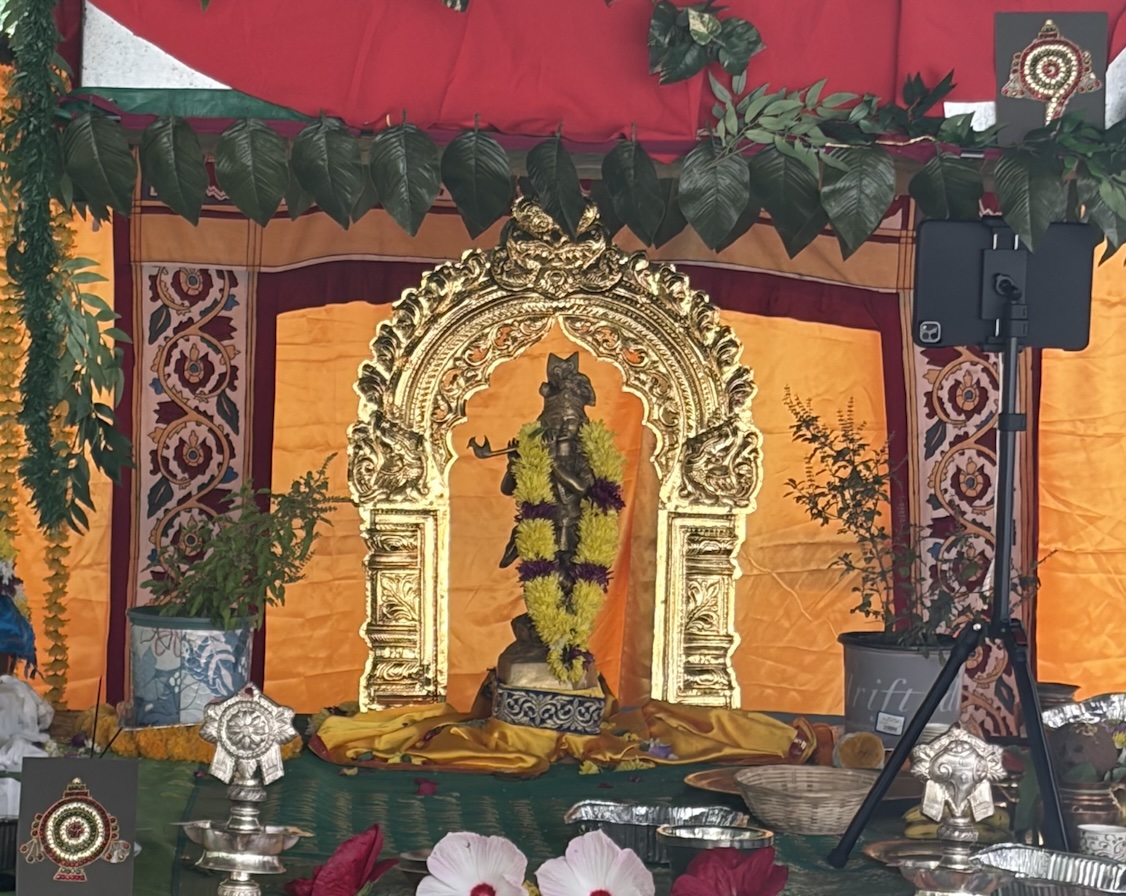
The Sri Siva Vishnu Temple (SSVT) in Lanham, Maryland, became a hub of devotion, Vedic scholarship, and community participation as hundreds of devotees gathered for the Sri Krishna Anugraha Mahotsava, a five-day spiritual festival held from July 15 to 19 under the guidance and blessings of Yatikula Chakravarthy His Holiness Sri Sri Sugunendra Theertha Swamiji.
According to a statement issued by SSVT, the Mahotsava brought together renowned Madhva Acharyas, temple priests led by Sri Rakesh Bhat, volunteers, musicians, and devotees from across the Washington metropolitan area for a series of traditional Madhva Sampradaya homas, poojas, abhishekas, and devotional ceremonies. Organizers said the event celebrated the spiritual traditions of Sanatana Dharma while fostering a strong sense of community among participants.
The five-day celebration was preceded by four weekends of devotee-participatory poojas, allowing worshippers to prepare spiritually for the main festival. According to the temple, the extended program encouraged greater community involvement and transformed the Mahotsava into a month-long devotional journey.
“Hundreds of devotees took part in Krishna Pooja, chanting Mantras given by Swamiji and the Krishna shlokas from different traditions, transforming the Mahotsava into a community-wide spiritual movement rather than a five-day event,” the statement said. “Families, including many children, participated enthusiastically, creating an atmosphere of devotion and anticipation.
The event also included singing of bhajans and devotional songs from different groups in the community.”
The celebrations also extended beyond the temple grounds. On June 28, devotees participated in a Nagara Samkirtane, a devotional procession featuring singers, musicians, dancers, and families. The event began with a cultural program before participants circled the temple while singing the names of Lord Krishna. Classical dance performances, devotional music, and Kolata added to the festive atmosphere, bringing together devotees of all ages in a public expression of bhakti.
Another key event leading up to the Mahotsava was the Vidvat Goshti, or Vedanta Scholars Conference, held on July 11.
Scholars including Dr. Purna Prasad, Sri Jayakrishna Nelamangala, Dr. Kalika Uttarkar, Dr. Pratosh Acharya, and Brahmachari Pratyagatma Chaitanya delivered presentations on topics ranging from the Bhagavad Gita and the Upanishads to Acharya Madhva’s philosophy, stress-free living, and the relevance of Sanatana Dharma in contemporary society.
According to the statement, the conference featured an interactive question-and-answer session that drew strong participation from younger attendees. Temple organizers said the engagement reflected His Holiness Sri Sri Sugunendra Theertha Swamiji’s vision of connecting younger generations with India’s spiritual and philosophical traditions.
The Mahotsava officially commenced on the morning of July 15 with Punyaha Vachanam, the traditional purification ceremony, followed by Ganapathi Homa, invoking Lord Ganesha’s blessings for the successful completion of the festival. Temple officials said the rituals established a devotional atmosphere that continued throughout the five-day celebration.
On July 16, devotees witnessed the Ashta Mahamantra Homa, during which eight sacred mantras dedicated to different manifestations of Lord Sri Krishna were offered into the sacrificial fire. Vedic chants resonated throughout the temple as priests performed the rituals according to Madhva traditions.
The morning ceremonies concluded with an elaborate Sri Krishna Abhisheka at the Krishna Sannidhi. Priests performed the ceremonial bathing of the deity using traditional offerings while devotees participated by chanting the Lord’s names.
The following day began with the Mahalakshmi Hridaya Homa, performed to seek the blessings of Goddess Mahalakshmi for prosperity, harmony, and spiritual well-being.
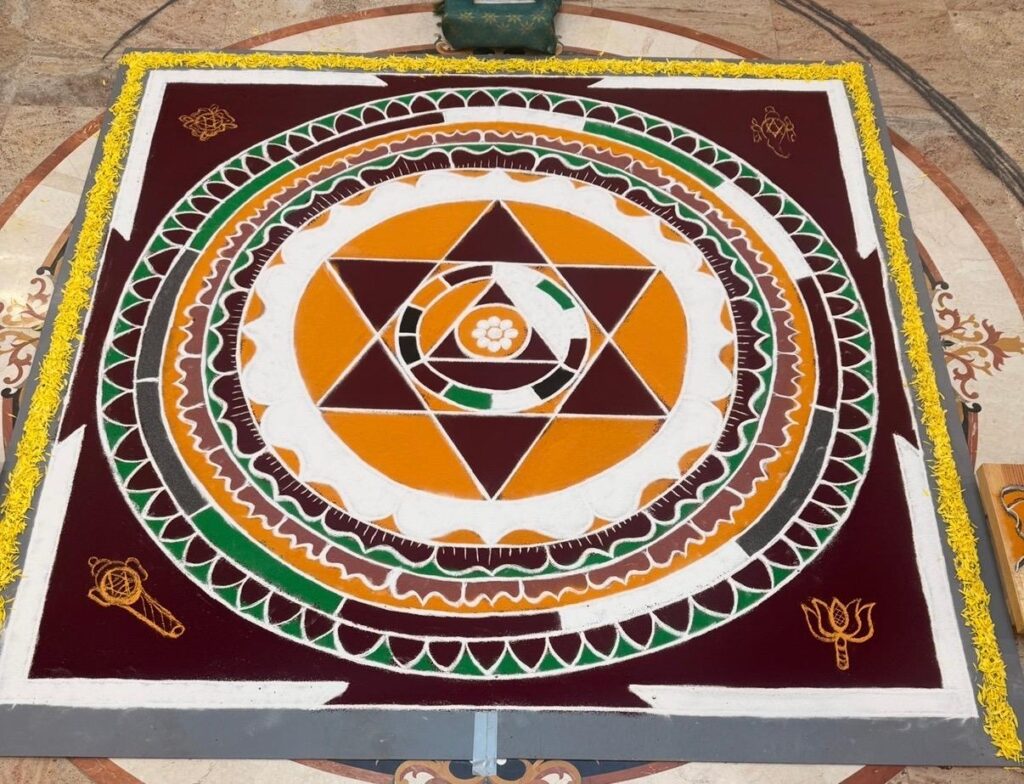
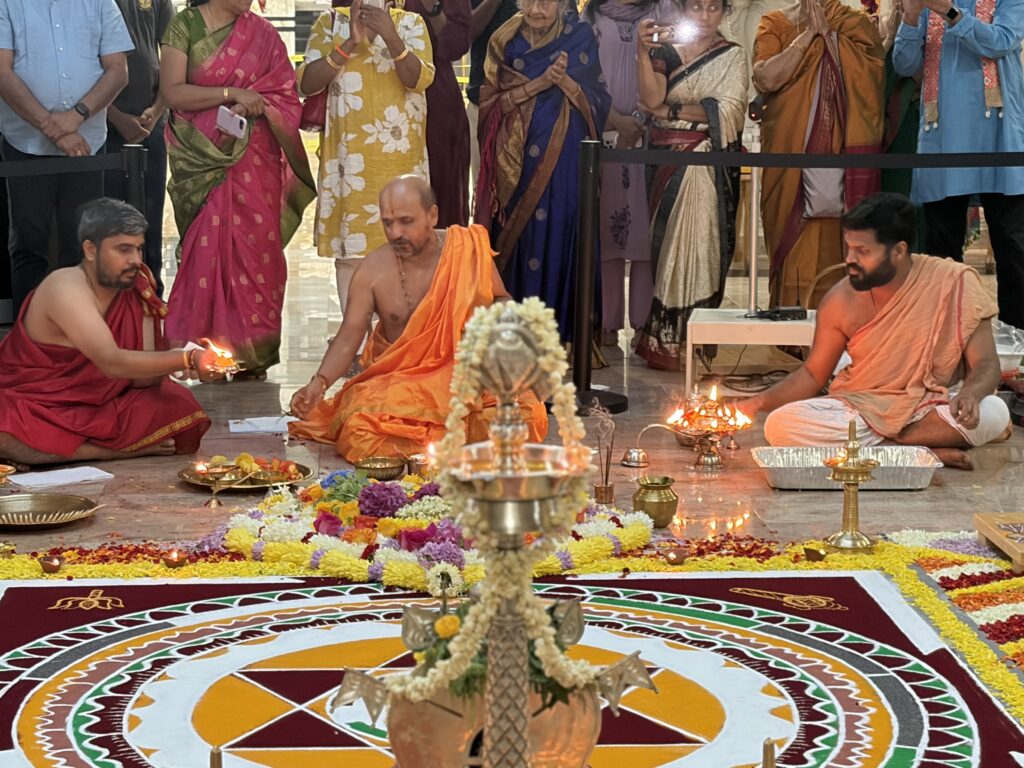
“The evening’s Ashta Lakshmi Deepa Pooja proved to be one of the visual highlights of the Mahotsava. The beautifully designed sacred mandala, illuminated by numerous lamps representing the eight forms of Mahalakshmi, captivated everyone present. As Vedic chants echoed through the temple, devotees sat in silent meditation, many describing the experience as mesmerizing and deeply moving,” the statement noted.
For many attendees, July 18 became one of the most memorable days of the festival.
The day began with the Pavamana Sukta Homa, performed collectively by participating Madhva Acharyas. According to the statement, more than 600 mantras from the ninth book of the Rig Veda, known as the Pavamana Mandala and glorifying Sri Mukhya Prana and ultimately Lord Sri Hari, were recited during the ceremony as devotees immersed themselves in prayer.
Later that evening, devotees participated in the Chakrabja Mandala Pooja, described by organizers as one of the signature rituals of the Mahotsava. The Chakrabja Mandala is a two-dimensional representation of the Divine Cosmos in which various deities and divine manifestations are invoked through Vedic mantras and worshipped collectively in an elaborate ritual.
The sacred mandala, meticulously prepared according to scriptural tradition, served as the focal point of the ceremony. As priests performed the elaborate rituals accompanied by Vedic chanting, flowers, lamps, and sacred offerings, the temple was transformed into an atmosphere of reverence and devotion. According to the statement, many devotees later described the experience as deeply moving and spiritually uplifting.
The Mahotsava concluded on July 19 with the Hari Vayu Stuthi Punascharana Homa, a ceremony honoring Lord Hari and Sri Mukhya Prana, both central to the Madhva tradition.
The final day culminated with the 108 Kalasha Abhisheka to Lord Sri Krishna. During the ceremony, 108 sanctified kalashas were ceremonially offered to the deity amid continuous chanting of Vedic hymns, the Vishnu Sahasranama, and devotional music. The temple said the concluding ritual drew hundreds of devotees and marked the culmination of five days of worship and spiritual observance.
Throughout the Mahotsava, organizers said devotees reflected on the profound impact of the ceremonies. Many identified the Ashta Lakshmi Deepa Pooja, Pavamana Sukta Homa, Chakrabja Mandala Pooja, and the 108 Kalasha Abhisheka as among the most memorable moments of the festival, with several participants describing the experience as emotionally and spiritually transformative.
The Mahotsava also underscored the importance of community participation. Sacred rituals were conducted by Acharya Sri Harish Baipadithaya, Acharya Sri Balakrishna Bhat, Acharya Sri Rakesh Bhat of SSVT, Priest Sri Vishwas Tantry, and Priest Sri Sudharshana Bhat, who collectively led the ceremonies rooted in the traditions of the Madhva Sampradaya.
Temple volunteers, donors, musicians, and numerous devotees contributed behind the scenes to organize and support the five-day celebration, helping ensure the smooth execution of the festival’s extensive religious and cultural programs, the statement added.
Related posts:
 Sri Ganapathy Sachchidananda Swamiji to Lead Maha Kumbhabhisheka Celebrations at Sri Venkateswara Temple in Frisco, Texas
 Thousands Attend Four-Day Annual Religious Event at Sri Venkateswara Temple in Pittsburgh, PA
 Jhulana Julao: Hindola Utsav of the Month of Shravan
 Thousands Unite for Gītā Utsav 2025 in Texas, Celebrating 10 Years of the Global Bhagavad Gītā Memorization Movement