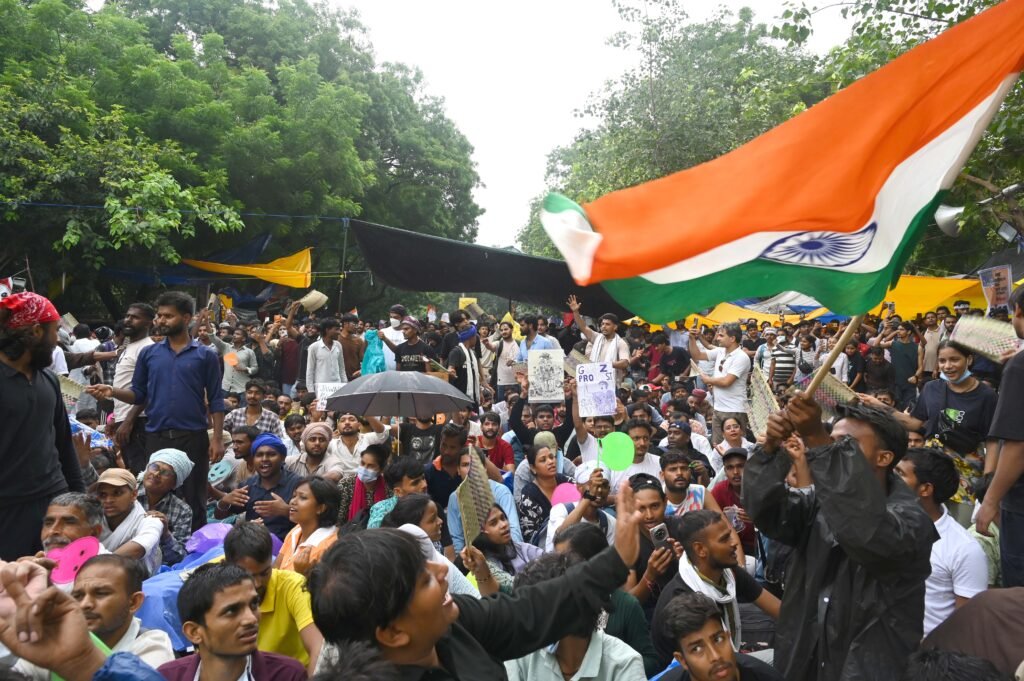
It started as a spark over a leaked medical entrance exam. It has since exploded into a global inferno. The abrupt cancellation of India’s highly competitive NEET-UG 2026 examination didn’t just leave 2.2 million medical aspirants in limbo—it triggered one of the largest and most intense student uprisings in recent memory.
Now, students aren’t just facing off against the government; they’ve united under a banner that has caught the attention of the world. Reclaiming a derogatory label used during a court hearing, the protesters have adopted a defiant moniker: The Cockroach Janta Party (CJP).
From Campus Campouts to Global Outcry: What began behind police pickets at Jantar Mantar in New Delhi has spilled across continents. Inside India, students from Mumbai to Patna have blocked roads, staged sit-ins, and held candlelight vigils, demanding systemic reforms and the resignation of Union Education Minister Dharmendra Pradhan. They are tired of a pressure-cooker system where education is compromised and futures are allegedly stolen by organized cheating networks.
But the anger isn’t confined to South Asia. The “Main bhi cockroach” (I am a cockroach too) slogan is echoing through the streets of major cities worldwide. In New York, the Indian diaspora and student bodies gathered at the Mahatma Gandhi statue in Union Square. Similar solidarity demonstrations played out outside the Indian High Commission in London, near the International Criminal Court in The Hague, and in Paris, Berlin, and Dublin.
Advertisement
Student bodies across Southeast Asia and the Middle East have also voiced their support, turning a domestic exam scandal into an international referendum on institutional integrity and the crushing psychological burden placed on millions of young people.
Bollywood Weighs In: The Divided Voice of Cinema. The emotional intensity of the protests—heightened by tragic reports of student suicides linked to extreme exam pressure—has drawn the Indian film industry into the fray. Celebrities are using their massive platforms to amplify the CJP movement for education reform, though they remain divided on the methods.
The Voices of Support: Several high-profile actors have thrown their weight behind the students, demanding empathy and accountability:
- Kamal Haasan didn’t mince words, criticizing the systemic failures: “We should have listened when one child cried… A system where coaching replaces learning, anxiety replaces curiosity, and criminality replaces merit is rotten… A nation has failed when its children are met with barricades and batons instead of answers.”
- Kareena Kapoor stressed that the system owes the youth fairness: “The voices of so many young people asking to be heard are impossible to ignore… No child should have to wonder if their effort will be enough. They deserve a system they can trust.”
- Alia Bhatt expressed awe at the students’ resilience: “Behind every student standing their ground is a dream… Their resolve is a mirror held up to all of us.”
- Dia Mirza condemned the lack of empathy from the top. Following a video address by the Prime Minister, she wrote: “Not one word of empathy for the parents who have lost their children… for the incredible resilience of students demanding their rights… Nothing that can heal the millions of hearts that are broken.”
- Comedian and actor Vir Das urged his peers in the entertainment industry not to stay quiet just because they are comfortable: “I hope you understand the sheer hypocrisy of not speaking up for young people, and then trying to sell them tickets later.”
The movement even caught the eye of Hollywood, with actor John Cusack sharing an article on the protests and posting: “Beautiful news from my favorite fellow cockroach.”
The Voices Urging Restraint. Not every celebrity is backing the continued street protests. Following assurances from the government, some actors have urged students to step down and trust the process.
- Salman Khan, who initially expressed sympathy for the students, later backed the government’s promise of fast-track courts and urged the youth to end the agitation: “The Honorable Prime Minister has tweeted, and I am sure that he will take strict action… So students, plz go back to your parents’ n homes.” He also publicly urged climate activist Sonam Wangchuk to end his hunger strike in support of the students, stating, “Sonam, it’s done, bro. Don’t extend this.”
- Veteran actor Anupam Kher advised caution, warning the youth against letting their genuine grievances be hijacked by political interests: “Don’t become someone else’s tool.”
- The Government’s Stance and the Road Ahead. The Union government insists that canceling the exam was a painful but necessary step to protect the credibility of India’s testing system. Prime Minister Narendra Modi has publicly appealed for calm, assuring anxious families that those responsible for the leak will face swift justice via newly established fast-track courts.
Yet, the CJP movement remains unyielding. Protesters argue that token arrests aren’t enough. They want foolproof safeguards against leaks, greater transparency, and a complete overhaul of the National Testing Agency (NTA).
Whether this confrontation leads to a total institutional reboot or fades once the re-examinations commence, one thing is certain: the “Cockroach” rebellion has ripped the band-aid off India’s education crisis. It has forced the world to look at a system where aspiration too often collides with systemic failure, leaving a generation unwilling to be squashed.
Disclaimer: The opinions and views expressed in this article/column are those of the author(s) and do not necessarily reflect the views or positions of South Asian Herald.