Join WhatsApp Channel

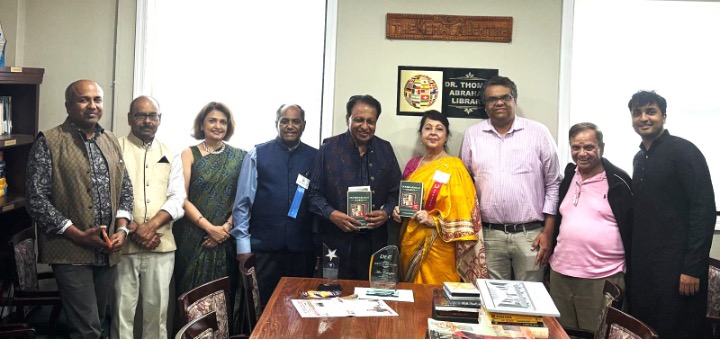
The Indian Diaspora Center at the Dr. Thomas Abraham Library, in collaboration with the Global Organization of People of Indian Origin-Manhattan Chapter (GOPIO-Manhattan) and the Indian American Kerala Cultural and Civic Center, hosted its 2026 Annual Symposium on June 28 at the Kerala Center in Elmont, New York.
Titled “Indian Television: Yesterday, Today and Tomorrow,” the symposium brought together prominent figures from Indian television and journalism for a panel discussion examining the industry’s evolution and future. According to a statement from GOPIO, the panel featured former Doordarshan news presenters Sheila Chaman and Ramu Damodaran; former Indian Ambassador T.P. Sreenivasan, who currently hosts Around and Inside on Asianet TV; and Sree Sreenivasan, digital media expert, journalism professor, host of the Sunday NYT Readalong, and co-founder of the South Asian Journalists Association (SAJA).
In his opening remarks, Kerala Center President Alex Esthappan welcomed attendees and expressed pride that the Kerala Center serves as the home of the Dr. Thomas Abraham Library and the Indian Diaspora Center.
Dr. Abraham, founder of the Indian Diaspora Center, outlined the organization’s mission to preserve the history, achievements, and contributions of the global Indian diaspora. He noted that the Center maintains an extensive collection of books and publications on the Indian diaspora, India, and Indian civilization. He also highlighted GOPIO’s initiative to establish India Collections in public libraries across the New York metropolitan area through book donations from the Consulate General of India and members of the Indian American community, making information about India and its diaspora more accessible.
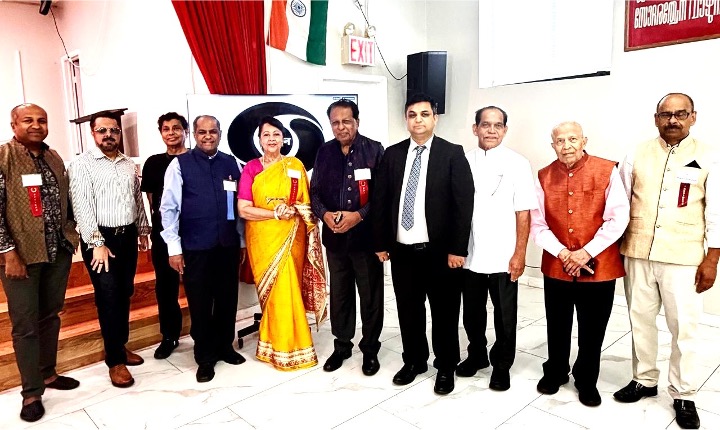
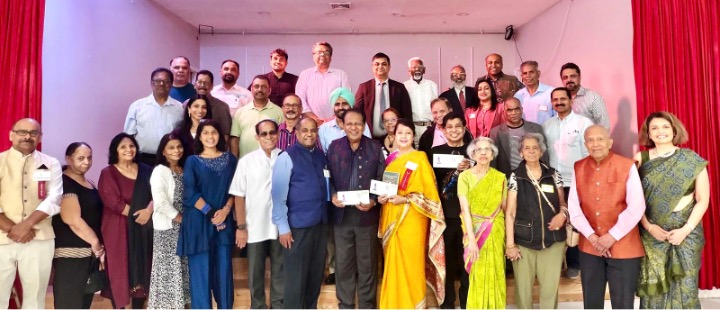
GOPIO and Kerala Center organizers with the moderator and speakers at the symposium. From Left to Right, Sree Sreenivasan, Chirag Chaman, Ramu Damodaran, Dr. Thomas Abraham, Sheila Chman, T.P. Sreenivasan, Ganesh Pager, E.M. Stepehen, Mukund Mehta and Alex Esthappan. PHOTO: GOPIO
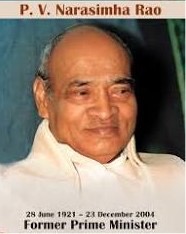
As June 28 marked the birth anniversary of former Indian Prime Minister P. V. Narasimha Rao, the symposium opened with a tribute delivered by Ramu Damodaran, who served in Rao’s office before joining the United Nations.
Paying tribute to the late Prime Minister, Damodaran said, “P. V. Narasimha Rao is rightly remembered for launching India’s economic liberalization. Equally significant, however, was his commitment to liberalizing the human mind. One visible expression of that vision was opening Indian television to new channels and new opportunities, giving viewers a genuine choice in what they could watch.”
Damodaran said Rao viewed India’s greatest strength as its “vast reservoir of human talent and professional skills.” He noted that economic liberalization was rooted in the belief that Indians, both within the country and abroad, should have greater opportunities to innovate, compete, and achieve their full potential. By opening both the economy and the media landscape, Rao helped lay the foundation for India’s emergence as a global hub for technology, entrepreneurship, and communications.
Reflecting on the transformation of Indian television, Damodaran said the industry’s evolution from a single state broadcaster into a diverse media ecosystem paralleled the broader economic and social changes initiated by the reforms of the early 1990s.
He also observed, “Mr. Rao was perhaps the first Indian Prime Minister to fully appreciate how effortlessly the United States attracted and benefited from the world’s finest minds. He believed that, irrespective of politics, India should learn from that example by creating an environment where talent could flourish and innovation could thrive.”
Moderator Sree Sreenivasan then introduced Sheila Chaman, who discussed her recently published book, Doordarshan Diaries: The Golden Era of Television. Co-authored by ten former Doordarshan colleagues, the book “chronicles the evolution of Indian television through the experiences of those who helped shape its formative years.” Chaman described it as both a “nostalgic memoir” and an important “historical record” of India’s pioneering television era.
Recalling the early years of broadcasting, Chaman said news presenters wrote or edited much of their “own scripts” and delivered them entirely from “memory,” because “teleprompters and autocue systems” were not yet available. She said the process demanded extensive preparation, discipline, and strong memory, qualities that defined Doordarshan’s early broadcasters.
Chaman also presented a PowerPoint featuring archival photographs and materials from the book, tracing the development of Indian television from its experimental launch in 1959 through the introduction of color broadcasts during the 1982 Asian Games. The presentation also highlighted milestones from her own career, including interviews with national leaders, interactions with film personalities, and appearances as a master of ceremonies at national and international events.
Sreenivasan moderated a discussion exploring the evolution of Indian television in line with the symposium’s theme.
Chaman noted that Doordarshan began broadcasting on September 15, 1959, with a small transmitter and makeshift studio, airing only a few hours of programming each day. Early programming emphasized education, agriculture, literacy, and national development. She identified the introduction of color television on August 15, 1982, ahead of the Asian Games, as a major turning point that expanded television’s reach across India.
She said India’s television industry underwent a dramatic transformation following the economic reforms of the early 1990s. The arrival of CNN during the Gulf War, followed by private broadcasters such as Star TV, Zee TV, and Sony, ended Doordarshan’s monopoly and ushered in an era of multi-channel broadcasting and expanded viewer choice. Today, India has more than 900 satellite television channels, while Doordarshan operates about 50 channels serving regional and national audiences. Citing a study by the Indian Institute of Management Ahmedabad, Chaman noted that India’s television audience is expected to reach nearly 1.03 billion by 2029, underscoring the medium’s continued relevance despite the rapid growth of digital platforms.
Former Ambassador T.P. Sreenivasan reflected on his unexpected transition into television after retiring from the Indian Foreign Service. “It is ironic,” he said, “that the oldest member of this panel is speaking about the newest trends in television.” He described himself as an “accidental television journalist” who entered the field as regional news channels expanded and created new opportunities for public discourse.
He said one of the industry’s most significant developments has been the rise of small regional news channels. Although many began with limited resources, which he humorously described as “tea shop stations,” several have grown into influential media organizations, demonstrating that quality journalism can thrive outside major broadcast networks.
Concluding his remarks, Ambassador Sreenivasan drew a comparison between diplomacy and journalism. “Both professions,” he said, “share a common purpose to educate and inform the public. Diplomats do it discreetly; journalists do it publicly.”
Addressing the symposium’s theme, Damodaran said, “If there is one element which has transformed television in the last 35 years, it is the emergence of accountability and that anyone who appears on television needs to be prepared to justify actions taken, or not taken, and place that justification before the people of India.”
“It is clear that audiences should demand better coverage as democracy in India and abroad depends on it,” Damodaran added.
During the audience discussion, panelists expressed concern over what they described as the increasing emphasis on sensationalism in Indian television news, characterized by exaggerated headlines and confrontational debates. They contrasted that environment with the atmosphere that existed during their years as Doordarshan news presenters.
Ambassador Sreenivasan observed that while television networks in Kerala are not entirely immune to those trends, they generally feature fewer confrontational debates. He also discussed the growing influence of independent news creators whose YouTube channels have attracted large audiences.
Reflecting on the event, Sree Sreenivasan said, “To have a chance to talk about the past, present and future of the richest, most diverse TV landscape in the world was exciting. Only GOPIO and Dr Thomas Abraham could conceive of and convene such an unusual discussion.” Earlier in the day, he hosted the 400th episode of his NYT Readalong program.
As a token of appreciation, the speakers received rare U.S. Postal Service First Day Covers issued during the First Global Convention of People of Indian Origin in New York City in 1989, where GOPIO was founded. The commemorative covers featured Mahatma Gandhi stamps honoring the Indian diaspora and the historic gathering.
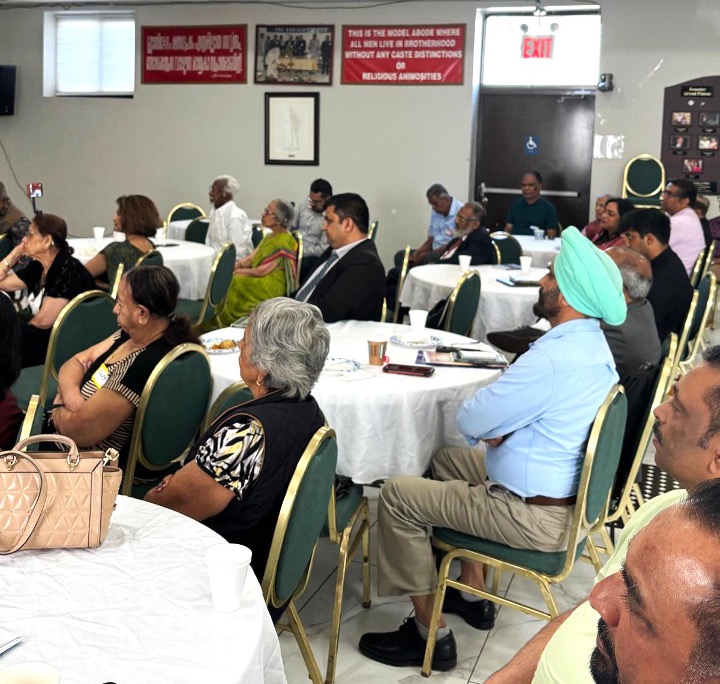
According to the statement, the symposium attracted community leaders, media professionals, scholars, and members of the Indian American community, generating a wide-ranging discussion on the evolution of Indian television and its future in the digital age. Among those in attendance were GOPIO International Chairman Dr. Thomas Abraham, GOPIO International Council Chair for Seniors Mukund Mehta, Kerala Center Founder and GOPIO Life Member E.M. Stephen, GOPIO Chamber of Commerce and Industry Secretary Ganesh Pager, Kerala Center Secretary Raju Thomas, and numerous GOPIO Life Members, along with members of GOPIO-Manhattan and the Indian American Kerala Cultural and Civic Center.
The event was jointly coordinated by Kerala Center President Alex Esthappan and GOPIO International Chairman Dr. Thomas Abraham. Kerala Center Vice President Daisy Stephen delivered the vote of thanks, expressing appreciation to the speakers for sharing their experiences and insights and thanking attendees for their participation. She said the lively exchange between panelists and the audience reflected the continued interest in the history, development, and future of Indian television and media.