Join WhatsApp Channel

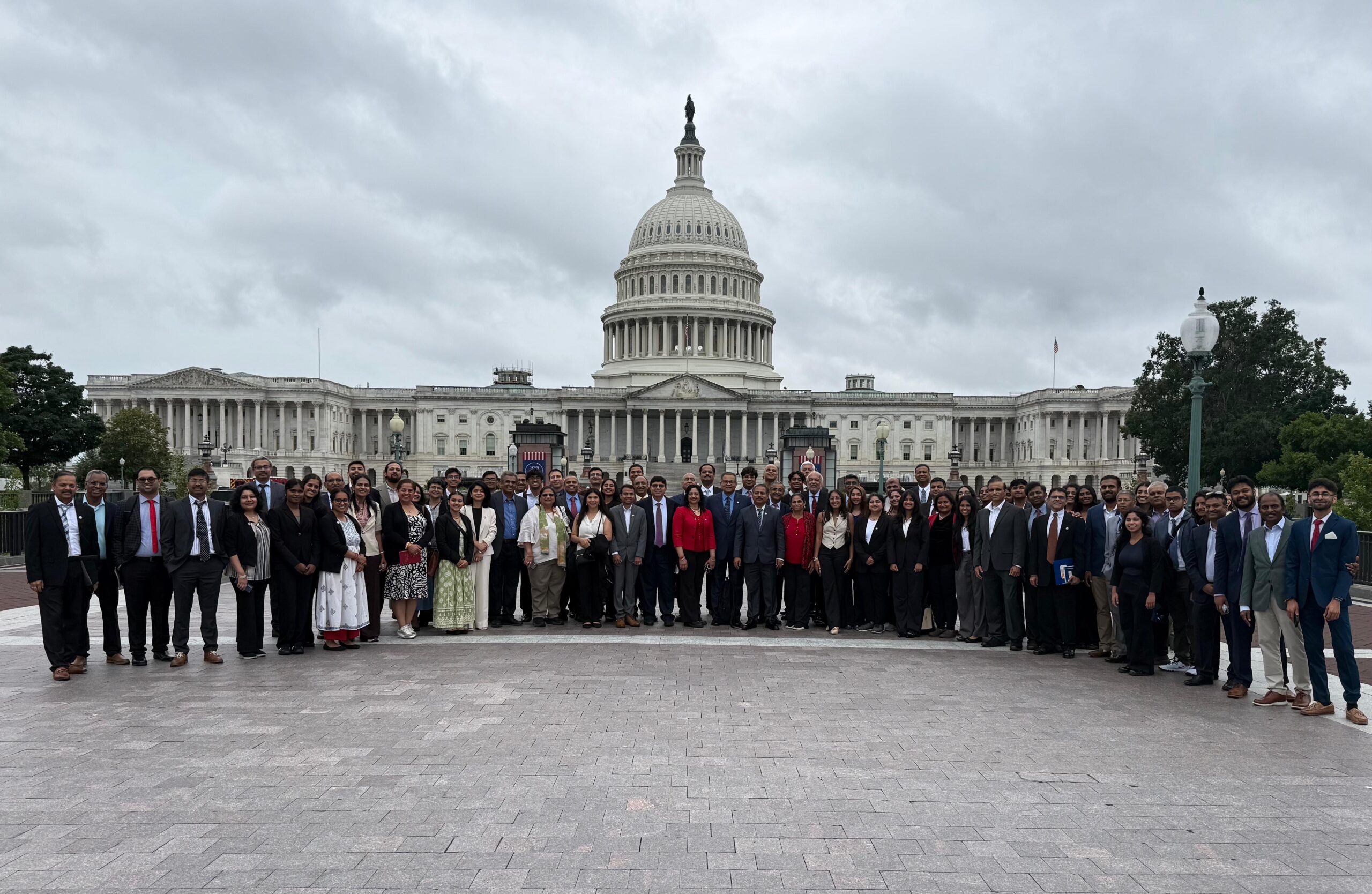
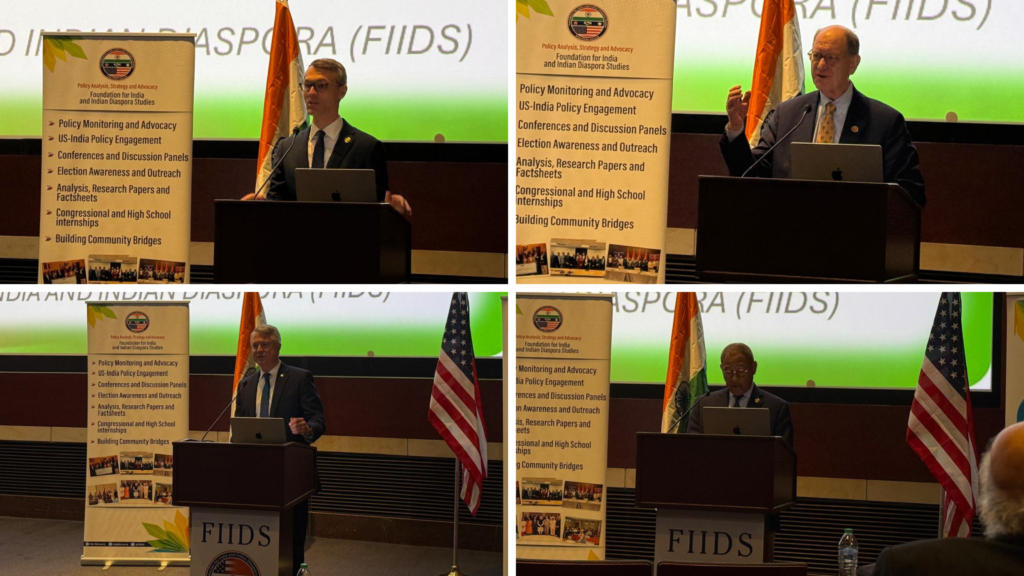
The Foundation for India and Indian Diaspora Studies (FIIDS) hosted a special Capitol Hill Day event on June 23 at the U.S. Capitol in Washington, D.C., focusing on the United States’ 250th anniversary and the growing U.S.-India partnership.
FIIDS President Khanderao Kand said more than 150 delegates from 25 states participated in the event. He explained that FIIDS encourages small groups of delegates from each state to meet with their elected representatives and discuss issues important to the Indian American community.
Kand noted that FIIDS, as a policy institute, regularly monitors resolutions and legislation introduced in Congress. This year, the organization reviewed approximately 38 resolutions before identifying five priority issues to discuss with lawmakers.
Deputy Assistant Secretary of State for South and Central Asian Affairs, Bethany Morrison highlighted the contributions of Indian Americans across business, government, and public service. She noted that Indian American leaders at companies such as Microsoft, Google, IBM, and Adobe play significant roles in advancing the U.S. economy.
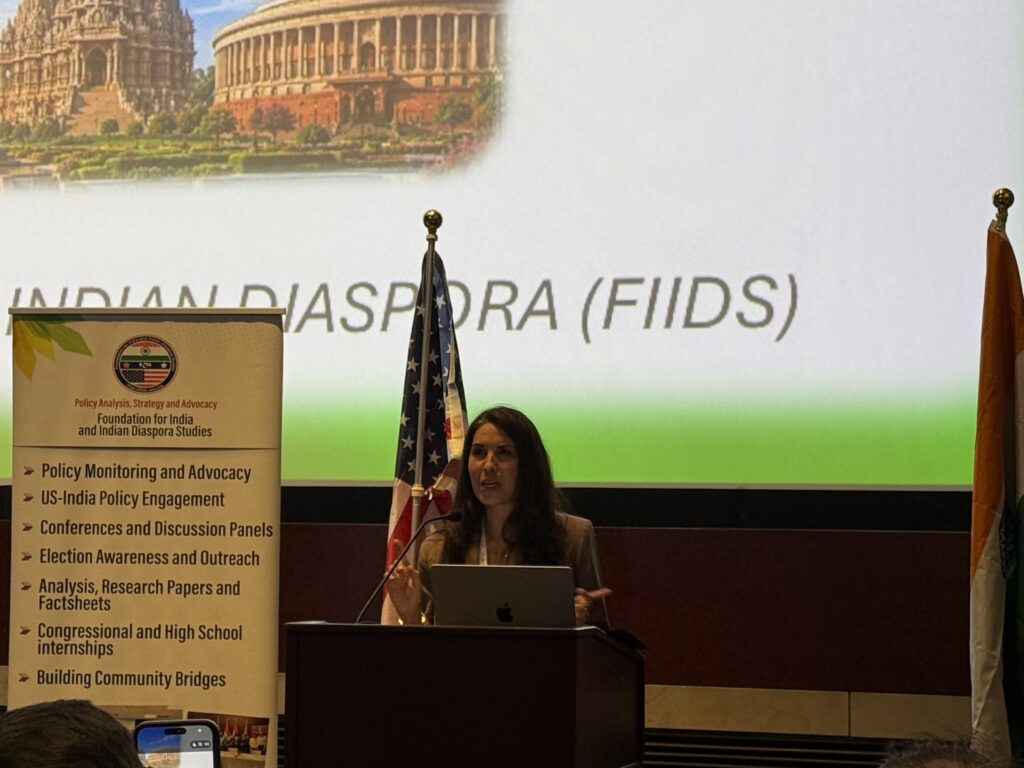
“It’s undeniable,” Morrison said, pointing to the contributions of senior officials across agencies including the FBI and National Institutes of Health, as well as Second Lady Usha Vance, in shaping current policy and future initiatives.
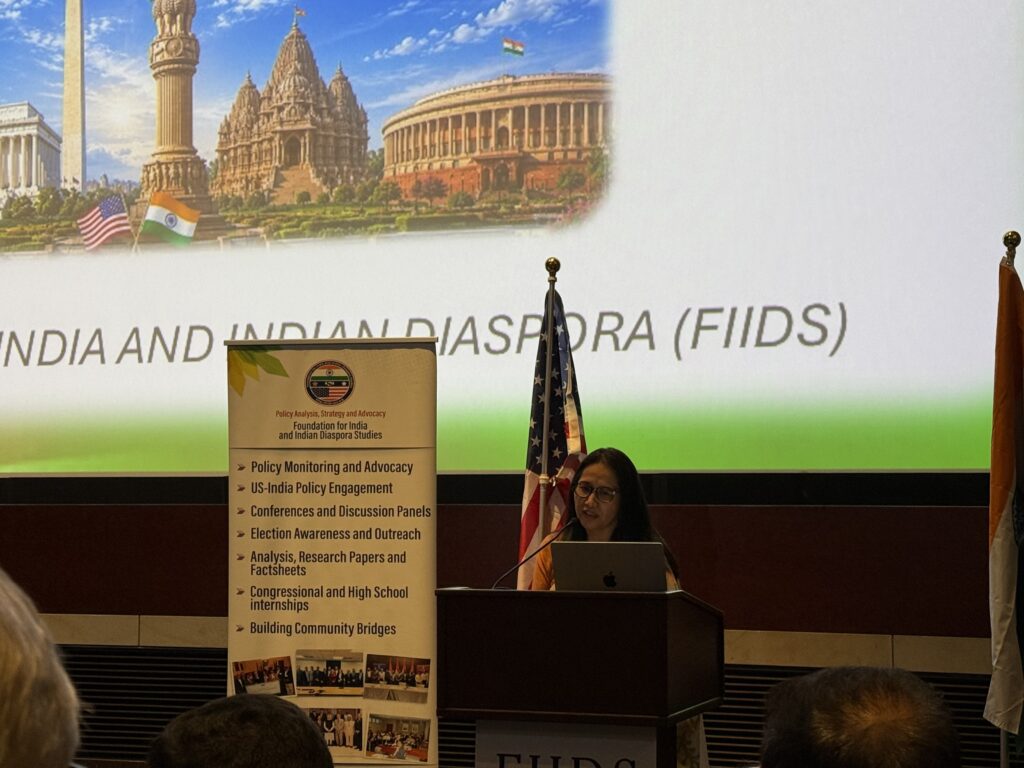
Deputy Chief of Mission, Embassy of India, Ambassador Namgya Khampa described FIIDS delegates as “very strong advocates” of the U.S.-India relationship. She said the partnership has often been characterized as one of the most “seminal and defining” relationships of the 21st century.
Khampa noted that the two countries have built a strong and resilient partnership over the years. Despite occasional differences in “perspective and position” on certain issues, she said the relationship has been sustained by a shared commitment and long-term vision developed over two decades.
“The reality I believe is that there is a lot that brings us together and that makes us stronger together, and that is the reality, and that is the vision that continues to guide us in our work here at the embassy,” Khampa said.
Sen. Roger Marshall called for deeper U.S.-India cooperation, emphasizing the contributions of Indian Americans to American society.
“Let me tell you who you are, because Washington always doesn’t always say it out loud, and it needs to be said,” Marshall said, noting that Indian Americans comprise about 1.5 percent of the U.S. population while contributing approximately 6 percent of federal income tax revenues.
Rep. Sanford Bishop reflected on the historical connections between India’s independence movement and the American civil rights movement. He noted that civil rights leaders in the United States drew inspiration from Mahatma Gandhi’s philosophy of nonviolence in their pursuit of “social and political justice.”
Bishop also highlighted the growing Indian American population in Georgia, which he said exceeds 180,000 residents and contributes significantly across multiple sectors of the state’s economy.
The congressman further noted that Georgia became the first state to adopt a legislative resolution condemning anti-Hindu hate. He added that he supports similar efforts at the federal level, including a House resolution introduced by Rep. Shri Thanedar.
Rep. James Walkinshaw from Virginia said the U.S.-India strategic partnership has strengthened under multiple administrations because it is grounded in both “shared interests and shared values.”
Walkinshaw cited cooperation on maintaining a free and open Indo-Pacific, strengthening supply chains, advancing emerging technologies such as artificial intelligence, and expanding defense collaboration. He also emphasized the importance of people-to-people ties as a foundation of the bilateral relationship.
Rep. Brad Sherman praised the achievements of Indian Americans, describing them as the “best educated” and “highest income” ethnic group in the United States.
Drawing laughter from attendees, Sherman remarked, “You represent a very smart group of people and the smartest of those have chosen to live in Los Angeles County in San Fernando Valley.”
He also recalled a conversation with Prime Minister Narendra Modi during the Prime Minister’s 2023 visit to the United States, during which he advocated for opening an Indian consulate in Los Angeles. Sherman noted that India has since established a consulate there.
Rep. Bill Huizenga said the United States and India share a common vision for a free, open, and secure Indo-Pacific rooted in “democratic values and a deep desire for freedom.”
“I’m confident that we can overcome any challenges, including questions from visas and immigration, and those very important issues,” Huizenga said. He also expressed optimism about expanding bilateral cooperation through initiatives such as TRUST and multilateral groupings including the Quad and Pax Silica.
Rep. Raja Krishnamoorthi described Indian Americans as one of the nation’s most successful immigrant communities, calling them the greatest export India has ever had.
Krishnamoorthi also addressed concerns about rising anti-immigrant rhetoric, referencing recent remarks from a Florida elected official who suggested he should be deported.
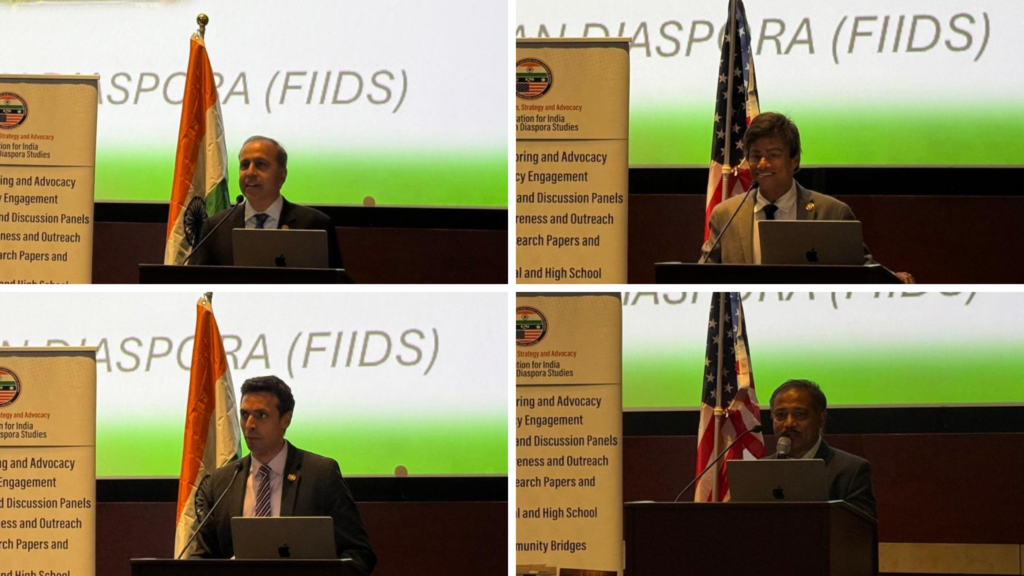
“I’m not going anywhere. Are you? None of us are going anywhere, and that hate, that bigotry, that prejudice, that discrimination that are directed at you and your families and me and all of us has no place in America,” he said.
He encouraged Indian Americans to seek public office at all levels of government, from local councils to Congress, to increase community representation.
Rep. Suhas Subramanyam echoed Krishnamoorthi’s remarks about the contributions of Indian Americans and highlighted his ongoing efforts to address immigration-related backlogs and family reunification issues.
Subramanyam also encouraged students to pursue internships and engage in public policy, telling attendees, “You have a champion of Congress in me.”
Rep. Shri Thanedar spoke about the importance of combating anti-immigrant sentiment and recognizing the contributions immigrants make to innovation, business, academia, and economic growth.
“I’m starting to see a lot more hate towards immigrants, and that has to stop. We got to fight that hate, and we got to unite,” Thanedar said.
Recalling Prime Minister Modi’s address to a joint session of Congress, Thanedar said escorting the Indian leader to the podium was one of the “greatest honor” of his career.
Kapil Sharma of Roundglass Foundation, who has worked on U.S.-India relations for more than three decades, noted the challenge facing Indian Americans today is not a lack of resources, but rather the inability to act collectively.
“How do we translate that human power or that voice to what you’re trying to do here today?” he questioned. “If we can’t unify, we can’t come together and we can’t amplify the strength of that voice.”
Rep. Rob Bresnahan, Bob Peckar, founding partner of Peckar & Abramson, Nissim Reuben, assistant director of the Asia Pacific Institute, and several other speakers also addressed the gathering.
Related posts:
 FIIDS Hosts US-India Summit on Capitol Hill, Highlights Strengthening Strategic Partnership and Diaspora Engagement
 FIIDS hosts event to celebrate the resiliency of democracies
 Historic Milestone: Largest Ever Indian American Representation in U.S. Congress
 US Congress Honors Dr. Sampat Shivangi’s Life and Legacy In a Special Capitol Hill Tribute