Join WhatsApp Channel

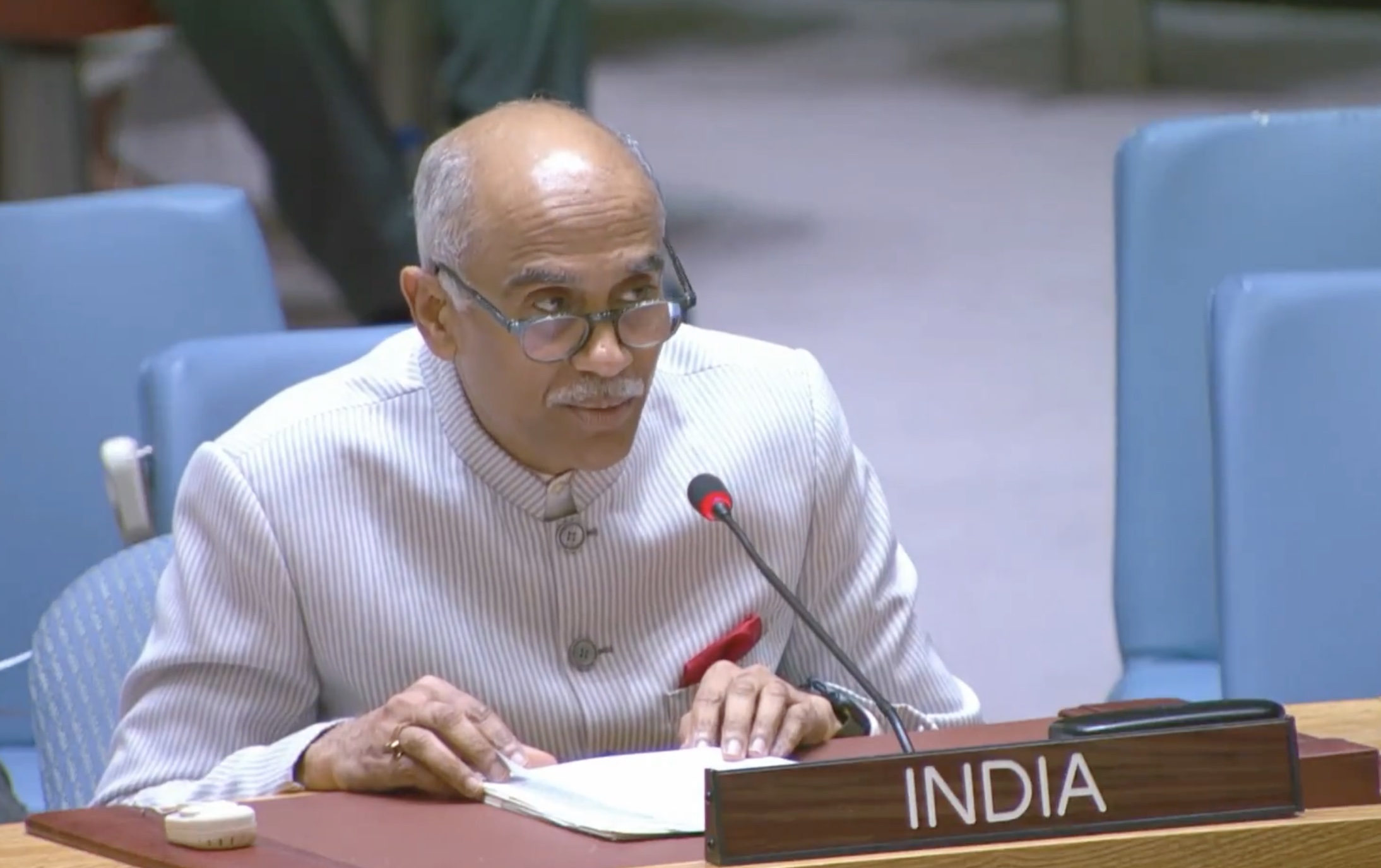
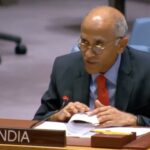
Permanent Representative of India to the United Nations, Ambassador Harish Parvathaneni, voiced concern over ongoing conflicts across the Middle East, highlighting the “immense” humanitarian toll reflected in the loss of lives, injuries, and large-scale displacement of vulnerable civilian populations.
Addressing the United Nations Security Council Open Debate on “Maintenance of International Peace and Security: Advancing Political Solutions in the Middle East: Mediation and Dialogue for Lasting Peace” on June 10, 2026, Ambassador Harish also drew attention to challenges affecting “freedom of navigation and consequent impact on global flow of commerce, including massive disruptions to established supply chains and global energy supplies.”
Against this backdrop, he expressed India’s “deep concern” over the conflict in Iran and the Gulf region, noting that it “unfortunately” began during the holy month of Ramadan. He urged all parties to “exercise restraint, avoid escalation and prioritize the safety of civilians.”
Ambassador Harish said the intensification of the conflict and its spread across the region have generated significant “anxiety.” He noted that the “mounting” destruction, loss of life, and disruption of normal economic and social activities have had a direct impact on India, which he described as a “proximate neighbor” with vital interests in the region’s security and stability.
He pointed out that nearly 10 million Indian citizens live and work in the Gulf region, making their safety and well-being a top priority for India.
“Our trade and energy supply chains are dependent on stability in the region and any major disruption has serious consequences for the Indian economy. India is also firmly opposed to attacks on merchant shipping as many of our nationals are prominent in its global workforce,” he said.
According to the Ambassador, several Indian nationals have either lost their lives or remain missing due to attacks on countries in the region as well as assaults on merchant vessels and critical sea lanes.
Reaffirming India’s position, he called for “dialogue and diplomacy, avoiding impeding freedom of navigation and commerce, avoiding military targeting of commercial shipping, avoiding targeting of civilian population and infrastructure, and seeking an early end to the conflict.” He also reiterated India’s support for all efforts aimed at achieving a peaceful resolution.
Turning to Gaza, Ambassador Harish emphasized that the situation carries serious humanitarian consequences and requires a “sustained ceasefire, humanitarian access, and a credible pathway” toward a lasting solution. He reiterated India’s support for a negotiated two-state solution, involving a “sovereign, independent, viable State of Palestine,” living side by side in “peace and security with Israel,” within secure and recognized borders.
“This remains the only path to achieve lasting peace and overall prosperity. India is also a committed development partner of Palestine with projects worth US$ 170 million,” he said. “We will be handing over in a few days, US$ 2.5 mn to UNRWA, the first tranche of our annual US$ 5 mn contribution.”
Addressing developments in Lebanon, the Ambassador underscored the need to respect the country’s territorial integrity and sovereignty. He reaffirmed the importance of implementing UN Security Council Resolution 1701, adopted on August 11, 2006, as well as the Declaration on the Cessation of Hostilities issued on November 26, 2024.
“Indian troops are deployed in UNIFIL and we call for ensuring safety and security of peacekeepers. They carry out a vital mandate entrusted by this Council and they must not be targeted. India will also be sending medical assistance to Lebanon,” he added.
On Yemen, he reaffirmed India’s commitment to the “unity, sovereignty, independence, and territorial integrity” of the Republic of Yemen and condemned attacks on maritime navigation. He stressed that safeguarding the Bab al-Mandab Strait and the southern Red Sea is a shared international responsibility and emphasized India’s opposition to efforts that undermine stability in the Gulf of Aden, the Arabian Sea, and the Indian Ocean.
The Ambassador also outlined several broader observations on conflict resolution and international peacebuilding.
Ambassador Harish said the UN Charter offers a variety of mechanisms for conflict resolution and de-escalation, but emphasized that no single model is suitable for every situation. He noted that peace efforts must be tailored to the specific context of each conflict, taking into account local realities and existing agreements between the parties. He pointed to the longstanding peace accords between Israel, Egypt, and Jordan as examples of durable arrangements. He also stressed that successful peace processes require national ownership, arguing that solutions cannot be imposed from outside and that the parties directly involved must remain central to all efforts aimed at achieving lasting peace.
He further highlighted the growing complexity of the global security environment, citing economic challenges, demographic pressures, supply chain disruptions, terrorism, and emerging technologies as factors shaping contemporary conflicts. In this context, he said the United Nations must remain agile and prepared to address evolving threats. The Ambassador also underscored the heavy human cost of conflicts, particularly for women and children, and called for a people-centered approach that prioritizes the alleviation of suffering and the protection of vulnerable populations.
He argued that mediation frameworks must evolve over time. Mechanisms that no longer reflect current realities should be updated or replaced to remain effective. He cited the Palestine issue as an example where some earlier mediation approaches may no longer be relevant, noting that contemporary peace initiatives differ significantly from previous frameworks.
In his address, Ambassador Harish said the United Nations is facing growing questions about its legitimacy, credibility, and effectiveness amid continuing conflicts and widespread human suffering. He argued that one of the primary reasons for this perception is the “eight-decade old, outdated architecture” of the Security Council.
He called for meaningful reforms, including the expansion of both permanent and non-permanent membership categories to better reflect contemporary geopolitical realities.
“The UNSC has to be fit-for purpose,” he said.
Emphasizing India’s commitment to regional peace and stability, the Ambassador said the people of the Middle East deserve lasting peace and a return to normalcy. He affirmed that India stands ready to contribute toward achieving “peace, prosperity and well-being” for the people of the region and beyond.
Related posts:
 At UN Security Council, India Defends Operation Sindoor, Rejects Pakistan’s Claims, Calls for Stronger Rule of Law and UN Reforms
 India Calls for Consensus-Driven UN Peacekeeping Reforms at Security Council Debate
 India Calls for ‘Zero Tolerance’ on Civilian Deaths at UNSC Debate
 India Urges United Nations to Impose “Serious Cost” on States Sponsoring Cross-Border Terrorism