Join WhatsApp Channel

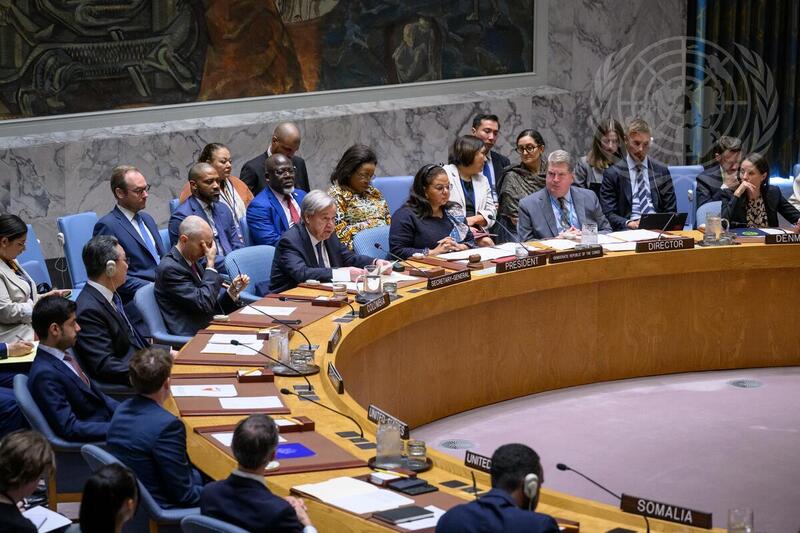
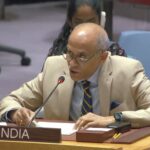
India’s Permanent Representative to the United Nations, Ambassador Harish Parvathaneni, said the United Nations Security Council (UNSC) has a broad “repertoire” of “tools and mechanisms” to fulfill its responsibilities for maintaining international peace and security.
Addressing the UNSC Open Debate on “Strengthening the Mechanisms for Peaceful Settlement of Disputes” on July 23, 2026, Ambassador Harish said, “Chapters VI and VII of the UN Charter outline such tools and mechanisms. Strong political will and joint sense of purpose are critical to the effective implementation of these tools and mechanisms.”
Describing the peaceful settlement of disputes as a topic of “immense significance,” particularly amid ongoing conflicts in several regions, the Ambassador outlined India’s position on the issue.
He said defining what constitutes a dispute is “central” to the Council’s deliberations and should not be “confused” with issues involving the illegal use of armed force, including armed aggression or illegal occupation, which directly affect the sovereignty and territorial integrity of member states.
“We have seen clear examples where geopolitical intermediation in the Council has projected armed aggression as a dispute. The Council has only very rarely made a determination of armed aggression. Clarity on this count is critical to determine which provisions of the Charter apply,” the ambassador said.
He also told the Council that resolving disputes and issues arising from the illegal use of armed force requires “inclusive, open and genuine efforts” rooted in a “problem-solving and pragmatic framework.” Linking such issues to “race, ethnicity, faith, religion and other identity markers” reflects a divisive approach and demonstrates a lack of engagement in good faith, he said.
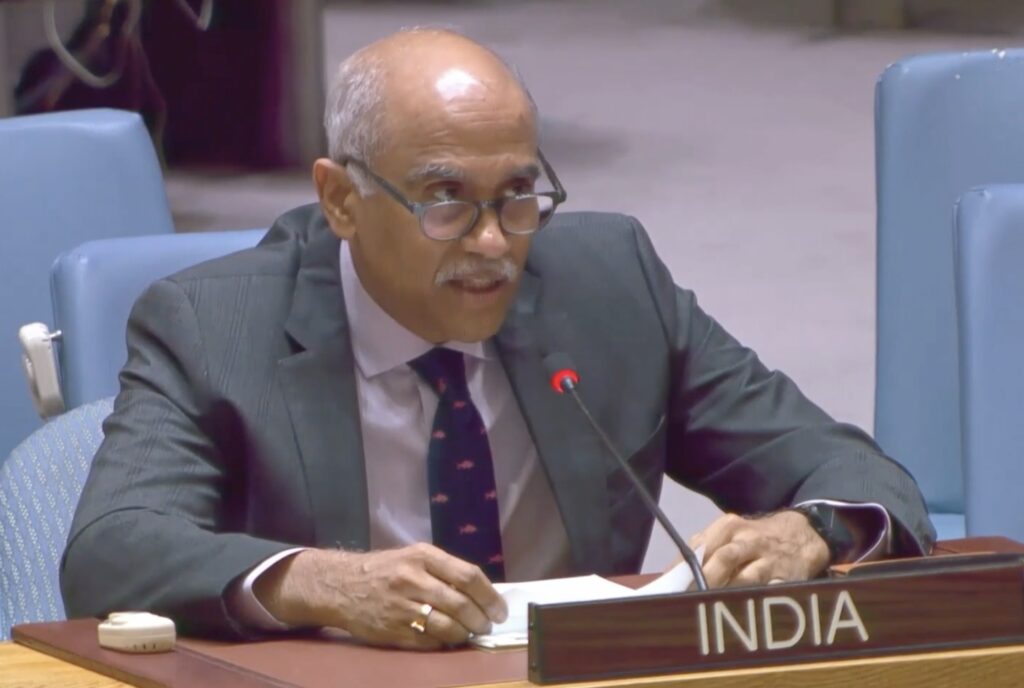
Ambassador Harish further said the Security Council should take “present realities” into account while examining “decades-old issues” related to the maintenance of international peace and security.
“It is also important to draw out the divergences between Chapters VI and VII of the UN Charter in this context,” he said. “The applicability of provisions in these two Chapters varies. Chapter VII is aimed at undertaking concrete actions when they offer firm pathways to the re-establishment of peace with respect to threats to the peace, breaches of the peace and acts of aggression. Their non-implementation could have an immediate aftermath, leading to further deterioration of peace and other serious consequences.”
He noted that Chapter VI serves a different purpose, offering a range of options to address situations that are likely to “endanger” the maintenance of international peace and security.
According to the ambassador, measures under Chapter VI also require consideration of procedures that may already have been adopted bilaterally by the parties concerned. Such interventions are designed to address prevailing circumstances rather than remain in force indefinitely, and they should be reviewed as conditions and contexts evolve.
Ambassador Harish also called for UN Security Council mandates to be “aligned” with the UN80 framework. He said mandates should undergo comprehensive evaluation through a “collective review mechanism” as part of the mandate implementation review process.
“Continuation of mandates may be guided by their relevance, utility and applicability. Narrow, political reasons should not be determinants on this score,” he said. “There is no reason for outdated and irrelevant mandates to continue in perpetuity without sunset clauses at considerable expense to the already constrained UN budget.”
He added that established regional and sub-regional organizations can play an “enabling role” in resolving disputes and conflicts by complementing the work of the United Nations. However, he said cross-regional groupings that are not linked by geography or common issues and have no direct connection to international peace and security should not be viewed in the same way because they lack the regional expertise and knowledge needed to resolve disputes.
During his remarks, Ambassador Harish also criticized Pakistan of attempting to “misuse” the Security Council platform to advance what he described as a “divisive agenda.”
“The Union Territory of Jammu and Kashmir has always been, is, and will remain an integral and inalienable part of India. This is the constitutional and legal reality that Pakistan deliberately chooses to ignore. The only outstanding issue with regard to Jammu and Kashmir is the naked aggression and illegal occupation of India’s sovereign territory by Pakistan,” he said.
Referring to developments in Pakistan-occupied Jammu and Kashmir, he added, “The ongoing developments in Pakistan-occupied Jammu and Kashmir fully expose the true nature of the Pakistani state. The world is witness to the continued suppression of basic rights, freedom of expression and association, and stifling of fundamental freedoms of Kashmiris in Pakistan-occupied Kashmir.”
Ambassador Harish said that, as a founding member of the United Nations with a longstanding commitment to the UN Charter and international law, India remains ready to work with the UN and other member states to strengthen the organization’s role in maintaining international peace and security.
Also addressing the debate, United Nations Secretary-General António Guterres warned that conflicts around the world are increasing in “number, complexity, length and scope.”
“We see an alarming disregard for international law. Impunity is spreading. Violations are going unanswered. Each violation unanswered becomes the next violation’s precedent. Trust is eroding. And negotiated settlements are becoming harder to reach and maintain,” he said.
The Secretary-General added that when parties prioritize “military solutions” over “negotiated settlements,” civilians bear the “heaviest toll.”
“We see this on full display in the Middle East, with devastating consequences in the region and across the globe,” Guterres said. “The situation is getting out of control. It’s teetering on the edge of the unimaginable.”
Deputy Representative of the United States to the United Nations, Ambassador Tammy Bruce noted, “The United States is leading efforts, globally and here at the UN, to peacefully settle disputes. We suggest to those intent on undermining the UN Charter to change course. We all deserve better. We all know we deserve better. Defending the UN Charter and returning back to basics is the clear and definitive road leading to peace, security, and prosperity.”
Related posts:
 India Urges United Nations to Impose “Serious Cost” on States Sponsoring Cross-Border Terrorism
 India Urges Transparent Natural Resource Governance at UNSC Open Debate
 India Calls for ‘Zero Tolerance’ on Civilian Deaths at UNSC Debate
 At UN Security Council, India Defends Operation Sindoor, Rejects Pakistan’s Claims, Calls for Stronger Rule of Law and UN Reforms