Join WhatsApp Channel

The ceasefire between Iran and the United States had already been tossed out with the two warring parties resorting to heavy missile exchanges in the last ten days or more further adding to the uncertainty to the now stalled talks between the two sides.
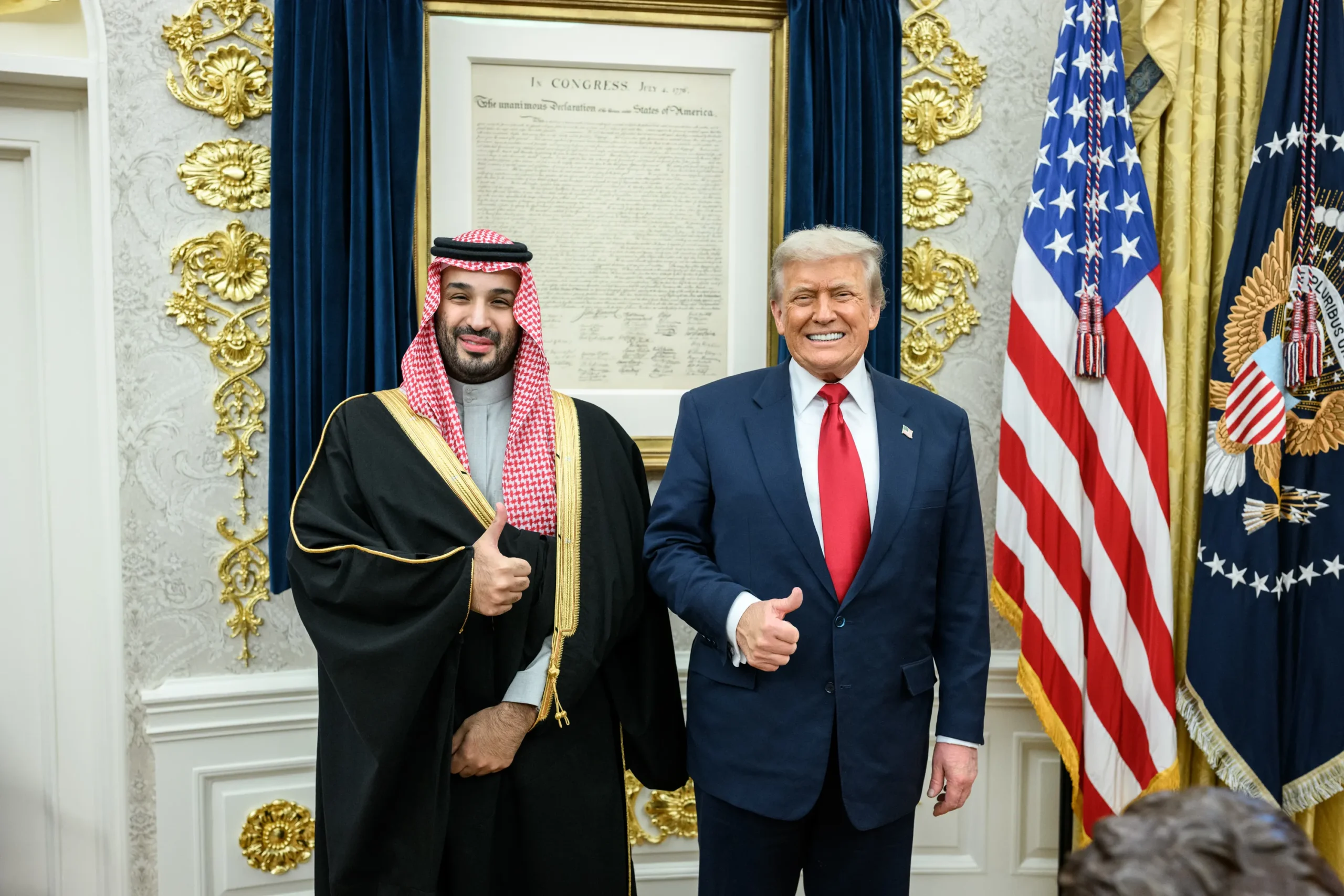
Now as if any more excuses had to be invented, President Donald Trump has formally given the go-ahead for a landmark civilian nuclear agreement with Saudi Arabia that had been in the works for sometime. The new deal that would last some 30 years has the potential of uranium enrichment within the Kingdom with billions of dollars in contracts exclusively to American companies, shutting out others of an extremely lucrative market.
The deal known as the 123 Agreement was readied towards the end of last year but delaying the formalization was the war in Iran and the skepticism it had generated on Capitol Hill, perhaps some of it having to do with not requiring Saudi Arabia to sign the Additional Protocol of the International Atomic Energy Agency (IAEA) that paves the way for snap inspections and other monitoring mechanisms.
Those in the area of non-proliferation have long said that centrifuges used to enrich uranium opens the door to a nuclear weapons program; and Saudi Arabia has not ruled out this possibility should Iran get an atomic weapon. Also concerns have started that Washington’s plan does not include a Saudi Arabia-Israel normalization as was once believed. Sooner or later, Israel will get involved in the process.
In the immediate context, the United States- Saudi Arabia deal raises uncomfortable questions for the United States-Iran peace process, not just the immediate objective of a temporary ceasefire. As it is tempers are high inside Iran between the so-called moderates and the hardliners on whether Tehran has “sold out” to Washington in even agreeing to talk. Now a nuclear deal in the region raises the difficult issue of an American double standard or even hypocrisy: giving Riyadh domestic enrichment rights but insisting Tehran to dismantle its nuclear program.
Further, piling conditionalities and strict verification procedures on Iran but allowing Saudi Arabia to walk away without even the Additional Protocol with the IAEA gives an incentive for the hardliners in Iran to hammer away at the moderates. The hawks have long argued that waiving non-proliferation requirements for some in the Gulf but insisting on restrictions for Iran will not be acceptable. In fact there are those who have been long maintaining that the West is so eager to talk about Iran’s nuclear program and its weaponization but conspicuously silent on Israel which is generally seen as an undeclared nuclear state in the comity of nations.
The Washington-Riyadh accord comes at a time when tempers are high in Iran with senior officials of the Trump administration itself reluctantly admitting of a power struggle, through not in the same words. And much of the public resentment in Iran have come out in the open during the funeral of the Supreme Leader Ayatollah Ali Khamenei with mourners in fiery exchanges with the prominent ruling elites of the country like the President and the Foreign Minister, accusing them of orchestrating a “silent coup” against the Revolution of 1979 that ousted the Shah and bringing in Ayatollah Ruhollah Khomeni.
In the early days of the Iran war many had questioned the Israeli strategy of going after the leadership stressing that taking aim at the top without thinking of the second and third rungs of the succession ladder was not in the best interests of anybody. But for a war that started without proper aims and objectives, the rationales shifted rapidly from ridding Iran’s nuclear weapons program to regime change to the re-opening of the Strait of Hormuz.
In the meantime, those chanting “death to the compromiser” or “blade in your throat” in the streets of Tehran at the time of the funeral of the Supreme Leader have crystallized into a struggle between the hardliners led by the Islamic Revolutionary Guard Corps. The IRGC insist on seeing themselves as the custodians of the 1979 Revolution and the Pragmatists who are looking at ways of getting out of isolation due to years of sanctions and isolation, in the process making deal making an even more difficult job. Adding to the uncertainty is the continued absence of the current Supreme Leader Ayatollah Mojtaba Khamenei from any public event.
Secretary of State Marco Rubio summarized the situation quite aptly in a recent interview. “The best way to understand Iran is to say there is a political class. Some of these individuals, while being hardline, recognize the necessity of managing the country and the economy, but another group acts entirely based on ideological beliefs… American negotiators are not just negotiating with the Iranian side, but the Iranian parties themselves must reach an internal agreement on what they can accept or offer.”
Disclaimer: The opinions and views expressed in this article/column are those of the author(s) and do not necessarily reflect the views or positions of South Asian Herald.