Join WhatsApp Channel

Issues of immigration are always a hot topic especially when rhetoric laced with perceived racism is thrown around. President Donald Trump first realized this when in a closed-door meeting with Senators in 2018 referred to Haiti, El Salvador and African countries as “shithole countries” from which people came to settle down in America, wondering why the folks cannot be from Norway, Sweden or Denmark. Initially denying he used the phrase, the President acknowledged in late 2025 that he did in fact use the term. Hell broke loose the first time around with many African capitals summoning American envoys and registering a protest.
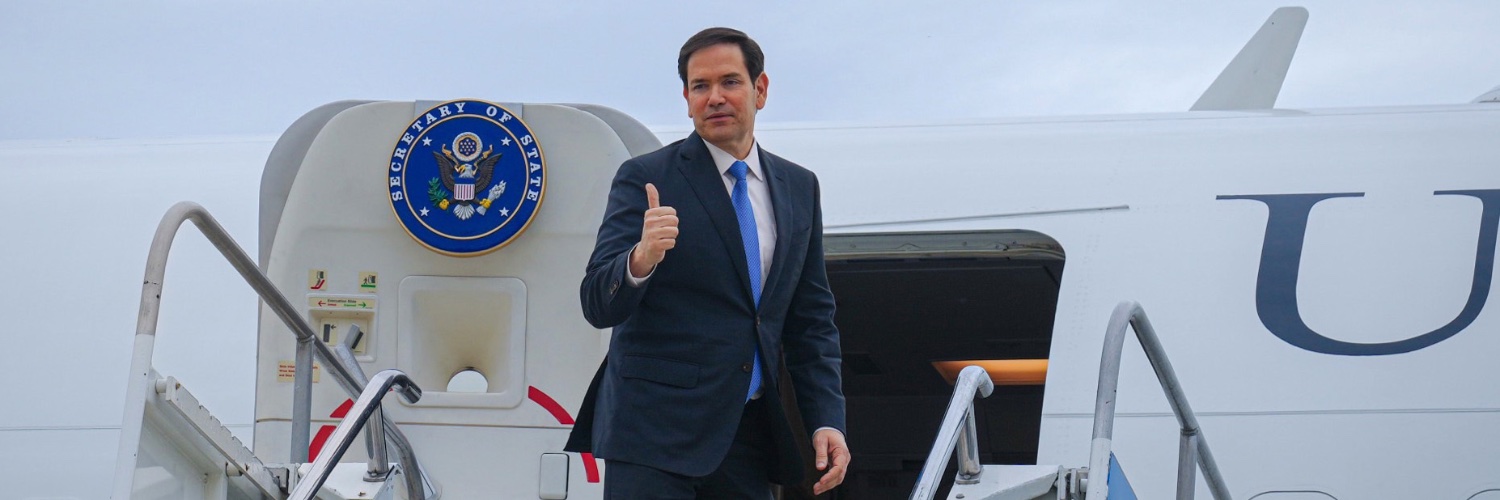
Now when Secretary of State Marco Rubio is on a visit seemingly to soften a rough patch in India-United States relations over the last one year as a result of tariffs, sanctions and what not, he unwittingly waded into another controversy that made headlines—mercifully at that—in the social media. Asked why the President should endorse remarks likening India to “hellhole” countries, the Secretary tried to ride out of the question by maintaining that there were stupid people the world over who said dumb things. Asked to comment on racism faced by Indians in the United States, Secretary Rubio remarked, “I’m sure there are people who have made dumb comments because every country has stupid people. I’m sure there are stupid people here,” he replied.
And the State Department made things only worse by taking down the post it had earlier put up leading to sharp backlash and even embarrassment. Did Secretary Rubio call President Trump “stupid” or “dumb”? Afterall Secretary Rubio has now come to be seen as the “blue eyed” boy of the President perhaps even a close competition to the “bluer” eyed, Vice President J.D. Vance as the top 2028 Republican candidate. To be fair to the Secretary of State he probably was not even aware of the context of the question. Conservative radio host Michael Savage while talking of birthright citizenship posted, “A baby here becomes an instant citizen, and then they bring in their entire family from China, or India or some other hellhole on the planet.” President Trump reposted this that triggered an outrage.
Issues of immigration are the sovereign right of nations: India has no right to tell the United States how to go about its business just as how Washington cannot tell New Delhi who to allow into the country. Occasionally nations do verbally disapprove of policies that are seen as blatantly discriminatory or racist. But even here this trickles down to a now frequently used or cited “national security” or “national interest” phrases in international affairs. Bureaucracies in the United States do not bend to pressures in following the processes laid out even while deporting an illegal alien back to the country of origin like the use of handcuffs and ankle restraints—standard procedures will be the immediate refrain.
In the case of the United States and matters pertaining to Indian immigration and visas have generally been left to the Indian American community that is now seen as a powerful group in the American political system. The community boasts a strength of about five million including a voting block of nearly three million and not exactly the exclusive preserve of Democrats. The Grand Old Party has made its presence known in the community and the Trump administration has prominent members in senior official capacities with roots in India. The Indian community has representation in the House of Representatives and is taking aim at the Senate; and is well spread out at the State and Local levels. Education, economy and matters of immigration including those pertaining to green cards, H-1B and H 4 visas are at the top of the priorities of a community that is constantly looking at ways to widen their presence in the polity.
The problem with immigration and visas is that it is not all India-centric; not many in the developing and even the developed world are happy with the scheme of things. And where it is deeply reflecting is in the sharp fall in tourism dollars that has come to impact an industry and by extension the economy. Published media reports speak a drop of four million visitors in 2025 compared to 2024 accounting for a drop in spending revenue of some US$ 8 billion. And here is the rub: eighty million more people travelled internationally in 2025 than in the previous year, but chose other destinations.
It is just not tourism that is taking a hit but other visas like those for Students have also impacted travel and spending. Seen in totality, drop in visitors has been seen from countries like Germany, France, Australia and China as well. But the biggest impact has been from the neighboring country of Canada. And much of this has been seen in the regular taunting of being the 51st State of the United States or in referring to their Prime Minister as Governor and in a general reluctance to visit even bordering states.
Capitalist systems go by a simple dictum: “Money talks, bullshit walks.” Short term referencing to the Middle East war, longer waits and layovers and rise in jet fuel prices aside, the larger reasons for leaving a hole in the pocket are indeed painful. And all of this could be reflected when the Mid Terms are held in November.
Disclaimer: The opinions and views expressed in this article/column are those of the author(s) and do not necessarily reflect the views or positions of South Asian Herald.