Choosing the 14th Dalai Lama’s successor has shifted from a religious affair to a major geopolitical concern in Asia. This process will influence the future direction of Tibetan Buddhism and serve as a battleground for different ideas of sovereignty, religious freedom, and political power.
China views the selection of the next Dalai Lama as crucial for reinforcing control over Tibet and promoting its narrative of national unity. For Tibetans, particularly those in exile, this succession is essential for maintaining a longstanding spiritual tradition. India, which has hosted the Dalai Lama since 1959, faces a complex strategic challenge. Meanwhile, the United States and other democratic countries consider this issue from the perspectives of human rights and international standards. Few religious successions carry such significant geopolitical consequences.
Sensitive Region
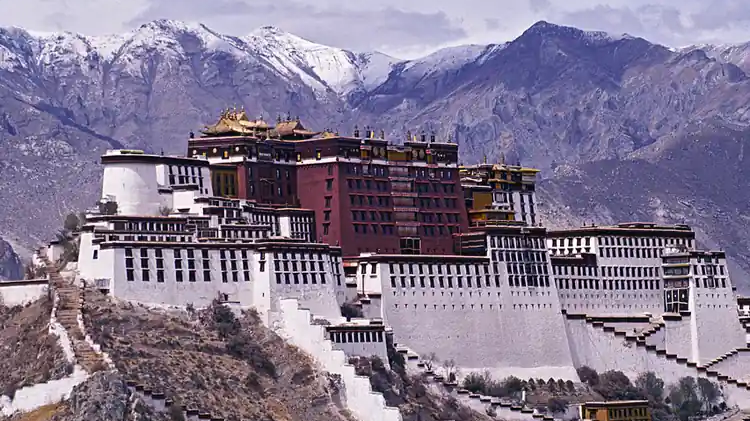
Beijing maintains that the appointment of the Dalai Lama is solely an internal matter for China. Chinese authorities assert that Tibet has historically been an integral part of China and that all religious organizations within its territory must operate under state supervision. Consequently, any attempts by the Dalai Lama, Tibetan exiles, or foreign governments to influence the selection of his successor are regarded as interventions in China’s internal affairs.
Advertisement
This stance considers more than just political ideology. Tibet is in a strategically sensitive border zone next to India, Nepal, and Bhutan. Beijing has traditionally seen separatism and foreign interference in this region as threats to its national stability. The historical memories of the 1959 uprising, the Dalai Lama’s escape to India, and ongoing unrest continue to influence Chinese policies.
Chinese officials also cite historical examples, asserting that imperial governments, especially during the Qing Dynasty, held authority over recognizing senior Tibetan Buddhist figures through the Golden Urn system. Although historians might debate the uniformity of this practice, Beijing views it as proof that the central government has long played a legitimate role in approving reincarnations.
The issue also aligns with President Xi Jinping’s wider policy of ‘Sinicizing’ religion, which mandates that religious institutions function within China’s legal and political system while promoting national unity. From Beijing’s view, managing the succession is not an interference in religion, but a recognition of state sovereignty.
Critics argue that political authority alone cannot establish spiritual legitimacy. While governments can regulate religious institutions, they rarely have the power to directly influence believers’ faith. This fundamental tension is central to the succession dispute.
The current Dalai Lama has spent years preparing specifically for this challenge. He has repeatedly stated that only traditional Tibetan Buddhist methods, not the Chinese government, have the power to choose his successor. Recently, he also stressed that the Gaden Phodrang Trust, the organization he established, will have sole authority to recognize his reincarnation.
Most notably, he proposed that the next Dalai Lama might be born outside Tibet, which would drastically alter the succession process. If a successor is recognized in India or another country beyond Chinese influence, Beijing would likely reject that choice and back its own candidate within Tibet. This could lead to two rival Dalai Lamas: one supported by the Chinese government and another acknowledged by many Tibetan Buddhists and democratic nations. The conflict would extend beyond religious authority to a battle over legitimacy.
India faces an exceptionally difficult balancing act. Since 1959, it has hosted the Dalai Lama and the Tibetan exile community, becoming a center for Tibetan Buddhism abroad. At the same time, New Delhi must manage a challenging relationship with China, marked by ongoing border disputes and strategic rivalry in the Himalayas.
If India recognizes the next Dalai Lama within its borders, Beijing might view this as support for Tibetan separatism. On the other hand, avoiding involvement could harm India’s reputation as a protector of Tibetans and as a democracy that values religious freedom. Thus, the succession places India at a crossroads between its security concerns and its democratic ideals.
While Bhutan would probably not publicly take sides, its succession dispute might influence its diplomatic relations, religious landscape, and strategic position. Bhutan practices the Drukpa Kagyu school of Vajrayana Buddhism, whereas the Dalai Lama is a spiritual figure for the Gelug school. Despite belonging to different traditions, they share Tibetan Buddhist origins, monastic scholarship, and religious customs. The Dalai Lama has historically held significant respect among many Bhutanese Buddhists, even if he is not their top religious authority.
Bhutan closely coordinates with India on strategic issues, so changes in India’s Tibet policy impact Bhutan. If New Delhi recognizes the Dalai Lama acknowledged by the Tibetan exile community, Bhutan may feel pressured to subtly align with India’s stance while steering clear of direct conflict with China. Still, Bhutan’s reaction would probably be characterized by deliberate ambiguity rather than outright support.
Nepal faces a more complex challenge, hosting around 20,000 Tibetan refugees. Kathmandu has historically supported the ‘One China’ policy and has intensified restrictions on Tibetan political actions due to mounting Chinese influence. Beijing considers Nepal an essential frontline to curb Tibetan anti-China activities. Consequently, Nepal has been more restrictive of public Tibetan events, limited protests, and enhanced cooperation with Chinese security forces.
If two rival Dalai Lamas appear, Nepal may face complex questions. Will it only acknowledge China’s designated successor? Will it ban gatherings that support the exile-recognized Dalai Lama? How will it handle Tibetan refugee communities without provoking Beijing or New Delhi? Can it maintain its traditional neutrality and avoid turning into another battleground for Sino-Indian rivalry?
Strict restrictions might harm Nepal’s reputation on international human rights and strain its relations with Western allies. Showing any leniency towards the Tibetan exile movement could trigger economic and political retaliation from China.
For Kathmandu, this situation essentially serves as a test of strategic diplomacy. It must carefully follow international law, safeguard religious freedom as outlined in its constitution, and maintain a balanced foreign policy that does not provoke China or compromise Nepal’s sovereignty.
The United States has gradually incorporated the Dalai Lama succession into its overall approach to China. Congress consistently maintains that Tibetan Buddhists should have sole authority over choosing their religious leaders, without interference from the government. Other democratic nations have taken similar positions.
For Washington, the succession is also part of a larger strategic rivalry with Beijing. This conflict reflects differing views on the international order: one emphasizing state sovereignty, and the other arguing that certain religious and human rights issues go beyond national borders.
Many countries across Asia, Africa, and Latin America prefer to stay neutral by avoiding choosing sides. They maintain strong economic ties with China while also supporting religious freedoms, making diplomatic neutrality a strategic choice. This ambiguity could benefit Beijing over time. It is not essential to get every government to recognize its Dalai Lama, only enough to prevent a unified international reaction.
The Dalai Lama’s succession raises questions that go beyond Tibet’s borders. Can governments determine the leadership of a religious group whose legitimacy relies on spiritual faith instead of political power? What actions should the global community take when claims of religious freedom clash with national sovereignty? Additionally, can conflicting historical narratives be reconciled when they challenge the core identities of nations and peoples?
Complex Reality
The conflict can appear as a clash between authoritarian control and religious freedom. Still, the reality is much more complex. China views the issue in terms of sovereignty, territorial integrity, and national unity. In contrast, Tibetans see it as essential to religious authenticity, cultural preservation, and maintaining a tradition that spans centuries. Both sides firmly believe their positions are non-negotiable.
For many decades, the Dalai Lama has symbolized compassion, dialogue, and nonviolence. Ironically, the dispute over his succession could become one of the major geopolitical conflicts in the coming decade.
Ultimately, this is a contest over legitimacy. Governments can control territory, enforce laws, and shape political institutions. Yet, both history and politics have yet to determine whether they can also hold spiritual authority.
Disclaimer: The opinions and views expressed in this article/column are those of the author(s) and do not necessarily reflect the views or positions of South Asian Herald.