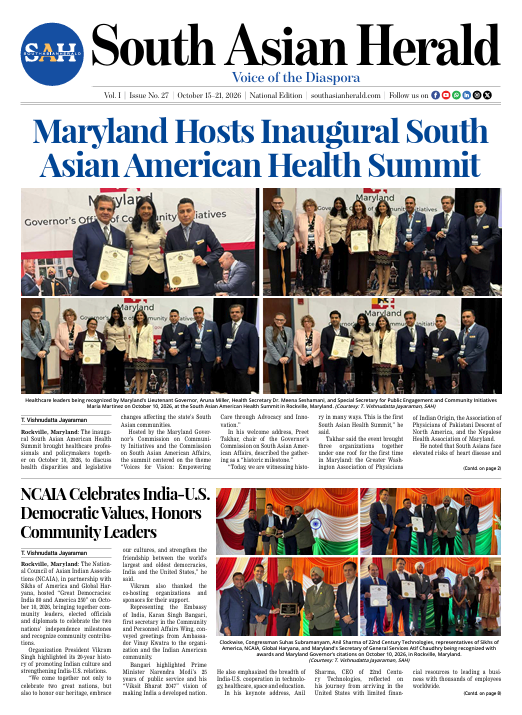
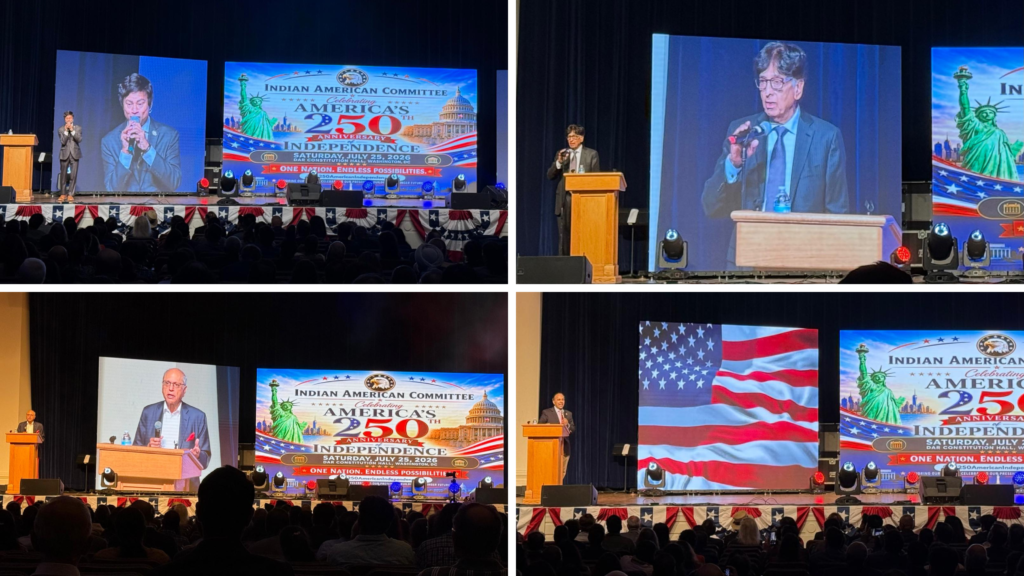
A consortium of national Indian American organizations brought together Indian Americans from across the country at DAR Constitution Hall in Washington, D.C., on July 25 for “America’s 250th Anniversary” recognizing the community’s contributions to the United States.
Shekhar Tiwari, chairman of the American Hindu Coalition, introduced Ramesh V. Kapur, co-chair of the America 250 Indian American Commemorative Celebration, highlighting his longstanding contributions to strengthening U.S.-India relations.
Kapur described the event as an opportunity to unite the community beyond political affiliations.
“This is an opportunity for our community to come together, not as Republicans or Democrats, but as Americans.”
Advertisement
Emphasizing patriotism and the importance of educating future generations about American values, Kapur added, “We have to show our patriotism, and that’s where our problem is. We are a little too quiet about it…”
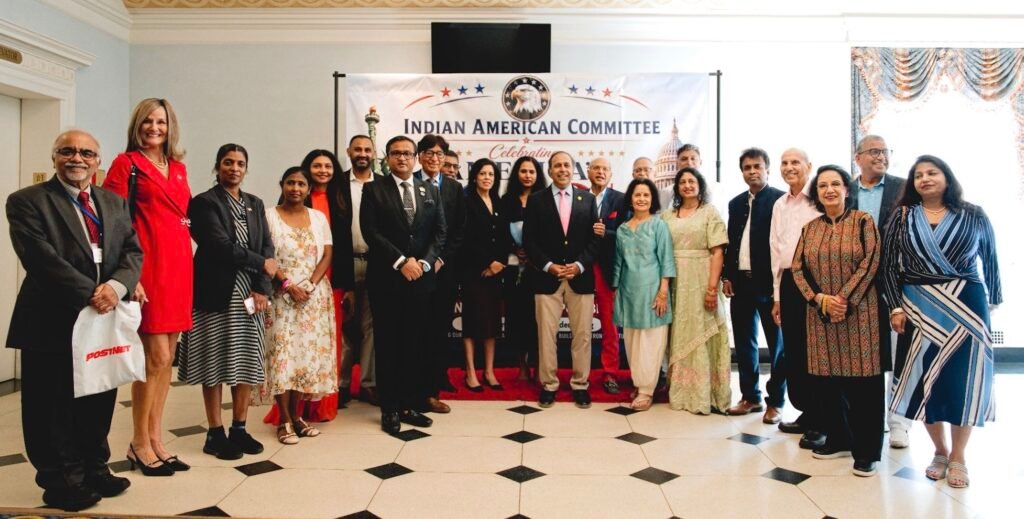
He said that mindset must change and noted that he plans to organize similar events every two years to showcase the contributions of Indian Americans.
Congressman Raja Krishnamoorthi said the Indian American community is an “integral” part of the nation and described it as one of the fastest-growing ethnic minority groups in the country. Citing a recent Indiaspora survey, he noted that 10 percent of physicians are Desis, 60 percent of hotel rooms are owned by Desis, and 27 of the last 34 National Spelling Bee champions have come from the Desi community.
Krishnamoorthi also expressed concern about incidents of anti-Indian sentiment across the country. Referring to demonstrations in Frisco and Plano, Texas, he said protesters gathered outside city halls and told people of Indian origin to “Go back, go back.” He also noted that an elected official in Florida had called for his deportation.
“Well, this is my response to him. I’m not going anywhere. Are you? None of us are. We are here to stay,” Krishnamoorthi said. “We are part of the fabric of this country, and on America’s 250th birthday, we are going to fight back.”
Congressman Shri Thanedar said America would not be successful without the contributions of immigrants.
“Some people forget that this is a country of immigrants,” he said, adding that hatred toward immigrants in the United States must not be “tolerated.”
He added, “We must demand that the immigrants and their culture and contributions to this great country be honored and respected every day.”
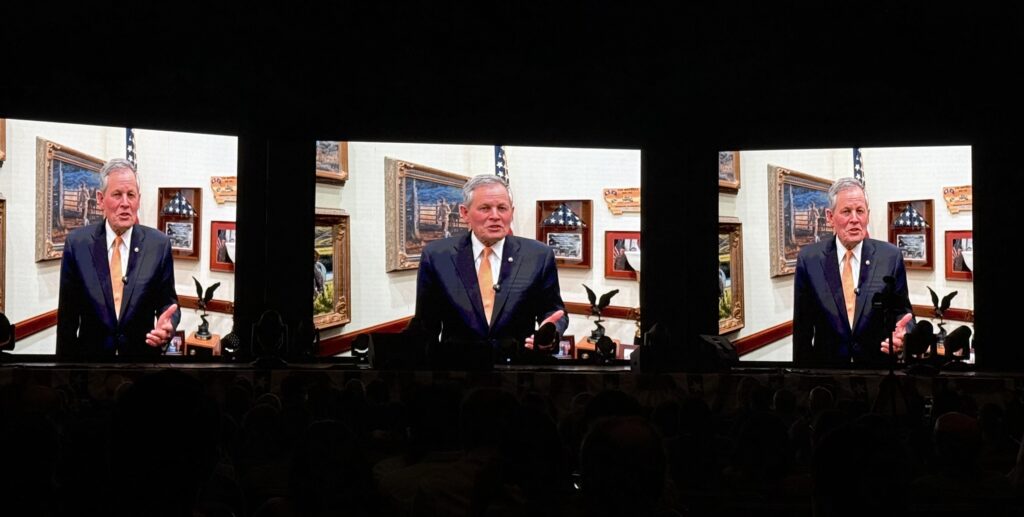
U.S. Senator Steve Daines said the United States and India are united by shared democratic values. “We’re united by freedom, opportunity, strength, and trust, and we share these principles with our great ally India, with whom we have an incredible partnership.”
As a member of the Senate Foreign Relations Committee, Daines said he has a “deep respect” for the strategic relationship between the United States and India. The senator described India as the world’s fastest-growing major economy and a “critical” trade partner.
“The United States and India need each other, and I’ll continue to promote diplomatic, economic, and cultural ties between the United States and India,” he said.
Highlighting the role of Indian Americans in American society, spiritual leader Gurudev Sri Sri Ravi Shankar of the Art of Living Foundation said the community has consistently made positive contributions.
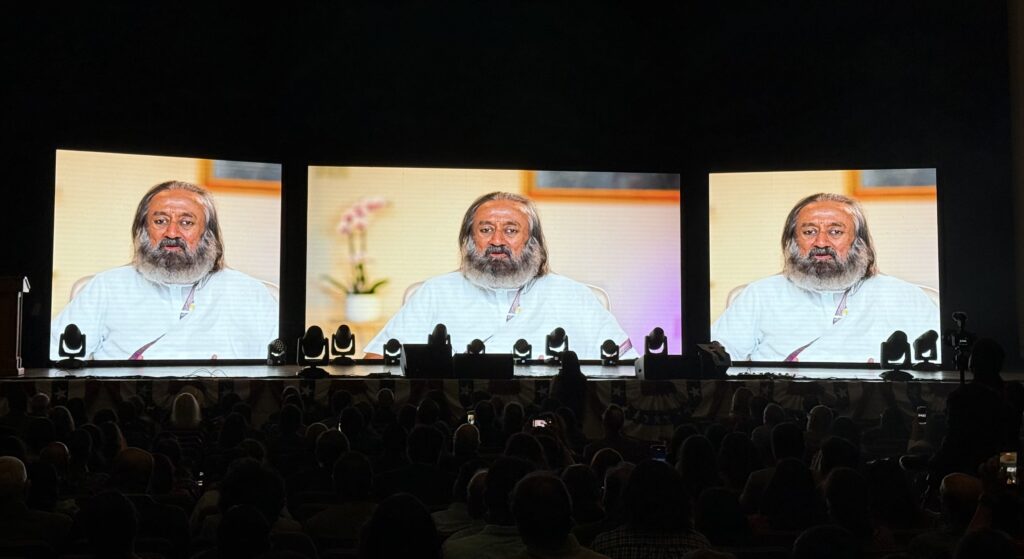
He said Indian Americans are never a “threat” to anybody and have enriched the world with the principles of diversity, justice, and equality, values upon which the American nation was founded.
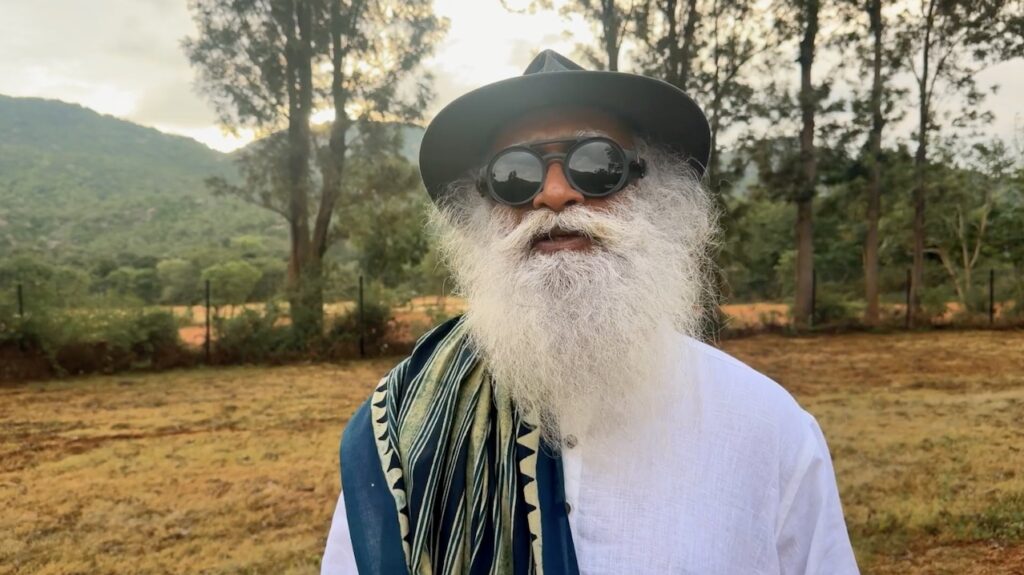
Sadhguru Jaggi Vasudev of the Isha Foundation said the United States is a powerful example of what can be achieved in 250 years, having transformed from raw land into what he described as the most developed nation on the planet.
“This should be an inspiration for every other nation, but at the same time, it’s very important that we build things for the well-being of human beings,” he said.
Sadhguru said the Indian community has significant contributions to offer, not only in technology, medicine, and other fields, but also in promoting inner well-being. He noted that Indian civilization has invested in the inner dimension of life for millennia.
Shruti Bhatt of BAPS Swaminarayan Sanstha said the celebration represented more than a historical milestone. “Tonight, we celebrate more than the founding of a nation. We celebrate an enduring idea that people from every background, every faith, and every culture can come together to build a stronger nation.”
Calling the occasion “deeply personal,” Bhatt said that, like many families in attendance, her family’s story reflects the journey of countless immigrants who came to the United States in search of opportunity.
Dr. Meher Medavaram, president of AAPI, highlighted the collective strength of the Indian American community.
“Looking out at this room, I do not just see distinct organizations. I see the collective engine of the Indian American diaspora,” she said.
She also underscored the role of Indian American physicians in the U.S. healthcare system.
“Indian American physicians do not just fill vacancies; they form the indispensable backbone of American healthcare,” Dr. Medavaram said. “From research labs to rural clinics, our physicians stabilize communities and transform our cultural values into deeply compassionate patient care.”
Dr. Suvas Desai, co-founder of the Indian American Committee, pointed to rising xenophobia and online threats of violence against South Asians in the United States and urged greater unity within the community.
“I’m certain by working together, we can achieve our goal of advocacy, of protecting our interest, and, even more importantly, the interest of our future generations.”
Echoing Congressman Krishnamoorthi’s remarks about the community’s contributions, Rajendra Dichpally presented statistics highlighting the economic and professional impact of Indian Americans.
According to Dichpally, Indian Americans make up about 1.5 percent of the U.S. population but pay more than 6 percent of the nation’s taxes. He also said that Indian Americans own 60 percent of motels in the country, more than 100,000 physicians practice in the United States, and more than 66 percent of unicorn startups have been founded by American immigrants, among other contributions.
Several other distinguished speakers also addressed the gathering, which featured a series of cultural performances celebrating the heritage and diversity of the Indian American community